A Colonnade on the Boulevard
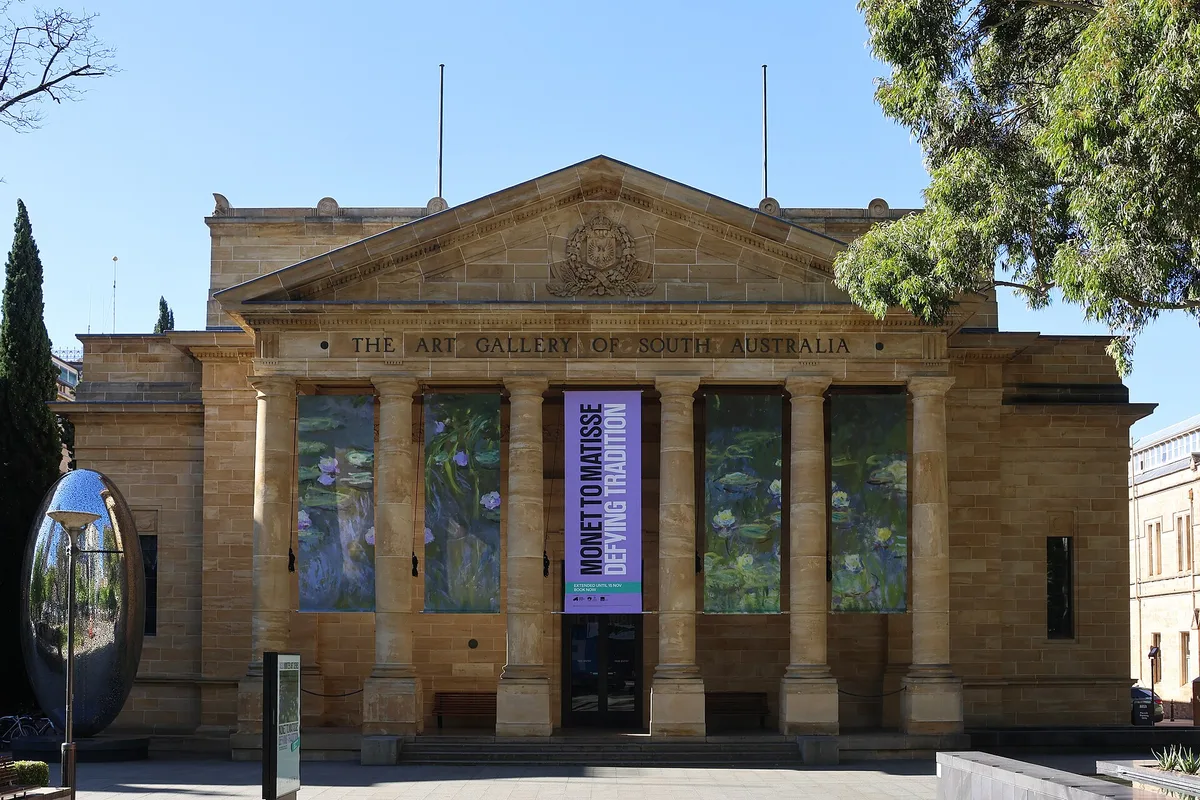
North Terrace is Adelaide’s cultural spine. Along one stretch of plane trees you pass the State Library, the South Australian Museum and the sandstone of the University of Adelaide. The Art Gallery of South Australia is the classical façade with the columned portico at number 490. It’s hard to miss: steps rise from the footpath, and banners for the current exhibition hang between the pillars.
It’s a 19th-century institution. Its collection is one of the oldest and deepest in the country, and it has particular strength in Australian art and important Indigenous works. Inside, high-ceilinged rooms open one into the next. Paintings hang close together, often in tiers, and on a quiet morning the rooms feel more like a grand house than a white-box museum.
The Rooms Worth Your First Hour
Arrive with a plan, because the building rewards it. The colonial and early Australian rooms are the main reason many visitors come. They include Tom Roberts’ A break away! (1891), a dusty, heaving scene of drovers losing a mob of sheep to a waterhole that turns up again and again in Australian art history.
Head-on, the highlights usually look like this:
- Australian art from the colonial era to Federation, including the Heidelberg School painters and Hans Heysen’s gum trees from the nearby Adelaide Hills
- Aboriginal and Torres Strait Islander art, one of the gallery’s defining strengths, spanning bark paintings to contemporary work
- European paintings and decorative arts, hung in the older salon-style rooms
- Contemporary galleries, where the installations change more often than anywhere else in the building
Labels are thorough. If time is short, choose two wings and do them properly rather than skimming them all.
Tarnanthi and the Biennial Calendar
Timing your trip around the gallery’s own calendar can change what you see. The gallery presents Tarnanthi, its festival of contemporary Aboriginal and Torres Strait Islander art. It usually takes over spaces in the building in the second half of the year, sometimes with an art fair attached where artists’ work is sold directly.
It also hosts the Adelaide Biennial of Australian Art, which runs in even-numbered years and usually coincides with Adelaide’s festival season in late summer and autumn. Dates and formats shift, so check the gallery’s official site before you book flights around either one.
Special exhibitions are often ticketed, but general entry to the collection is free. Current exhibition prices are listed on the official website and at the front desk.

Getting to 490 North Terrace
The gallery is in the city’s northeast corner, so you can easily walk there from most CBD hotels.
- On foot from Rundle Mall: walk north up Pulteney Street or along the arcades to North Terrace, about ten minutes.
- By tram: the North Terrace tram line runs along the boulevard in front of the gallery, and city tram travel is free.
- By train: Adelaide Railway Station is at the western end of North Terrace. From there it’s a flat walk of roughly 15 minutes east past Parliament House and the State Library.
- By bus: the free City Connector loop serves North Terrace.
Driving is the least convenient option. Street parking nearby is tight and metered, and city car parks are the realistic choice.
Beating the Lunchtime Wave
The gallery’s busy hours follow a clear pattern. BestTime’s forecast puts the quietest windows at 10am–11am and 4pm–5pm, on both weekdays and weekends. Those are the bookends of the day, when you’ll often have a room of Heysens to yourself.
Try not to arrive on a weekend between 12pm and 3pm. That’s when foot traffic usually peaks, the popular rooms fill and ticketed exhibitions slow to a shuffle.
Opening hours are currently 10am–5pm daily. Gallery hours can shift for public holidays and special events, so confirm on the official site on the day.
Moving Through the Galleries
Most of the etiquette here is common sense. A few habits make the visit smoother:
- Pay by card. Card and tap payments are normal across Adelaide, including at the shop and café. Tipping isn’t expected.
- Leave big bags behind. Larger backpacks and bags may need to be checked in at the entrance, so travel light.
- Check the photography signs. Casual photos without flash are generally fine in the collection rooms. Some loaned exhibitions don’t allow photos, and each room is signed.
- Ask the attendants. Gallery staff in the rooms know the collection well. They’re the fastest way to find a specific painting in a building that doubles back on itself.
- Free tours and talks are run regularly. The day’s schedule is posted at the entrance and online, and joining one is an easy way to get a guided route through the highlights.
Making a Morning of North Terrace
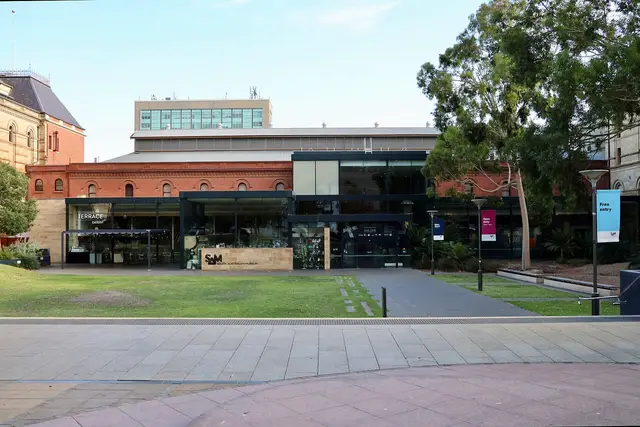
Doing the gallery on its own wastes its location. The South Australian Museum is right next door and also free to enter, with a well-known collection of Aboriginal cultural material. Seeing the two back to back gives you a fuller picture of Indigenous art and culture than either does alone.
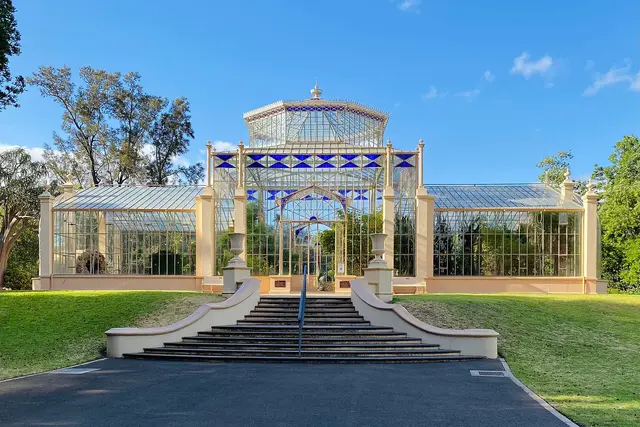
Walk east and North Terrace ends at the Adelaide Botanic Garden, with its glasshouses and lawns. It’s a good place to rest your legs after a few hours on gallery floors. West of the gallery, the State Library of South Australia has the Mortlock Wing, a galleried 19th-century reading room that’s worth a quick look.
A good route is to start at the gallery at 10am, see the museum next and finish with lunch near the Botanic Garden. Return to the gallery for a final hour after 4pm, when the crowds usually thin again.
Frequently asked questions
When is the quietest time to visit the Art Gallery of South Australia?
BestTime's forecast shows the quietest periods are 10am–11am and 4pm–5pm on both weekdays and weekends. Avoid weekends between 12pm and 3pm, when it's usually busiest.
How do I get to the Art Gallery of South Australia?
It's at 490 North Terrace, about a ten-minute walk north of Rundle Mall. The free city tram runs along North Terrace, and Adelaide Railway Station is roughly 15 minutes' walk west.
How long should I spend there?
Allow two to three hours to see the Australian and Aboriginal collections properly. Allow more if there's a special exhibition or Tarnanthi is on.
What are the opening hours?
It currently opens 10am–5pm daily. Hours can change for holidays and events, so check the official website before you go.
What else is nearby?
The South Australian Museum is next door. The State Library of South Australia is a short walk west, and the Adelaide Botanic Garden is at the eastern end of North Terrace.
Plan your trip to Adelaide
Australia eSIM & staying connected →
Some links above are affiliate links — if you book through them, Wander Atlas earns a small commission at no extra cost to you. It's how we keep every guide free.
Related guides
 attraction
South Australian Museum: Adelaide Travel Guide (4.6★)
 attraction
Adelaide Botanic Garden: Travel Guide (4.7★)
 attraction
Botanic Park: Adelaide Travel Guide (4.7★)
 hidden gem