Why go
Chengdu Museum doesn’t get the tour-bus traffic of Jinsha or the pandas, and that’s exactly its appeal. Walk in on a weekday afternoon and you’ll often have entire galleries to yourself, close enough to a Han-dynasty stone carving to see the tool marks.
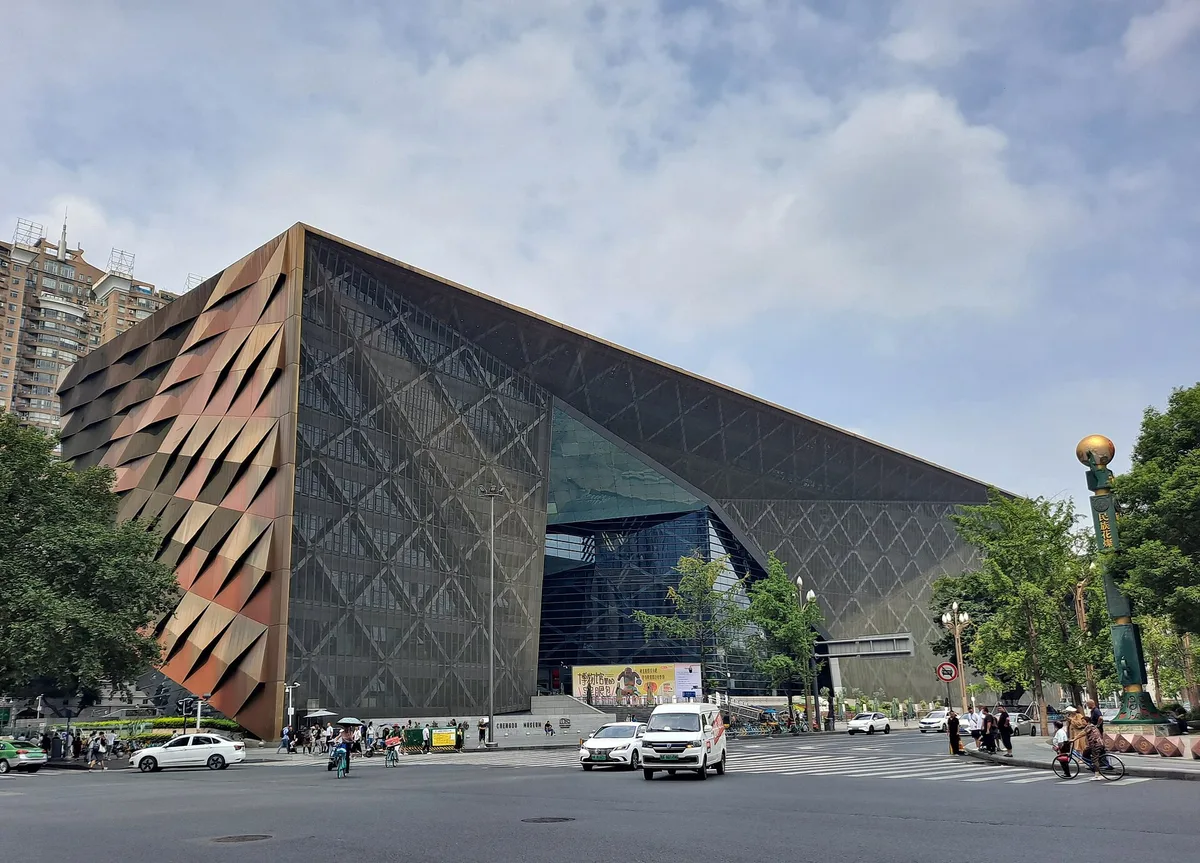
The building itself is worth a look before you even reach the exhibits. Its dark, angular facade of stone and glass wraps around a soaring atrium, deliberately echoing the black-and-gold aesthetic of Sichuan lacquerware and bronze ware found across the region.
Getting there
The museum sits right on Tianfu Square, in the heart of Qingyang District, the address that pops up as Tianfuguangchang or Renmin Xilu on maps.
- Nearest metro: Tianfu Square Station, Lines 1 and 2, several exits lead directly onto the square
- Landmark: directly opposite the Sichuan Science and Technology Museum, whose golden dome you’ll spot first
- On foot: a 10-15 minute walk from Chunxi Road shopping district
Because it’s on the square, you can pair it easily with a stroll past the Mao Zedong statue that anchors Tianfu Square before or after your visit.
What to see inside
The core draw is the folk culture and history galleries, which trace Chengdu from ancient Shu kingdom artifacts through Qing-dynasty street life. Look for the scale models of old Chengdu teahouses and the reconstructed opera stage, complete with painted masks used in Sichuan’s famous “face-changing” performances.
Upper floors rotate through temporary exhibitions, often pulling in loans from other Sichuan institutions. Check what’s showing before you go since these change the character of a visit considerably.
- Bronze and stone relics room (ground floor)
- Folk life and teahouse culture exhibit
- Sichuan opera and shadow puppet gallery
- Rotating special exhibition floor
Give yourself two to three hours to move through at a comfortable pace, more if a special exhibition catches you.
When to go
Weekday mornings and early afternoons are your quietest window here, especially outside Chinese school holidays and national “golden week” periods when Tianfu Square itself gets busy with domestic tourists. Since the museum draws far fewer international visitors than Jinsha or the Panda Base, even weekend visits tend to feel unhurried.
Confirm opening hours and any closed days before you set out, since museum schedules in China shift around public holidays and occasional maintenance closures.
How to visit like a local
You’ll need to register with a passport or ID at the entrance, sometimes through a self-service kiosk, sometimes at a staffed counter. Booking a timed slot online in advance is common practice locally and smooths entry if the system is in use when you visit.
- Bring a passport (not a photo of one), staff usually need to scan the physical document
- Bags go through a security scan, standard at Chinese public institutions
- Photography is generally fine in permanent galleries; watch for signs restricting it in special exhibitions
- There’s no tipping expected anywhere in Chinese museums
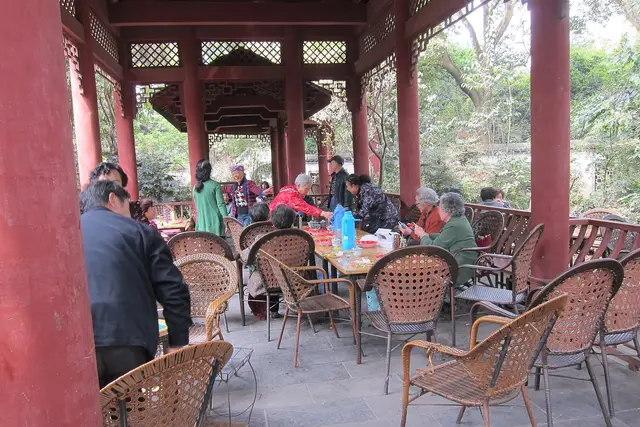
The mistake visitors make is treating this as a quick add-on stop before the pandas and rushing through in twenty minutes. Locals treat it more like a quiet afternoon activity, wandering the folk culture floor slowly and stopping at the museum café rather than powering through.
Pair it with a walk around Tianfu Square afterward, or continue on to Chunxi Road for dinner. Since it’s rarely crowded, this is also a comfortable choice on a hot Chengdu afternoon when you want air conditioning and pace rather than another packed attraction.
Frequently asked questions
How much does it cost to enter Chengdu Museum?
Entry is free, as with most major public museums in China, but you must register with a passport or government ID at the entrance.
How do I get to Chengdu Museum by metro?
Take Line 1 or Line 2 to Tianfu Square Station — several exits open directly onto the square where the museum sits, opposite the Sichuan Science and Technology Museum.
How long should I spend there?
Plan on two to three hours for the permanent folk culture, history, and opera galleries, longer if a temporary exhibition is running.
When is it least crowded?
Weekday mornings and early afternoons are quietest, especially outside Chinese national holidays — it draws far fewer visitors than Jinsha Site Museum or the Panda Base.
What's nearby if I want to combine a visit?
Tianfu Square itself with its Mao Zedong statue is right outside, and Chunxi Road's shopping and dining district is about a 10-15 minute walk away.
Plan your trip to Chengdu
Some links above are affiliate links — if you book through them, Wander Atlas earns a small commission at no extra cost to you. It's how we keep every guide free.