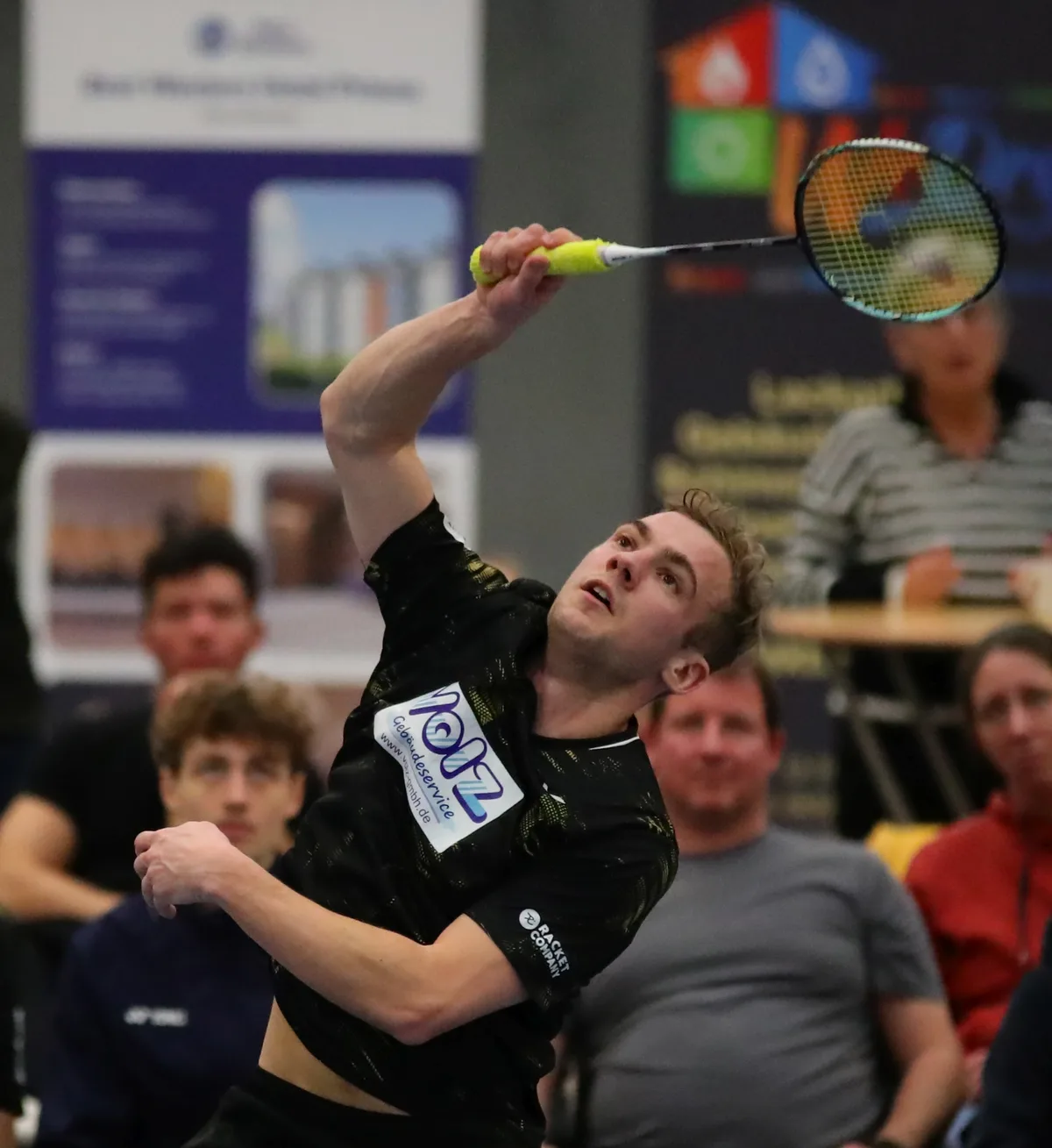
Seven days of badminton for veteran players
The players here never stopped. The VICTOR Badminton Asia Senior Championships is Badminton Asia’s continental title event for masters players. The draws are divided into age groups, usually starting at 35+ and going up in five-year bands.
The 2026 edition runs from November 16 to 22 in China. VICTOR, the Taiwanese racket and shoe maker, is the title sponsor. In each age group you can usually find former international players drawn against club players who have spent years preparing for this week.
The pace surprises people. The jump smash loses a little speed with age, but the shot selection gets sharper. A 50+ doubles pair with good court sense can pin younger opponents in the back corners for whole rallies.
What a day in the hall looks like
The hall runs many courts at the same time. Senior championships hold men’s and women’s singles, men’s and women’s doubles and mixed doubles in every age group. That adds up to a very large number of matches.
The opening days are the busiest. Rows of courts on synthetic mats all play at once, with an umpire’s chair beside each one and coaches’ chairs behind the baseline. Spectators tend to drift along the stands, watching one match and then the next.
As the week goes on, fewer courts are in use and the matches get tighter. Finals usually fill the closing days, so the event’s last weekend, November 21–22, is when the medal matches take place.
Scoring follows the standard rally-point format:
- Best of three games to 21 points
- A short interval when the leader reaches 11
- A longer break between games
Tickets, venue and entries
All the official information comes from one organisation. Badminton Asia, the continental governing body, publishes the host city, venue and spectator information for its championships on its official website. Any ticket price appears there or at the venue, not in this guide.
Entries for players do not come from the public. Badminton Asia championships take entries through national member associations. A veteran who wants to compete applies through their own country’s badminton federation, which handles nominations and paperwork.
Senior championships usually draw a crowd made up of competitors, partners, family and team officials. Many people in the stands have played earlier that day, or are waiting for their own match.
Courtside manners in a Chinese hall
Badminton is one of China’s most widely played sports. People of every age book courts in community halls after work, so crowds tend to know the etiquette well. Regulars usually do the following:
- Stay still during rallies. Spectators walk to their seats or along the stands only between points, or at the 11-point interval.
- Skip the flash. Flash can distract players following a shuttle at speed, so phone photography in halls is usually done without it.
- Clap for both sides. A long rally usually gets applause for both players, wherever they come from.
- Pay by phone. Alipay and WeChat Pay are used almost everywhere in China, from venue kiosks to street food. Both apps let foreign visitors link an international bank card.
The Chinese word for badminton is yǔmáoqiú (羽毛球), which means “feather ball”. It helps when asking a taxi driver or hotel staff for directions.
Getting around China in late November
The weather depends a lot on the host city. By late November the north is usually cold, with freezing nights in cities like Beijing and Harbin. The south, around Guangzhou and Shenzhen, is still mild. Packing depends entirely on where the venue is.
China’s high-speed rail network links most large cities. Tickets are sold on 12306, the national railway platform. Foreign visitors buy tickets and pass station gates using their passport, so it stays on them on travel days.
Inside cities, the Didi ride-hailing app is the usual alternative to hailing taxis. Its English interface is handy for getting to a sports hall in a suburb. Hotels register foreign guests’ passports with the local police at check-in. This is routine, and it is the reason staff photocopy or scan your passport.
Who gets the most out of it
The championship suits a particular kind of traveller. If you play club badminton yourself, you can watch players from your own age band execute shots at a high level. Families of competitors usually stay near the venue, because a single player can have matches spread across morning and evening sessions.
General sports fans visiting China in mid-November can treat it as a few hours watching experienced players use real tactics. Most of the rallies are won by placement rather than power.
Frequently asked questions
When are the VICTOR Badminton Asia Senior Championships 2026?
The championships run from November 16 to 22, 2026, in China. Medal matches usually take place on the closing days, November 21–22.
Where is the venue and where are tickets published?
Badminton Asia organises the event and publishes the host city, venue and spectator ticket information on its official website.
Who can compete?
Veteran players compete in age groups that usually start at 35+ and go up in five-year bands. Entries go through each country's national badminton association, which is a member of Badminton Asia. Individuals do not enter directly.
How long should I spend watching?
Many courts run at once in the early rounds, so you can watch several matches in two or three hours. If you only want the finals, the last weekend of the event is when they are played.
How do I pay for food and transport around the venue?
Alipay and WeChat Pay are used almost everywhere in China. Both apps let foreign visitors link an international bank card. Train tickets are sold on the 12306 national railway platform and are tied to your passport.
Plan your trip to China
China eSIM & staying connected →
Some links above are affiliate links — if you book through them, Wander Atlas earns a small commission at no extra cost to you. It's how we keep every guide free.