Why go
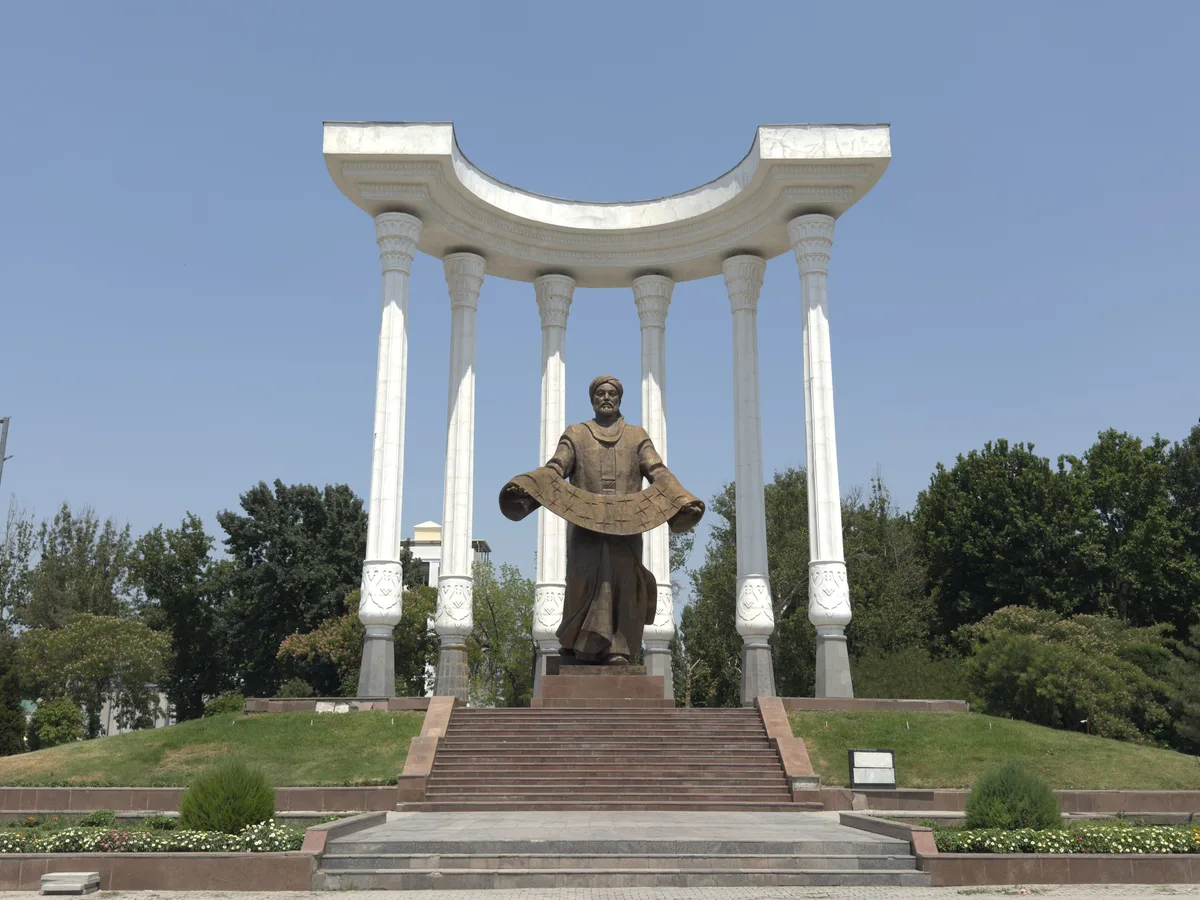
You come here for a name, not a spectacle. Al-Farghani (astronomer, mathematician, geographer) was born in this stretch of the Fergana Valley over a thousand years ago, and his calculations on the Earth’s circumference once traveled as far as Baghdad’s House of Wisdom.
The statue in Quva is the town’s way of claiming him. It’s modest by monument standards: a raised figure, a plinth, an open plaza around it. What makes it worth the detour is the quiet. You’re standing in the actual region that produced him, not a replica city.
Getting there
Quva sits roughly 40-50 kilometers from Fergana city, on the eastern side of the valley toward Andijan. Shared taxis and marshrutkas run between Fergana and Quva throughout the day from the main bus station, and the ride takes about an hour depending on traffic through the villages.
A private taxi is the easier option if you’re short on time, agree the fare before you set off, since meters aren’t standard practice here. The monument sits in a central square, an easy walk from wherever a driver drops you in town.
What you’ll find
The statue itself is the centerpiece, but the setting is the real texture. Quva is a working agricultural town: mulberry trees line the streets, tea houses spill onto the pavement, and the pace slows the moment you step off the main road.
Around the square you’ll notice:
- The plinth inscription referencing al-Farghani’s astronomical work
- Open paved space where local families gather in the evening
- Nearby chaikhanas (teahouses) serving green tea and non bread
- Modest civic buildings typical of a valley district center
There’s no ticket booth, no gate, no fixed hours to plan around. It’s a public square, open to the air, and you can walk up any time of day.
When to go
Spring and autumn are the most comfortable seasons for the Fergana Valley generally, when daytime heat isn’t punishing and the surrounding orchards are either blossoming or heavy with fruit. Summer here climbs into the high 30s Celsius, and the open plaza offers little shade.
Given the under-the-radar nature of this stop, crowds were never really the issue. You’re more likely to have the square to a handful of locals than to any tour group. Early morning or early evening light is kindest for photos, softening the plaza’s concrete and giving the statue some shadow definition.
How to visit like a local
Treat this as a pause on a longer valley itinerary, not a headline stop. That’s how residents themselves treat it, as a familiar landmark rather than an attraction. Nobody collects an entry fee, so there’s no ticket line or booking system to navigate.
- Greet shopkeepers with “Assalomu alaykum”, it goes a long way in smaller towns like Quva
- Carry small cash (som) for tea or bread at a nearby chaikhana; cards are rarely accepted outside city centers
- Dress modestly, as you would anywhere in provincial Uzbekistan, shoulders and knees covered
- Ask a local teahouse owner about al-Farghani’s legacy; residents are often glad to talk about their town’s connection to him
The mistake visitors make is expecting a museum-scale experience and leaving disappointed. This is a civic monument in a real town, not a curated tourist site, its value is context, not scale. Pair it with a stop in Fergana city’s Al Bakr Square or the Kokand khanate sites nearby to make the drive worthwhile.
Bring a phrase or two of Uzbek or Russian if you can, English is scarce this far from the regional capital, and a little effort with greetings changes how warmly shopkeepers and passersby respond.
Frequently asked questions
How do I get to Al-Farg'oniy haykali from Fergana city?
Take a shared taxi or marshrutka from Fergana's main bus station toward Quva, about 40-50km east; the trip takes roughly an hour. A private taxi is faster but agree the fare upfront, as meters aren't standard.
Is there an entrance fee?
No. It's a public monument in an open town square, accessible at any time with no ticket or gate.
How much time should I set aside?
20-30 minutes is enough for the statue and square itself. Add extra time if you want tea at a nearby chaikhana or a wander through Quva.
What's the best time of year to visit?
Spring and autumn, when the Fergana Valley's heat is manageable. Summer temperatures often exceed 35°C with little shade at the plaza.
Is this a well-known tourist attraction?
No — it's genuinely under-the-radar, more meaningful to history enthusiasts tracing al-Farghani's legacy than a mainstream stop. Expect to have the square largely to yourself.
Plan your trip to Fergana
Some links above are affiliate links — if you book through them, Wander Atlas earns a small commission at no extra cost to you. It's how we keep every guide free.
Related guides
 attraction
 Yodgorlik Silk Factory: Margilan Travel Guide (4.2★)
 attraction
 Palace of Khudáyár Khán: Kokand Travel Guide (4.7★)
 hidden gem
 Silk factory: Margilan Travel Guide (5.0★)
 hidden gem