Why go
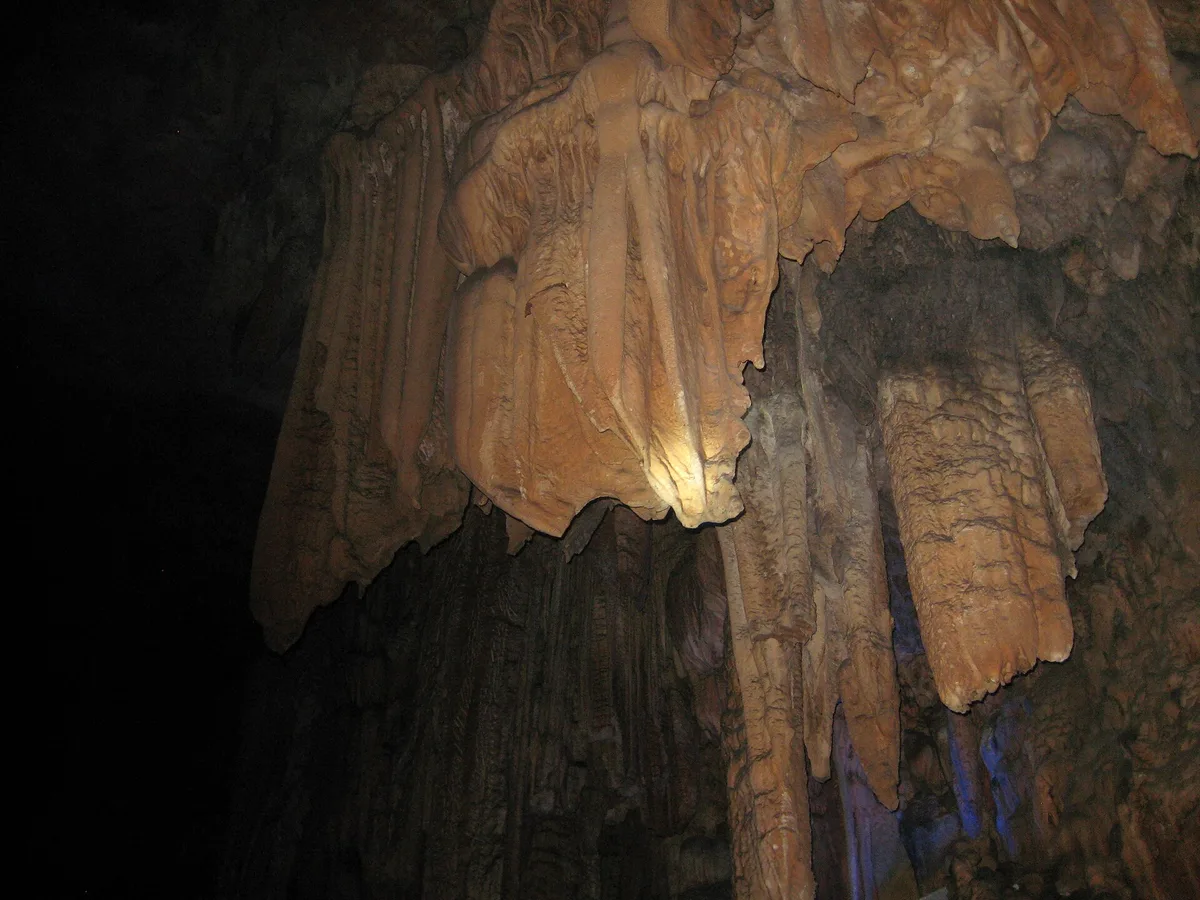
The name comes from the reeds that once grew at the cave mouth, used to make flutes, a detail that feels almost quaint once you’re inside, because nothing about this cave reads as quaint. Reed Flute Cave has been forming for roughly 240 million years, and the karst dissolution that carved it has left behind a genuinely strange landscape of stone curtains, columns, and flowstone that locals nicknamed “the Palace of Natural Arts” for a reason.
What sets it apart from other karst caves around Guilin is the lighting: designers have washed the formations in shifting reds, greens, purples, and ambers, so a plain limestone column suddenly reads as a jade forest or a coral reef. It’s theatrical, unapologetically so, and it works.
Getting there
Reed Flute Cave sits at 1 Lu Di Lu in Xiufeng District, about 5km northwest of central Guilin, tucked against Guangming Hill. Public buses (routes 3 and 58 are the ones most visitors use) run from the city center to a stop near the cave entrance in well under half an hour. Taxis and ride-hailing apps are cheap and simple if you’d rather skip figuring out bus stops, worth it if you’re combining this with other sights in one morning, since Guilin’s attractions are spread out along the Li River basin. There’s no direct rail link, so budget the extra transfer time if you’re coming straight from the train station.
What to see inside
The walking route loops for roughly 500 meters through a single vast chamber system, and the ceiling in the main hall soars high enough that the colored lights fade into shadow before they reach it. Look for the formations with folk names carved out of pure imagination: the “Crystal Palace of the Dragon King,” a curtain of flowstone called the “Virgin Forest,” and a reflecting pool where stalactites double themselves in the still water so convincingly you’ll want to check which half is real.
Older stone inscriptions and ink writings from visitors dating back over a thousand years are preserved on the cave walls near the entrance, Guilin was a stop on inland travel routes even in the Tang dynasty, and people carved their impressions the same way travelers do now, just with brushes instead of phones.

When to go
Guilin’s cave interior stays a fairly constant cool temperature regardless of season, which makes it a legitimate escape from the thick summer humidity outside. That said, the cave gets genuinely crowded during Chinese national holidays (May Day, October 1st Golden Week), and during peak summer travel months, when tour groups move through in tight succession and the narrower passages can back up. Shoulder seasons, spring and autumn, bring more comfortable weather for the walk to and from the entrance, plus thinner crowds inside.
How to visit like a local
Buy your ticket at the counter by the park entrance rather than through a third-party bundle if you can, since the cave is sometimes packaged into day tours that move through quickly, you want the full loop, not the abbreviated version. Go in the morning on a weekday if your schedule allows; tour buses from Guilin’s hotels tend to arrive in waves after mid-morning, and the cave’s single walking path means one large group ahead of you slows everyone behind.
Wear shoes with actual grip (the path is paved but damp underfoot year-round, and the humidity means condensation collects on railings and low ceiling sections. A collapsible umbrella or light rain jacket in your bag isn’t overkill; parts of the cave genuinely drip. Photography is allowed and even encouraged given the lighting design, but a tripod will slow you down in narrow spots and isn’t really necessary) the colored floodlighting is bright enough for handheld shots.
This isn’t a place locals frequent regularly since it’s squarely a sightseeing destination rather than a daily-life spot, but it remains less overrun than Guilin’s river cruises and headline viewpoints, so you won’t need to fight for photo angles the way you might elsewhere in the city. Cash and mobile payment (Alipay/WeChat Pay) both work at the ticket counter and nearby vendor stalls, though card acceptance can be inconsistent, so having a backup payment method is sensible.
Nearby
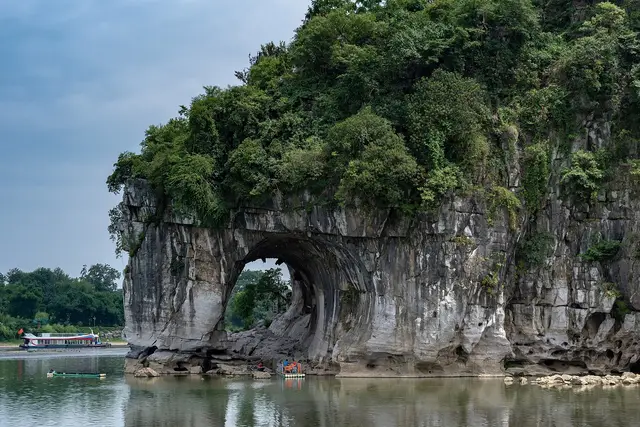
The cave sits close to Ludi Park’s other scenic spots, and it pairs naturally with a half-day that also takes in Guangming Hill or a return trip toward Elephant Trunk Hill and the Li River waterfront, both easy taxi rides back toward the city center.
Frequently asked questions
How long should I spend at Reed Flute Cave?
Plan for 1 to 1.5 hours: the guided walking loop covers about 500 meters through the main chambers, plus time getting to and from the entrance gate.
How do I get to Reed Flute Cave without a tour group?
Take public bus route 3 or 58 from central Guilin, or grab a taxi/ride-hail car — it's about 5km northwest of downtown and takes under 30 minutes either way.
What's the quietest time to visit?
Weekday mornings, before mid-morning tour buses arrive from the hotels. Avoid Chinese national holidays like Golden Week, when the single walking path gets congested.
Is the cave cold or damp — what should I wear?
It stays cool and humid year-round regardless of the season outside, so bring a light jacket and shoes with good grip; condensation on railings and the path is normal.
What else is nearby worth combining with this visit?
Guangming Hill and Ludi Park's other scenic corners are right next door, and Elephant Trunk Hill and the Li River waterfront are an easy taxi ride back toward central Guilin.
Plan your trip to Guilin
China eSIM & staying connected →
Some links above are affiliate links — if you book through them, Wander Atlas earns a small commission at no extra cost to you. It's how we keep every guide free.