Zhejiang Art Museum: Hangzhou Travel Guide
When to visit China: month-by-month weather, crowds and holidays →
✓ Facts verified via Google Places · Sep 3, 2026
At a glance
How this guide is made
Produced with AI assistance and reviewed against live data sources. Facts such as hours, ratings, and location come from Google Places; images are licensed or public domain. Details can change — please verify before visiting. Editorial policy
Why go
You come to the Zhejiang Art Museum not for a single blockbuster masterpiece but for the quiet pleasure of stepping out of the West Lake crowds into cool, high-ceilinged galleries showing contemporary Chinese ink painting, calligraphy, printmaking and photography. Zhejiang has one of China’s deepest traditions of ink art, this is the province that produced generations of literati painters, and the museum’s rotating exhibitions are how that tradition keeps talking to the present.
It’s a palate-cleanser between temple visits and lakeside photo stops, the kind of place where you slow your pace without meaning to.
Getting there
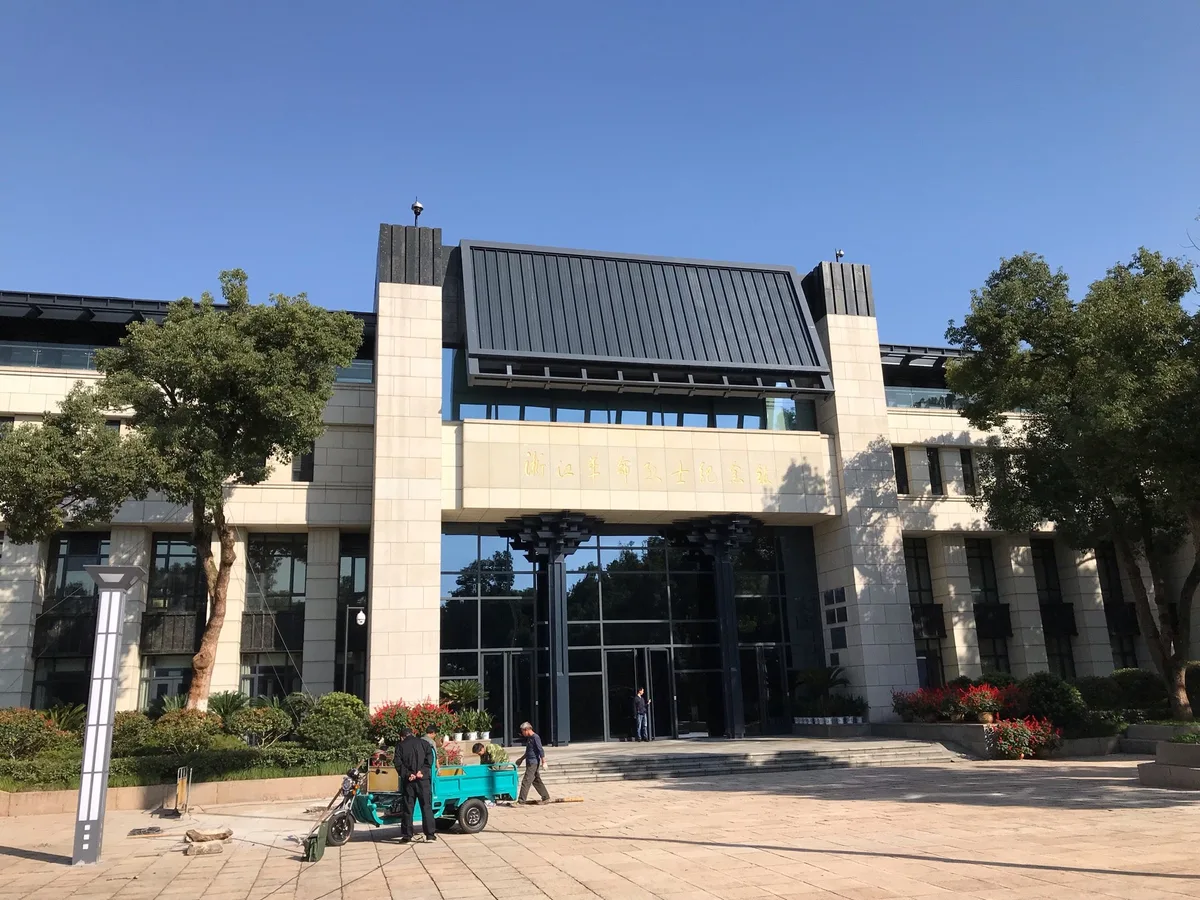
The museum sits at 138 Nan Shan Lu, on the southern arc of West Lake, in a stretch of the lakeshore locals call Nanshan Road, the same road that strings together the China Academy of Art’s main campus, Liuhe area approaches, and the causeway toward Leifeng Pagoda. If you’re coming from the lake itself, walk along the water past the willow trees and pedalo docks on Nanshan Road; the museum’s low-slung, dark-toned building with its angular roofline is easy to spot set back from the road.
Most visitors combine it on foot with Leifeng Pagoda (10–15 minutes’ walk) or the Su Causeway. There’s no metro station directly outside, so a taxi, bike-share, or the bus routes running along Nanshan Road are your practical options. Ask your hotel to confirm the current best bus number, since routes shift.
What to see
Inside, the museum is organized around big, light-filled halls that rotate through temporary shows rather than a single fixed permanent collection on constant display (so what you see depends on timing. Expect ink landscapes and calligraphy scrolls hung with generous space around them, sometimes paired with contemporary prints, sculpture, or photography that riff on classical Chinese forms. The building itself, with its dark stone cladding and deliberately austere lines, is worth studying as you walk between rooms) it’s a piece of understated regional architecture rather than a flashy showpiece, and it plays well against the greenery of the surrounding hillside. Labels are typically bilingual (Chinese/English), so even without a guide you can follow the arc of a show.

When to go
Because exhibitions rotate, there’s no single “best season” tied to the art itself, but the setting rewards a spring or autumn visit, when West Lake’s paths outside are at their most walkable and the light through the galleries’ windows is softest in late morning. Midday in summer can turn the surrounding lakeside into a crowded, humid slog, so treat the museum as an air-conditioned rest stop if you’re touring West Lake in July or August.
Plan on 45 minutes for a quick pass through one or two galleries, or up to 90 minutes if a major show is on and you want to linger over the calligraphy.
How to visit like a local
Go on a weekday morning, right after opening if you can manage it (locals treat this stretch of Nanshan Road as an early lap around the lake before the tour groups arrive, and the museum benefits from the same lull. Bring a passport or ID, since Chinese museums typically require it for entry even when admission is free, and don’t assume you can just walk in with a bag) larger bags often need to go through a checkpoint or storage.
Payment for any café or shop on site will be almost entirely mobile (WeChat Pay/Alipay) rather than cash, so have a Chinese payment app set up beforehand if you plan to buy anything. Dress and behave as you would in any quiet gallery: voices low, no flash photography near works on paper, and no touching scrolls or frames. The mistake first-time visitors make is treating this as a five-minute photo-op between West Lake sights. The galleries are calm enough that rushing through defeats the point; better to treat it as the deliberate slow beat in an otherwise fast day of sightseeing.
Nearby to combine
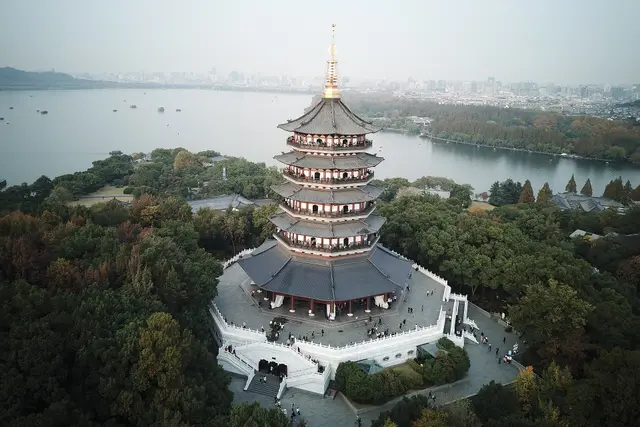
Pair the museum with a walk to Leifeng Pagoda for the pagoda’s views back over the lake, or continue along Nanshan Road toward the China Academy of Art campus, whose own galleries and student exhibitions are often free to wander into. If you want a full half-day loop, start at the museum in the morning, walk the Su Causeway at midday, and finish with an early-evening circuit of the lake as the light turns gold over the water.
Frequently asked questions
How do I get to Zhejiang Art Museum?
It's at 138 Nan Shan Lu on the southern shore of West Lake, Hangzhou. There's no metro stop right outside, so walk along the lakeside from Leifeng Pagoda or the Su Causeway (10–15 minutes), or take a taxi/bus along Nanshan Road.
How much does it cost to enter?
Admission policies and prices at Chinese public art museums change periodically and sometimes vary by exhibition, so check current admission (many public museums in China are free or low-cost with ID) before you go rather than assuming.
How long should I spend there?
Budget 45 minutes for a quick visit through one or two galleries, or up to 90 minutes if a major exhibition is running and you want to read the calligraphy and labels closely.
When is the best time to visit?
Weekday mornings are calmest, and spring or autumn gives the best light and comfortable walking weather along the lake outside. Avoid midday in peak summer heat if you're combining it with lakeside walking.
What's nearby that I can combine with a visit?
Leifeng Pagoda, the Su Causeway, and the China Academy of Art's Nanshan Road campus are all within easy walking distance, making it easy to build a half-day loop around West Lake's southern shore.
Plan your trip to Hangzhou
Some links above are affiliate links — if you book through them, Wander Atlas earns a small commission at no extra cost to you. It's how we keep every guide free.