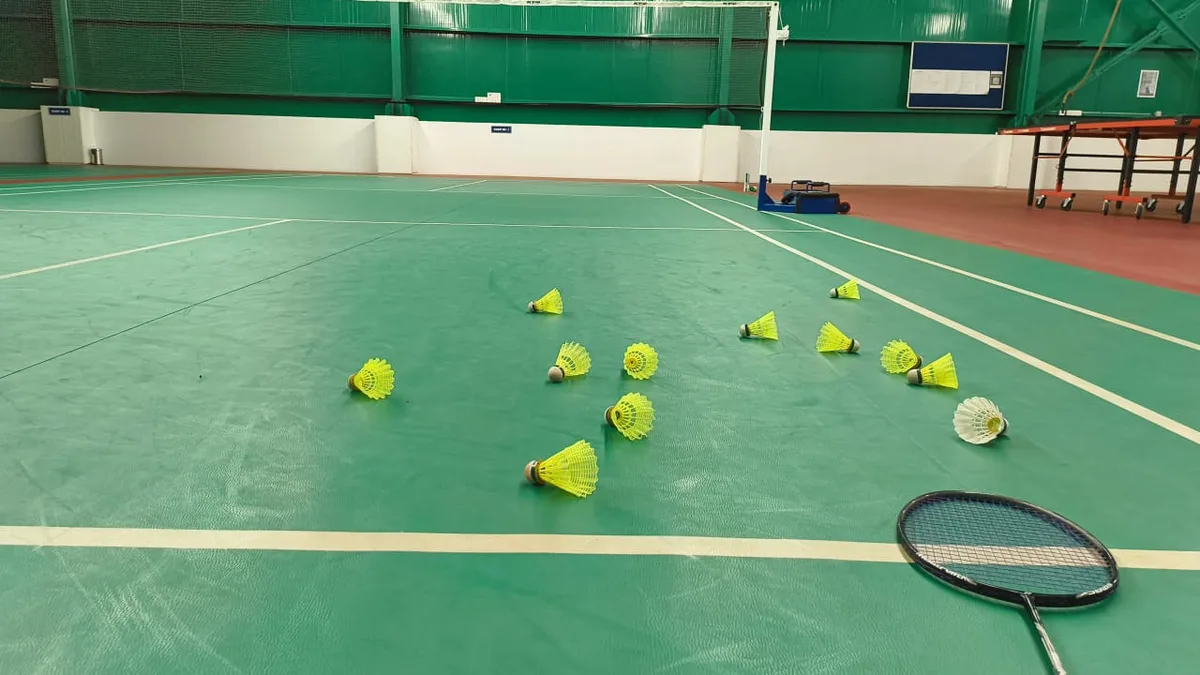
Six days, five draws, one arena
The Hong Kong Open takes six days and builds to the finals. The 2026 edition, branded the LI-NING Hong Kong Open, runs from Tuesday 17 November to Sunday 22 November. It sits at Super 500 level on the BWF World Tour, the middle rung of the circuit, which means meaningful ranking points and fields that usually include players from the world’s top 20.
Five disciplines share the courts:
- Men’s singles
- Women’s singles
- Men’s doubles
- Women’s doubles
- Mixed doubles
Early rounds pack several courts at once with matches all day. As the draw narrows the action moves to fewer courts, and the final day brings all five titles to a single show court.
Kai Tak Arena, not the Coliseum
The venue is newer than most people assume. Earlier editions were played at the Hong Kong Coliseum in Hung Hom. The 2026 tournament is held at Kai Tak Arena, the indoor hall inside Kai Tak Sports Park, built on the site of the old Kai Tak airport in Kowloon City District.
The nearest MTR stop is Kai Tak Station on the Tuen Ma Line, with Sung Wong Toi Station one stop along as an alternative. From Hong Kong Island, most visitors change to the Tuen Ma Line at Hung Hom or Admiralty. Attendees usually tap in and out with an Octopus card, or a contactless bank card at the gates.
Who fills the courts
China, Japan, Korea and Taiwan provide the core of the field, so expect most of the seeded names to come from those four. That also shapes the crowd. Taiwanese and mainland Chinese fans in particular travel for this one, and flags from several nations appear along the same rows.
The organiser has not set the entry list in these facts, so no names are given here. BWF rules fix the shape of a match:
- Best of three games to 21 points
- A 60-second interval when the leader reaches 11
- A two-minute break between games
A singles match runs from about 40 minutes up to well over an hour. Doubles matches are often quicker.
Sitting courtside without annoying anyone
Badminton crowds go quiet during rallies. The shuttle is light and drift matters, so the venue stays still while it is in play. Spectators stay seated through a point and use the 11-point interval or the break between games to find seats or head for food.
- Noise: clapping and chanting between points is normal. Shouting during serve is not.
- Photos: flash is generally barred at BWF events because it distracts players at the service line.
- Moving between courts: in the early rounds fans often follow a favourite from court to court, and they move only between games.
- Getting home: after the evening session, people usually walk to Kai Tak Station together. Many skip that rush by eating in Kowloon City first: Thai restaurants line South Wall Road, a short walk away.
Tickets and session times come from the organiser’s official channels and its ticketing partner, and that is where prices are posted. Full-day passes in the early rounds usually suit fans who want volume. The weekend semi-finals and finals are the sessions most people come for.
Frequently asked questions
When is the Hong Kong Open badminton 2026?
The LI-NING Hong Kong Open 2026 runs from Tuesday 17 November to Sunday 22 November 2026. The finals take place on the last day.
Where is the Hong Kong Open 2026 held?
At Kai Tak Arena, the indoor venue inside Kai Tak Sports Park in Kowloon City District. Earlier editions were played at the Hong Kong Coliseum in Hung Hom.
How do I get to Kai Tak Arena by MTR?
Take the Tuen Ma Line to Kai Tak Station, which is the closest stop. Sung Wong Toi on the same line is an alternative. From Hong Kong Island, change to the Tuen Ma Line at Admiralty or Hung Hom.
What level of tournament is the Hong Kong Open?
It is a BWF World Tour Super 500 event, with men's and women's singles, men's and women's doubles, and mixed doubles. The field draws heavily from China, Japan, Korea and Taiwan.
How long does a badminton match last?
Matches are best of three games to 21 points. Singles typically run from about 40 minutes to over an hour, and doubles are often shorter.
Plan your trip to Hong Kong
Hong Kong eSIM & staying connected →
Some links above are affiliate links — if you book through them, Wander Atlas earns a small commission at no extra cost to you. It's how we keep every guide free.
Related guides
 event
5 Seconds of Summer - EVERYONE'S A STAR! World Tour: Dates, Tickets & Venue (Hong Kong)
 event
ATP Hong Kong Tennis Open: Dates, Tickets & Venue (Hong Kong)
 event
BIGBANG XX: Cosmos World Tour: Dates, Tickets & Venue (Hong Kong)
 event