
Five days in December
The tour ends here. The WTT Finals are the last stop of the World Table Tennis season, and the 2026 edition is held in Hong Kong from December 9 to 13.
This is not an open draw. Players earn their place through results across the whole year, so the field is a short list of the strongest players on the circuit. Every session matters, because a closed draw like this has no easy early rounds.
What you actually watch
A table tennis arena feels small in a good way. There is one blue table under hard white light, barriers ringing a court of coloured flooring, and umpires seated at the side. Even from the upper rows you can follow the ball, and you can hear it.
The sound is half of it. You get the sharp crack of a loop drive, the soft knock of a short serve, and squeaking shoes as players lunge for a wide ball. Rallies at this level can turn in under a second, so you stop watching the ball and start watching the players’ feet.
Early sessions usually pack several matches into one ticket. Many fans favour these for value and variety. The final days narrow to the medal matches, and that is where demand concentrates.
Where it’s played
World Table Tennis, the professional arm of the International Table Tennis Federation, names the venue for each edition on its official site. When Hong Kong hosted the 2025 edition, it was staged at the Hong Kong Coliseum in Hung Hom, Kowloon. That is the city’s long-standing indoor arena for big concerts and sport.
The Coliseum sits directly beside Hung Hom MTR station, which serves both the East Rail Line and the Tuen Ma Line. A covered footbridge links the station to the arena, so the walk stays dry and short. From Tsim Sha Tsui it’s one stop, or a flat walk of roughly twenty minutes along the harbourfront.
Most international visitors stay in Tsim Sha Tsui or Hung Hom itself. That keeps the trip to the arena to one stop or none.
Tickets and seating
Ticket links, session times and seat maps are on the WTT official site, which lists the authorised sellers for each edition. Prices are shown there too, by session and seating zone.
A few patterns hold at most table tennis events:
- Sessions are ticketed separately. A day ticket rarely covers both afternoon and evening play.
- Lower side seats are the most sought after. They give you the clearest view of spin and footwork.
- End-on seats show the angles. From behind the table you see how far wide the ball is played.
- Final-day sessions draw the biggest crowds. Seats for the title matches are the hardest to get.
Between points, not during them
Table tennis crowds follow quiet rules. Fans stay silent from the toss of the serve until the point ends, then cheer hard. Shouting during a rally earns glares, and sometimes a pause from the umpire.
Spectators who leave their seats mid-match usually wait until the players switch ends between games. Flash photography is off-limits because the ball is small and fast, and a flash can distract a player. Phones mostly come out at changeovers.
You’ll hear Cantonese around you. Locals often call the sport bing bam bo (乒乓波), a cheerful sound-alike of ping pong. Mainland Chinese, Japanese and European supporters bring flags and organised chants, and the crowd tends to reward a good point whoever wins it.
For the MTR, buses and the convenience stores near the station, most people tap an Octopus card or a contactless bank card. Arena food stalls are basic, so fans often eat before a session in the Hung Hom and Whampoa streets nearby.
Filling the gaps in December
December is one of the more comfortable months to visit Hong Kong. It’s usually dry and mild, with cool evenings that suit a walk along the water after an evening session.
Easy add-ons near the arena:
- Tsim Sha Tsui Promenade: harbour views across to Hong Kong Island’s skyline, a short walk from Hung Hom.
- Avenue of Stars: the waterfront stretch with handprints and statues from Hong Kong cinema.
- Temple Street Night Market: Jordan or Yau Ma Tei stations, for late snacks and street stalls after evening play.
- Star Ferry: the slow, cheap crossing from Tsim Sha Tsui to Central, a good way to see the harbour between sessions.
- Whampoa: the ship-shaped Whampoa mall and dense local restaurants, one MTR stop from Hung Hom.
Many visitors who travel in for the Finals stay the full five days, mixing early-round sessions with afternoons out in Kowloon.
Frequently asked questions
When are the 2026 WTT Finals in Hong Kong?
The 2026 WTT Finals run from December 9 to 13, 2026. World Table Tennis publishes the session-by-session schedule on its official site.
Where are the WTT Finals held in Hong Kong?
World Table Tennis names the venue for each edition on its official site. The 2025 edition in Hong Kong was staged at the Hong Kong Coliseum in Hung Hom, right next to Hung Hom MTR station (East Rail and Tuen Ma lines).
Where do I get tickets?
The WTT official site links to the authorised ticket sellers for each edition, with seat maps and prices by session. Sessions are usually ticketed separately, and final-day seats are the most in demand.
What are the rules for spectators?
Spectators stay quiet from the serve until the point ends, then cheer. They avoid flash photography and usually move seats only when players change ends between games.
What else is near the venue?
From Hung Hom you can walk to the Tsim Sha Tsui Promenade and the Avenue of Stars. The Star Ferry crosses to Central, and Temple Street Night Market is a short MTR ride away for late food after evening sessions.
Plan your trip to Hong Kong
Hong Kong eSIM & staying connected →
Some links above are affiliate links — if you book through them, Wander Atlas earns a small commission at no extra cost to you. It's how we keep every guide free.
Related guides
 event
5 Seconds of Summer - EVERYONE'S A STAR! World Tour: Dates, Tickets & Venue (Hong Kong)
 event
Andy Lau Hong Kong Coliseum Concert: Dates, Tickets & Venue (Hong Kong)
 event
ASICS Hong Kong Half-Marathon Championships: Dates, Tickets & Venue (Hong Kong)
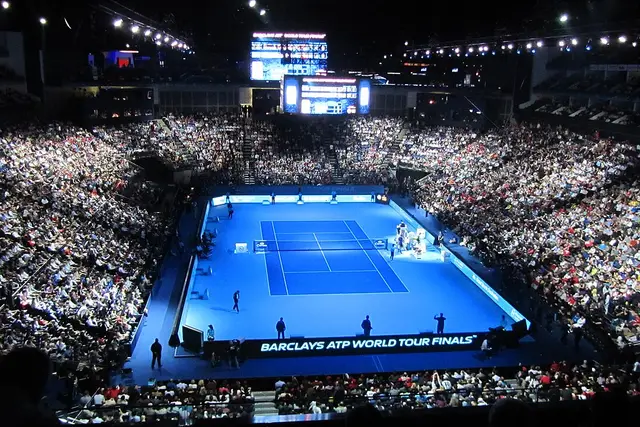 event