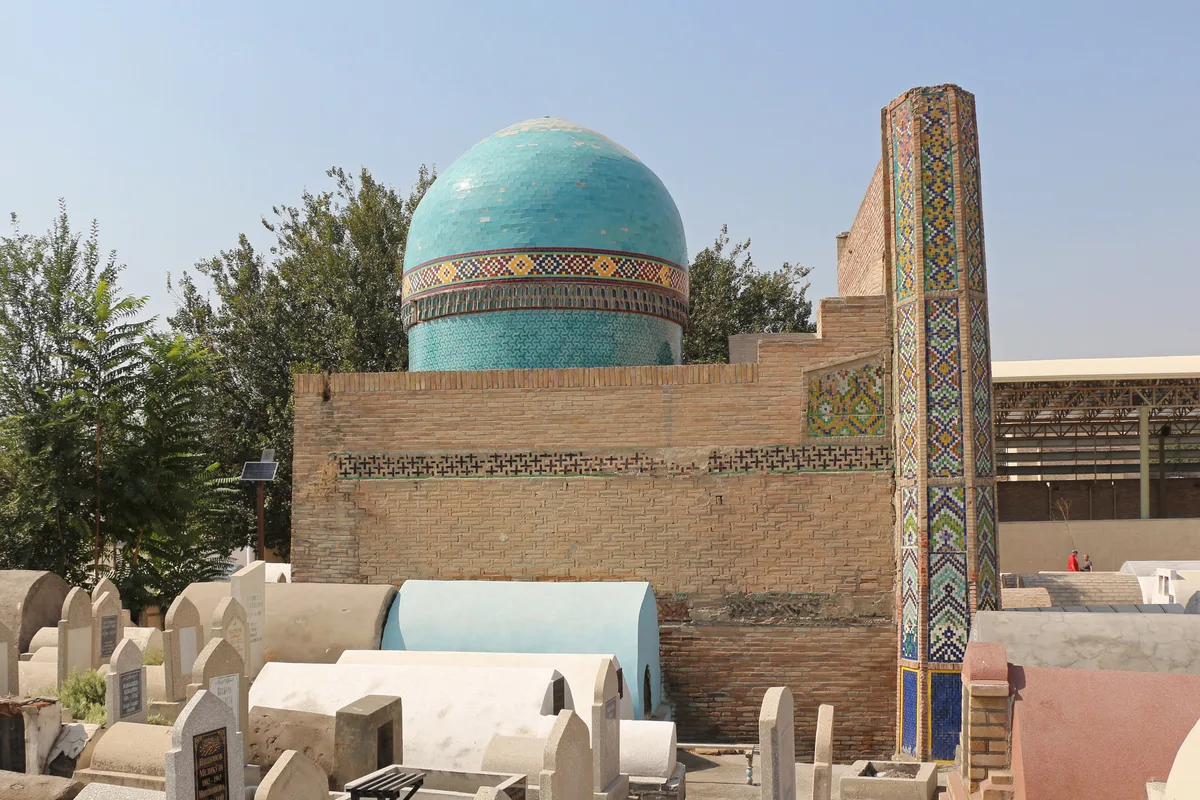
Kokand doesn’t announce this one. You turn off a quiet residential road onto an unmarked lane, past low mud-brick walls and a scatter of apricot trees, and the mausoleum appears almost without warning, a squat, domed structure the colour of baked earth, standing alone in a patch of open ground.
Why this place matters
Modari Khan means “mother of the khan”. This is the resting place of a royal mother from the Kokand Khanate, the 19th-century Uzbek state that once ruled much of the Fergana Valley. Unlike the grand, restored palaces downtown, this tomb has kept its worn, unpolished edges. The brickwork is patched, the dome slightly weathered, and that rawness is exactly what makes it worth the detour.
What you’ll actually see
The structure is small enough to take in at a glance, but the details reward a slow walk around it.
- A ribbed dome rising over a square brick chamber, typical of Timurid-influenced funerary architecture
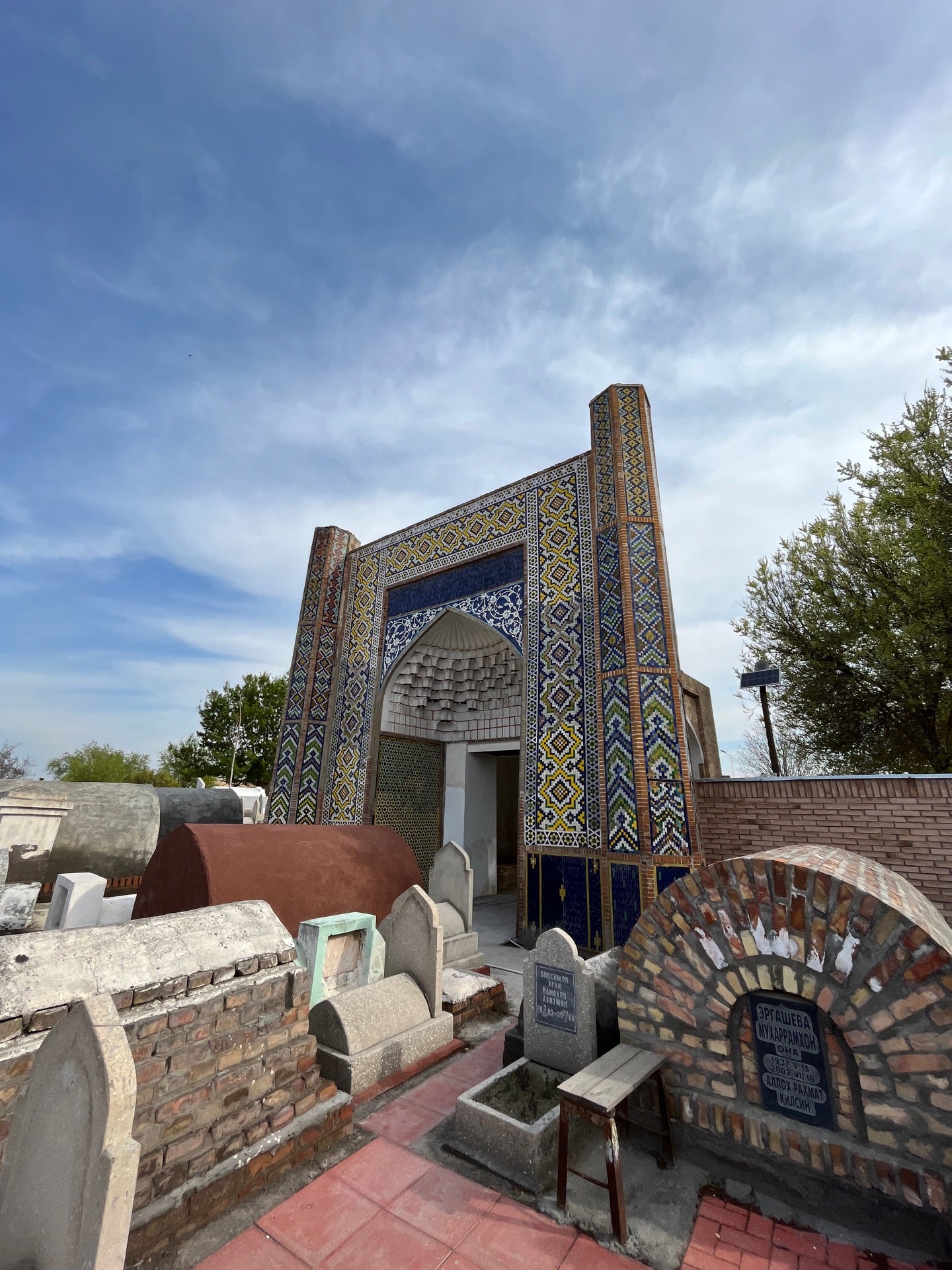
- Faded majolica tile fragments clinging to sections of the facade, blue and turquoise against the tan brick
- A modest interior chamber holding the tomb itself, dim and cool even at midday
- Surrounding grounds with little formal landscaping, just packed earth, a few trees, and silence
There’s no ticket booth, no gift shop, no crowd control barrier. You’re essentially alone with a 19th-century royal tomb, which is a rare thing anywhere in Central Asia’s more heavily touristed sites.
Getting there
The mausoleum sits at coordinates marked GXQ3+C92 on an unnamed road in Kokand, Fergana Region. A spot that doesn’t show up on paper maps but is easy to punch into a phone’s map app. Kokand itself is reached by shared taxi or marshrutka from Fergana city (about an hour) or by train and bus from Tashkent (roughly 4-5 hours by road).
Once in Kokand, a local taxi is the simplest way to reach the site, since it’s off the main avenues most drivers default to. Show the driver the map pin rather than relying on a name. Few will know “Modari Khan” off the top of their head.
Pairing it with the rest of Kokand
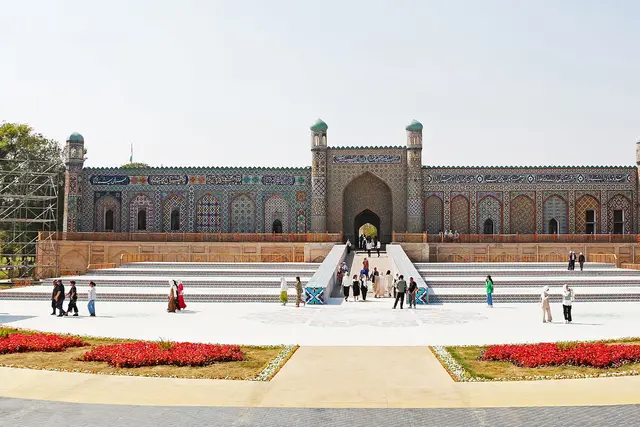
Modari Khan works best as one stop on a short loop rather than a destination on its own. The Khudayar Khan Palace, Kokand’s showpiece 19th-century royal residence with its tiled facade and courtyards, is the natural anchor for the day. The Dakhma-i-Shakhon (Tomb of Kings) and the Juma Mosque are both within a short drive too.
Because Modari Khan takes only 20-30 minutes to see properly, slot it in either right before or after the palace, the contrast between the restored grandeur of Khudayar Khan and the bare, quiet dignity of this smaller tomb is part of what makes the visit memorable.
How to visit like a local
There’s no formal entry system here, so a few behavioral notes matter more than logistics.
- Dress modestly, as at any mausoleum in Uzbekistan, shoulders and knees covered
- Keep your voice low near the tomb chamber; it’s still treated as a place of quiet respect, not a photo backdrop
- There’s no ticket window, so don’t expect a guide or signage in English, a translation app helps for any plaques you find
- Pay for your taxi or driver in cash, in Uzbek som; card readers are not a given this far from the center
- The biggest mistake visitors make is skipping this in favor of only the palace, you lose the sense of scale and quiet that makes Kokand’s lesser-known sites distinct from its headline ones
Because it’s genuinely under-the-radar rather than simply overlooked, you won’t find tour buses or ticket queues here. That also means there’s no café, restroom, or shaded seating on site, so plan your comfort stops around the palace or a chaikhana (teahouse) back in town. Morning visits are pleasant for the softer light on the brick facade, and since there’s no posted schedule, simply going whenever you’re passing through Kokand works fine. This isn’t a place that gets busy at any particular hour.
Bring a hat and water if it’s summer; the region gets fiercely hot and there’s no shade shelter at the tomb itself. A camera with a decent lens is worth it for the tilework close-ups, since the fragments are small and easy to miss from a distance.
Frequently asked questions
How do I get to Modari Khan Mausoleum?
Take a taxi or rented car in Kokand and navigate using the map pin (GXQ3+C92) rather than the name, since it's on an unnamed side road most drivers won't recognize by address.
How much time should I plan for the visit?
20-30 minutes is enough to walk around the dome, look at the tile fragments, and step into the small tomb chamber.
Is there an entry fee?
There's no formal ticket booth on site; bring some cash in Uzbek som just in case, but don't expect an official admission system like at the Khudayar Khan Palace.
What else should I see nearby?
Pair it with the Khudayar Khan Palace, the Dakhma-i-Shakhon tomb complex, and the Juma Mosque, all a short drive away in central Kokand.
Is it crowded?
No — it's genuinely under-the-radar with no tour groups or queues, so you'll likely have the site to yourself at any time of day.
Plan your trip to Kokand
Some links above are affiliate links — if you book through them, Wander Atlas earns a small commission at no extra cost to you. It's how we keep every guide free.
Related guides
 attraction
 Palace of Khudáyár Khán: Kokand Travel Guide (4.7★)
 hidden gem
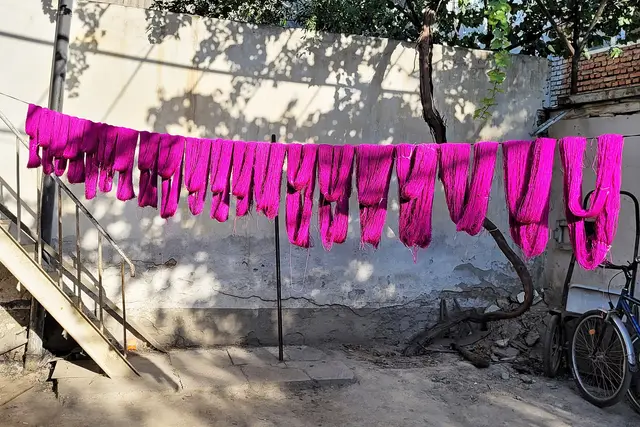
 Silk factory: Margilan Travel Guide (5.0★)
 hidden gem
 Yangi O'zbekiston - Yoshlar ziyo maskani: Namangan Travel Guide
 attraction