Wat Kaew Korawaram: Krabi Travel Guide (4.6★)
When to visit Thailand: month-by-month weather, crowds and holidays →
✓ Facts verified via Google Places · Sep 8, 2026
At a glance
Opening hours
- Monday: 8:00 AM – 4:30 PM
- Tuesday: 8:00 AM – 4:30 PM
- Wednesday: 8:00 AM – 4:30 PM
- Thursday: 8:00 AM – 4:30 PM
- Friday: 8:00 AM – 4:30 PM
- Saturday: Closed
- Sunday: Closed
How this guide is made
Produced with AI assistance and reviewed against live data sources. Facts such as hours, ratings, and location come from Google Places; images are licensed or public domain. Details can change — please verify before visiting. Editorial policy
Why go
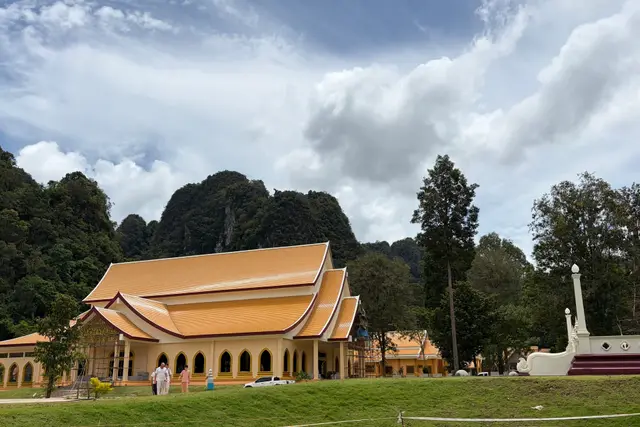
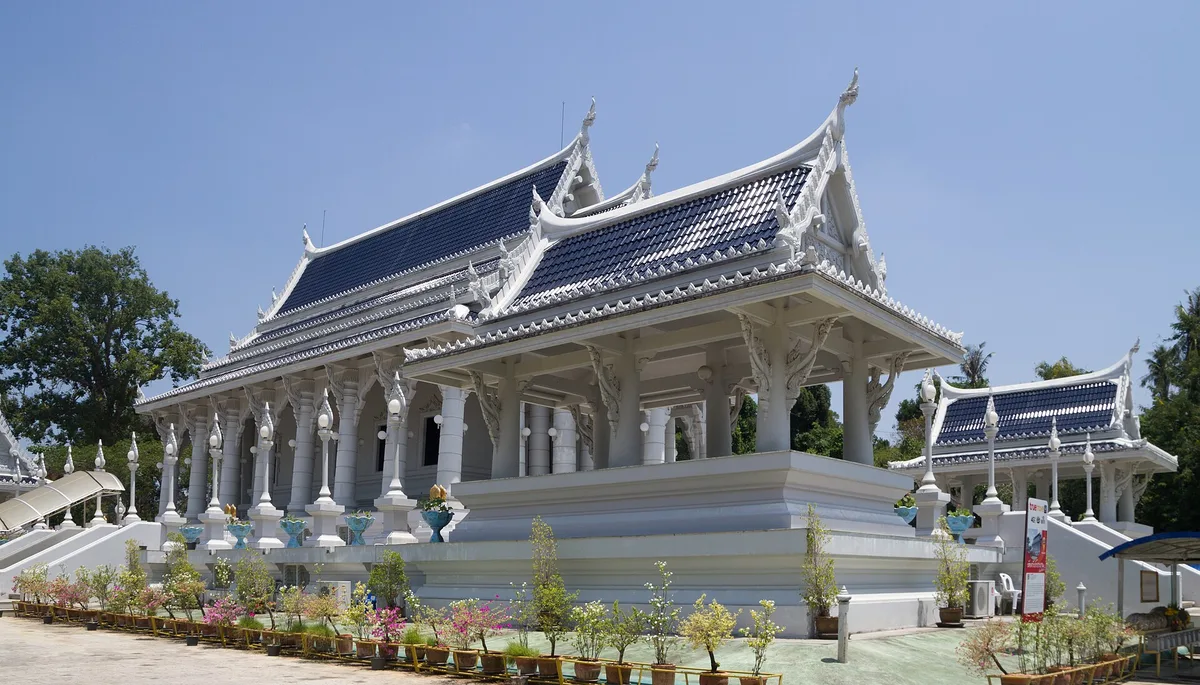
You don’t come to Wat Kaew Korawaram expecting a ruin or a relic on the scale of Ayutthaya, you come because it’s the temple that Krabi Town actually uses, and it shows. The main viharn (ordination hall) is a modern construction, finished in the early 1990s, but it’s built with an unapologetic wow factor: white walls trimmed in gold, a multi-tiered roof that catches the light, and naga serpents guarding every staircase.
Locals still bring offerings here, monks still chant at dawn, and the whole complex sits on a small forested hill that gives you one of the better free views over Krabi Town’s tin roofs and the limestone karsts beyond.
Getting there
The temple sits on Thanon Isara (Isara Road) in Tambon Pak Nam, right in the historic core of Krabi Town, close enough to the Chao Fah Pier riverside walk and the Krabi Town night market that you can fold it into an evening stroll. If you’re staying in town, it’s a 10–15 minute walk from most guesthouses near the river; a tuk-tuk from the pier area or bus terminal costs only a few minutes’ ride and drivers all know it by name.
There’s no MRT or train system in Krabi, so tuk-tuk, motorbike taxi, or your own rented scooter are the realistic options, parking is easy and free at the temple grounds.
What to see
Climb the naga-flanked staircase to the main viharn first. Take your shoes off before stepping onto the platform, as you would at any Thai temple, and look up at the roof finials (chofah) that curl like flames against the sky. Inside, the principal Buddha image sits under a coffered ceiling painted with murals; incense smoke curls up from the offering tables near the entrance.
From there, follow the path around the back of the hill to find the giant standing golden Buddha statue that overlooks the town. This is the image most visitors remember, partly for its scale and partly for the view alongside it: corrugated rooftops, the Krabi River snaking toward the sea, and jungle-covered limestone peaks in the distance. Smaller shrine buildings and bell towers are scattered around the grounds, worth a slow lap if you have the time.

When to go
Early morning (before 9am) or late afternoon (after 4pm) are the most comfortable windows, Krabi’s midday heat is intense and there’s limited shade on the open staircase and hilltop viewpoint. Late afternoon has the edge: the light turns warm and low, which flatters the gold roof tiles and makes for the best photos over the town. Avoid visiting during heavy midday rain showers in the wet season (roughly June to October), since the outdoor staircases and viewpoint path can get slick.
How to visit like a local
This is a working temple, not a museum, so the etiquette that matters here is the etiquette that matters everywhere in Thailand: cover your shoulders and knees, remove your shoes before entering any building with a Buddha image, and keep your voice down if a monk is chanting or someone is praying nearby. There’s no entrance fee and no ticket booth, donations go in the boxes near the main hall if you’d like to leave one, and it’s respectful to do so quietly rather than making a show of it.
Women should avoid touching monks directly. Locals tend to visit in the cool hours around sunrise or just before sunset, both to pay respects and to catch the view, so timing your visit the same way puts you in step with how the temple is actually used rather than just photographed. The most common mistake visitors make is treating the hilltop Buddha statue purely as a photo backdrop and skipping the viharn itself, the ordination hall’s interior murals and the atmosphere of an active place of worship are the more memorable half of the visit.
Nearby
Once you’re down from the hill, the Krabi Town night market and the Chao Fah Pier promenade are both close enough to combine into one outing, especially if you time your temple visit for late afternoon and let it run into evening. Fish-feeding at the mangrove boardwalk near the pier and the town’s clock tower roundabout are both walkable from the temple gates, making this a natural anchor for a half-day loop around central Krabi Town.
Frequently asked questions
How do I get to Wat Kaew Korawaram from central Krabi Town?
It's on Thanon Isara in Tambon Pak Nam, a 10–15 minute walk from most riverside guesthouses, or a few minutes by tuk-tuk from Chao Fah Pier or the bus terminal. There's free parking if you're on a rented scooter.
Is there an entrance fee?
No official ticket — entry is free, though donation boxes are placed near the main hall for those who wish to contribute.
How long should I spend there?
Around 45 minutes to an hour covers the main viharn, the hilltop golden Buddha statue, and the surrounding shrine buildings without rushing.
What should I wear?
Standard Thai temple etiquette applies: cover your shoulders and knees, and be ready to remove your shoes before entering any hall with a Buddha image.
When is the best time of day to visit?
Early morning before 9am or late afternoon after 4pm, avoiding the intense midday heat and, in the June–October wet season, sudden downpours that make the outdoor staircases slippery.
Plan your trip to Krabi
Some links above are affiliate links — if you book through them, Wander Atlas earns a small commission at no extra cost to you. It's how we keep every guide free.