Why Kubah is worth the drive
You don’t come to Kubah for one famous sight. You come for the forest itself, dipterocarp trees leaning over sandstone ridges, wild palms crowding the understory, the air thick and green.
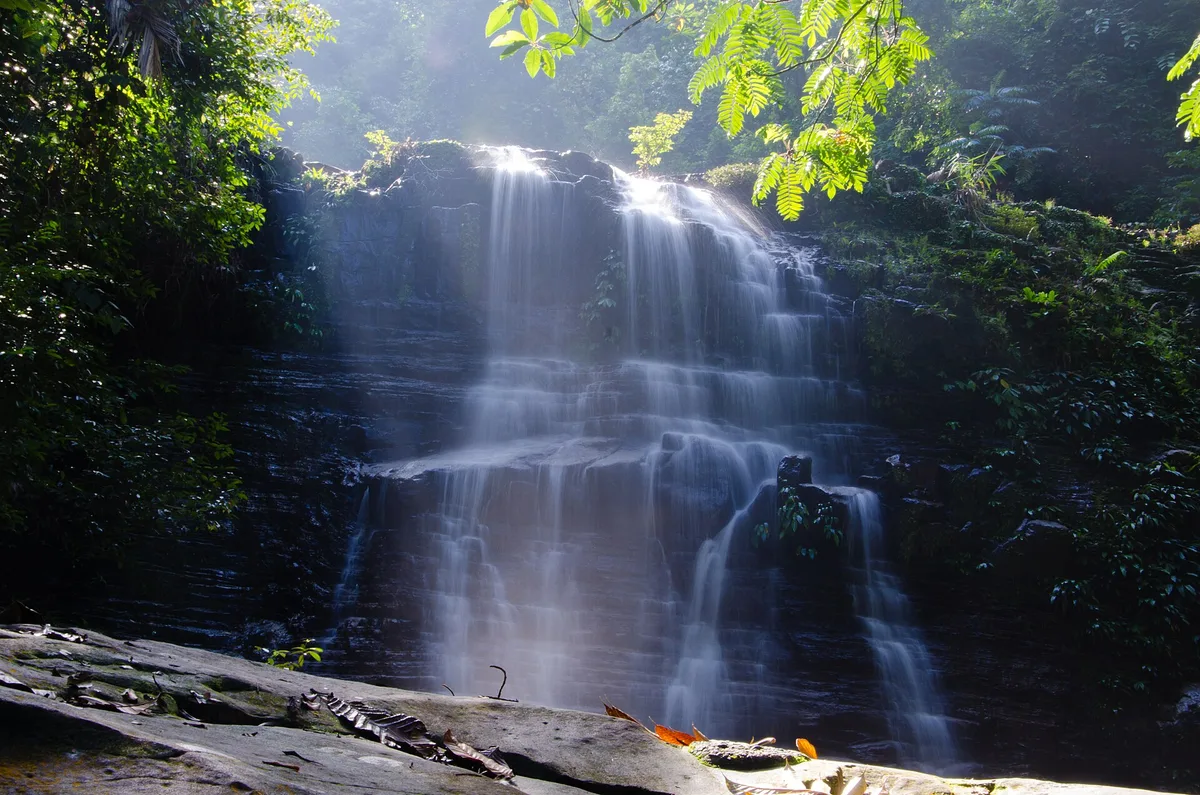
It’s about 20km from central Kuching, small enough as national parks go, but the terrain punches above its size. Trails climb steadily through jungle to viewpoints over the Sarawak coastline and down to waterfalls where the water runs tea-dark over rock.
Getting there
Most visitors drive or take a taxi/Grab from Kuching city, roughly 30-40 minutes depending on traffic. There’s no reliable public bus that drops you at the gate, so arranging a car, rented or hired, makes the day far less stressful.
If you’re staying near the Kuching waterfront, ask your hotel about arranging a return taxi, since flagging one down near the park afterward can take a while.
What to see and do inside
Register at the park headquarters first. Staff can point you to whichever trail suits your energy and time.
The main options:
- Waterfall Trail – an easier walk to a swimmable cascade, good for families
- Selang Trail – steeper, winds through denser forest with palm groves
- Rayu Trail – longer, links toward Matang Wildlife Centre if you want a full-day trek
- Summit Trail – the toughest climb, rewarded with coastal viewpoints on clear days
Bring water and watch your footing. The paths get slick after rain, and Kuching’s rain doesn’t ask permission.
Wildlife here is shy but real: bearded pigs root through the undergrowth, and the forest hums with cicadas and the occasional hornbill call overhead. Don’t expect orangutans, for those, most people continue to nearby Semenggoh Wildlife Centre or Matang, which connects via the Rayu Trail.

When to go
Weekday mornings, 7am to noon, are consistently the quietest stretch here. Arrive then and you’ll often have long sections of trail to yourself.
Weekends pick up steam through the afternoon, with the busiest crush typically rolling from 5pm into the evening as day-trippers and picnicking groups arrive. If you’re after solitude on the trails, avoid that window entirely.
Sarawak’s equatorial climate means heat and humidity year-round, so an early start also just makes the climbing more bearable. Rain can arrive any afternoon, even outside the official monsoon months.
How to visit like a local
Come early, come light, and register at the counter before you set off. It’s how the park tracks who’s on the trails.
Practical notes:
- Pay entrance and any trail fees in cash at the counter; card acceptance out here isn’t guaranteed
- Wear proper closed shoes, not sandals. The sandstone gets slippery near the waterfalls
- Carry your own water and a snack; there’s no real food stop once you’re past the entrance
- Tell the ranger which trail you’re taking and your rough return time
The mistake most first-timers make is treating this like a quick photo stop. The park rewards a half-day, not a drive-by, build in time to actually sit by the waterfall rather than rushing through.
Since this isn’t a place locals treat as an everyday haunt so much as a well-known day-trip destination, you won’t find crowds of regulars, but weekday mornings still feel noticeably calmer than the tour-bus energy of a Saturday afternoon.
Nearby, if you have more time
Pair Kubah with Matang Wildlife Centre, connected by the Rayu Trail for hikers, or drive there separately if you’d rather skip the trek.
Semenggoh Wildlife Centre, Kuching’s best-known spot for semi-wild orangutans, sits on the opposite side of the city and works well as a separate half-day. Annah Rais longhouse is another possible add-on if you want a cultural stop to balance the forest.
Give Kubah itself three to four hours minimum, less if you only do the Waterfall Trail, more if you’re chasing the summit viewpoint.
Frequently asked questions
How do I get to Kubah National Park from Kuching city?
There's no direct public bus, so most visitors drive, hire a car, or take a taxi/Grab — the trip takes roughly 30-40 minutes covering about 20km.
When is the quietest time to visit?
Weekday mornings between 7am and 12pm are consistently the calmest window. Weekends, especially from 5pm onward, get considerably busier.
How long should I plan for a visit?
Budget at least 3-4 hours for a proper trail plus waterfall time; longer if you attempt the Summit Trail or connect through to Matang via the Rayu Trail.
Can I see orangutans at Kubah?
Not reliably — wildlife here tends toward bearded pigs, hornbills, and smaller forest creatures. For orangutans, head to nearby Semenggoh Wildlife Centre or Matang Wildlife Centre.
What should I bring?
Cash for entrance fees, closed-toe shoes for slippery sandstone sections, water, and a light rain layer since afternoon showers are common year-round.
Plan your trip to Kuching
Some links above are affiliate links — if you book through them, Wander Atlas earns a small commission at no extra cost to you. It's how we keep every guide free.
Related guides
 attraction
 Borneo Cultures Museum: Kuching Travel Guide (4.7★)
 attraction
 Tua Pek Kong Temple: Kuching Travel Guide (4.5★)
 attraction
 Malaysia-China Friendship Park: Kuching Travel Guide (4.6★)
 hidden gem