Old Las Vegas Mormon Fort State Historic Park: Travel Guide
When to visit United States: month-by-month weather, crowds and holidays →
✓ Facts verified via Google Places · Sep 8, 2026
At a glance
Opening hours
- Monday: Closed
- Tuesday: 8:00 AM – 4:00 PM
- Wednesday: 8:00 AM – 4:00 PM
- Thursday: 8:00 AM – 4:00 PM
- Friday: 8:00 AM – 4:00 PM
- Saturday: 8:00 AM – 4:00 PM
- Sunday: Closed
How this guide is made
Produced with AI assistance and reviewed against live data sources. Facts such as hours, ratings, and location come from Google Places; images are licensed or public domain. Details can change — please verify before visiting. Editorial policy
Why this patch of adobe matters
Everything about modern Las Vegas (the casinos, the airport, the sprawl of subdivisions pushing into the Mojave) traces back to a small square of sun-baked mud brick a few blocks north of Fremont Street. In 1855, a group of Mormon missionaries sent from Salt Lake City built an adobe fort here to protect a way station along the Old Spanish Trail, drawn by a natural artesian spring that made this one of the only reliable water sources between Utah and Southern California.
That fort is the reason “Las Vegas”, Spanish for “the meadows”, exists at all, and the surviving fragment of it is the oldest non-native structure still standing in Nevada. Stand at the reconstructed wall and you’re looking at the literal foundation stone of the city’s timeline, decades before a single slot machine arrived.
What you actually see
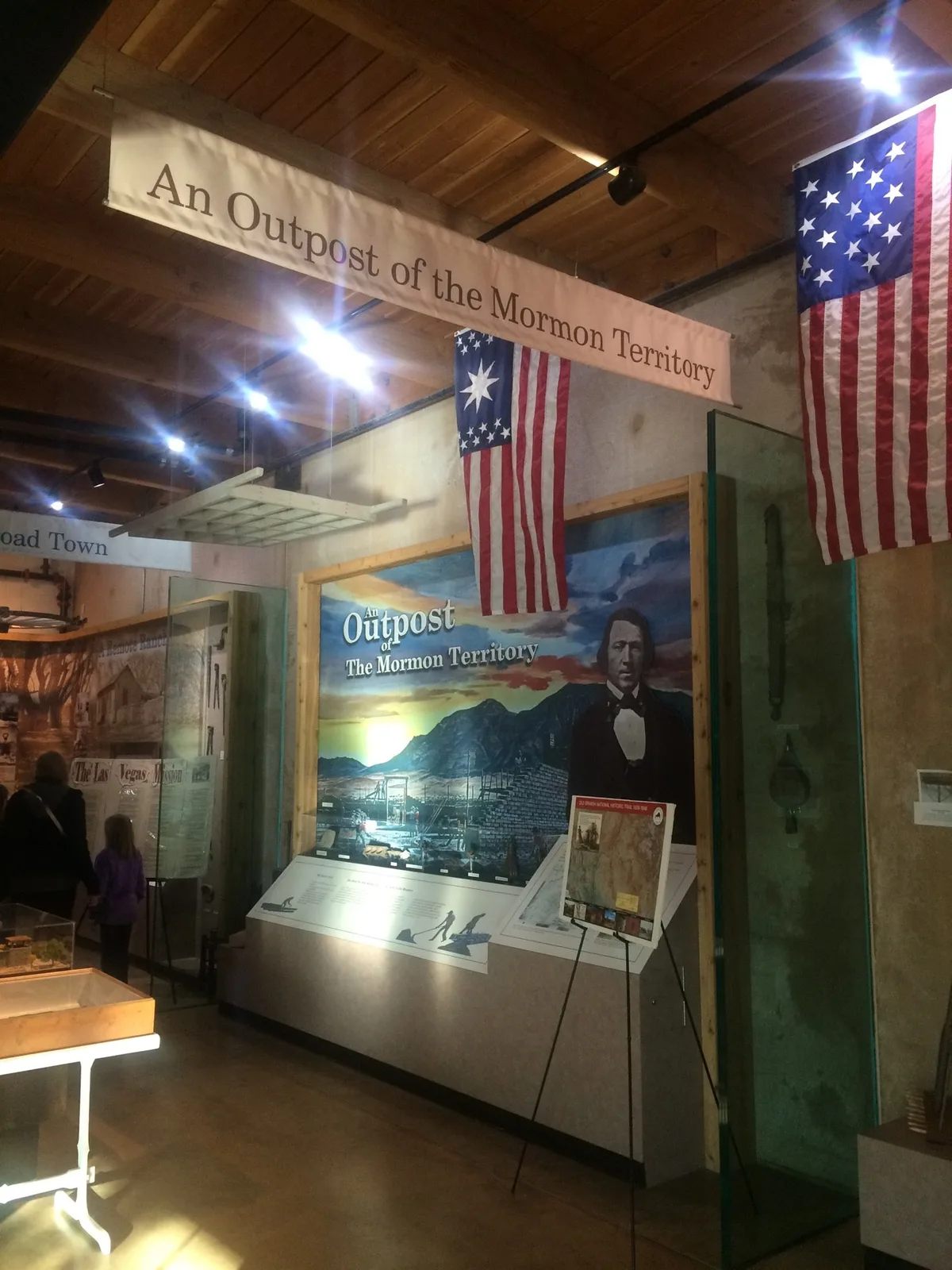
Don’t expect a sprawling fort complex. What survives is one original adobe room, incorporated into a small reconstructed perimeter wall, plus a modest visitor center with exhibits on the Southern Paiute people who lived here first, the Mormon missionaries, the Old Spanish Trail trade route, and the ranching era that followed the mission’s abandonment. Outside, a shaded courtyard holds interpretive panels, a small orchard-and-garden area meant to echo the original mission plantings, and a rebuilt wagon and corral setup that gives you a sense of scale.
It’s compact, you can walk the whole site in well under an hour, but the exhibits are well curated rather than skimpy, and the setting itself, a patch of quiet green against the downtown skyline, is the real payoff.
Getting there
The park sits at 500 E Washington Ave, right where Las Vegas Boulevard meets Washington, about a 10-minute drive from the Strip, and closer still from downtown/Fremont Street, an easy 15-20 minute walk or short bus ride up Las Vegas Boulevard. There’s a small on-site parking lot. If you’re using RTC transit, buses running along Las Vegas Boulevard/Main Street stop within a couple of blocks.
Because it’s tucked just north of the Fremont East district, it pairs naturally with a downtown itinerary: see the fort in the morning, then walk south into the Fremont Street Experience or the Neon Museum later in the day.
When to go
This is an outdoor-adjacent site with limited shade, so timing matters more than at an indoor museum. Aim for a weekday morning, especially October through April when Las Vegas temperatures are mild, summer mornings work too, but you’ll want to be there right at opening before the courtyard heats up, since afternoons from May to September regularly push past 100°F (38°C).
Because it’s a state historic park rather than a Strip attraction, it never gets the crowds of a casino or the Neon Museum, so you’re unlikely to be jostling for space at the exhibits regardless of when you show up. Confirm current opening hours and admission on the Nevada State Parks website before you go, since hours can shift seasonally.
How to visit like a local
Locals treat this less as a headline attraction and more as a quick, worthwhile detour (the kind of place you fold into a downtown morning rather than plan a whole day around. Go early, before the heat builds and before any school groups arrive later in the morning. Admission is inexpensive by Vegas standards (small fee, often with a discount for Nevada residents and children under a certain age free) check current rates at the gate or online), and payment is straightforward by card or cash at the visitor center desk.
There’s no ticket line to worry about and no reservation system, you just walk up. Read the exhibits before you walk the outdoor loop; the context makes the plain adobe wall far more meaningful than it looks at first glance. The mistake most visitors make is treating it as a five-minute photo stop and rushing through, slow down at the courtyard panels, since that’s where the Southern Paiute and Old Spanish Trail history (the parts most people skip past) actually gets explained.
Nearby, while you’re in the area
Combine your visit with the Springs Preserve, a larger nature and history museum campus about a 10-minute drive away built around the same natural spring system that made the fort’s location viable in the first place. Downtown’s Fremont Street Experience, the Neon Museum, and the Arts District are all within a short drive or a manageable walk, making the fort a sensible first or last stop on a downtown-focused half-day rather than a standalone trip from the Strip.
Frequently asked questions
How much time should I budget for the Old Las Vegas Mormon Fort?
About 45 minutes to an hour is enough to see the visitor center exhibits and walk the small outdoor courtyard and adobe wall.
How do I get there from the Las Vegas Strip?
It's roughly a 10-minute drive or rideshare (around $10-15) from the Strip. From downtown/Fremont Street it's an easy 15-20 minute walk or a short bus ride up Las Vegas Boulevard.
What's the best time of day and year to visit?
Weekday mornings are quietest and most comfortable. Visit October through April for mild temperatures, or arrive right at opening in summer to avoid the afternoon heat, which regularly tops 100°F (38°C) May through September.
Is it worth visiting if I'm not a history buff?
Yes, briefly — it's the site where Las Vegas itself began, thanks to the artesian spring that once flowed here, and the exhibits explain that story clearly in a small, easy-to-digest space even for casual visitors.
What else is nearby?
The Springs Preserve is about a 10-minute drive away and expands on the same natural-spring history. Downtown's Fremont Street Experience, the Neon Museum, and the Arts District are all a short drive or walk south.
Plan your trip to Las Vegas
Some links above are affiliate links — if you book through them, Wander Atlas earns a small commission at no extra cost to you. It's how we keep every guide free.