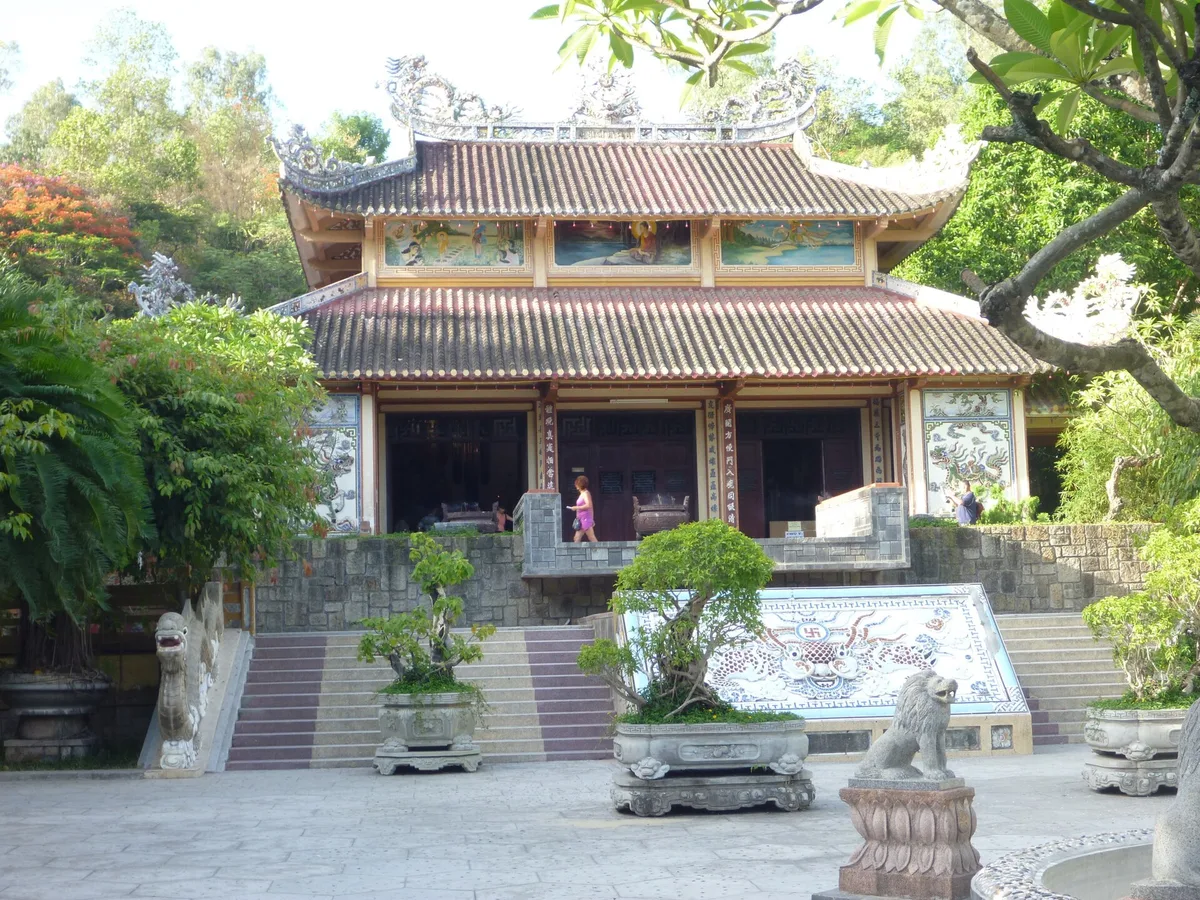
Long Son Pagoda doesn’t try to be subtle. From the road on Đ. 23 Tháng 10, the first thing you register is scale: a dragon-flanked staircase climbing a hillside behind the temple roofs, leading your eye up to a huge white concrete Buddha seated against the sky.
That statue, a towering presence visible from much of western Nha Trang, is the reason most people come. The pagoda itself dates to the late 19th century and has been rebuilt more than once, most recently after storm damage in the mid-20th century, so what you see at ground level is a working, active temple rather than a museum piece.
The ground-level temple
Before you climb anything, spend time at the main sanctuary. Its tiled roof curves upward with dragon motifs at the eaves, and the entrance is often flanked by incense urns thick with smoke and ash.
Inside, a large seated Buddha presides over the altar, and you’ll usually find monks or caretakers moving quietly through morning or evening rituals. This is a functioning place of worship, not a photo backdrop, so keep voices low and don’t step directly in front of anyone praying.
Climbing to the giant Buddha
The staircase up the hill is the main event and it’s steeper than it looks from below. Expect a long series of steps to reach the white Buddha statue, with a few landings along the way where smaller shrines and reclining Buddha figures give you an excuse to pause.
- Wear shoes you can actually climb steps in; flip-flops get slippery on worn stone
- Bring water, especially midday, since there’s little shade on the open staircase
- Look back toward the city and Nha Trang Bay from the upper landings, not just the summit
At the top, the statue’s base offers the pagoda’s best panorama: red-tiled roofs, the Cai River snaking toward the coast, and on clear days the outline of the bay itself.

Timing your visit around the crowds
Long Son Pagoda is officially open around the clock, but there’s a practical difference between “open” and “worth visiting.” The statue and stairs are a daylight experience; after dark there’s little lighting for the climb.
The site is genuinely one of Nha Trang’s most-visited landmarks, so weekends between 8am and 6pm bring steady tour groups and can make the staircase feel congested. If you want it calmer, aim for evenings after the tour groups clear out, when foot traffic drops off noticeably, though you’ll be viewing the grounds rather than climbing in full light.
For a daytime visit without the peak squeeze, arriving right after sunrise usually beats both the heat and the tour buses that start rolling in mid-morning.
Dress and conduct at the entrance
This is an active Buddhist site, and the dress code is enforced more consistently here than at some Nha Trang attractions. Shoulders and knees should be covered; sleeveless tops and short shorts will likely get you turned away or handed a wrap at the gate.
Remove your shoes before entering the main hall, and keep to the edges of the room if a ceremony is underway. Photography of the exterior and statue is fine, but ask before photographing monks or people mid-prayer.
There’s no admission fee, though donation boxes sit near the main entrance and at points along the staircase; a small note in the box is customary if you’re taking photos or spending real time on the grounds.
Nearby and getting there
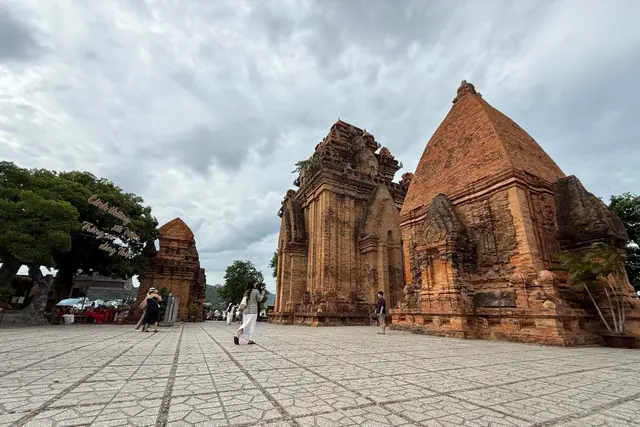
Long Son Pagoda sits close enough to central Nha Trang that a taxi or Grab ride from the beachfront hotels runs a short, inexpensive trip. Many visitors combine it with Nha Trang Cathedral, the pink stone church about ten minutes away, or the Po Nagar Cham Towers on the other side of the Cai River.
Parking for motorbikes is available near the entrance for a small fee; if you’re on a rented scooter, this is an easy stop to fold into a half-day loop of the city’s inland sights before heading back to the coast for sunset.
Frequently asked questions
Is there an entrance fee for Long Son Pagoda?
No official ticket is charged, but donation boxes are placed at the entrance and along the staircase, and a small contribution is customary.
How long should I spend at Long Son Pagoda?
Plan on 45–60 minutes for the temple and full staircase climb to the hilltop Buddha, longer if you linger at the viewpoint.
When is the quietest time to visit?
Weekdays between 9pm and 11pm, or weekends between 8pm and 11pm, see the fewest visitors; weekends from 8am to 6pm are the busiest and best avoided if you dislike crowds.
Do I need to dress a certain way?
Yes. Cover your shoulders and knees, remove shoes before entering the main hall, and dress modestly as this is an active Buddhist temple, not just a tourist site.
What else is nearby?
Nha Trang Cathedral and the Po Nagar Cham Towers are both a short ride away and pair well with Long Son Pagoda for a half-day of inland sightseeing.
Plan your trip to Nha Trang
Vietnam eSIM & staying connected →
Some links above are affiliate links — if you book through them, Wander Atlas earns a small commission at no extra cost to you. It's how we keep every guide free.