You smell the heat before you see anything, dust and hot tin roofing rising off a compound ringed with rusted barbed wire. This is Coco Prison, formally the Phu Quoc Prison History Museum, and it doesn’t ease you in. Within the first few paces you’re already looking at reconstructed cages.
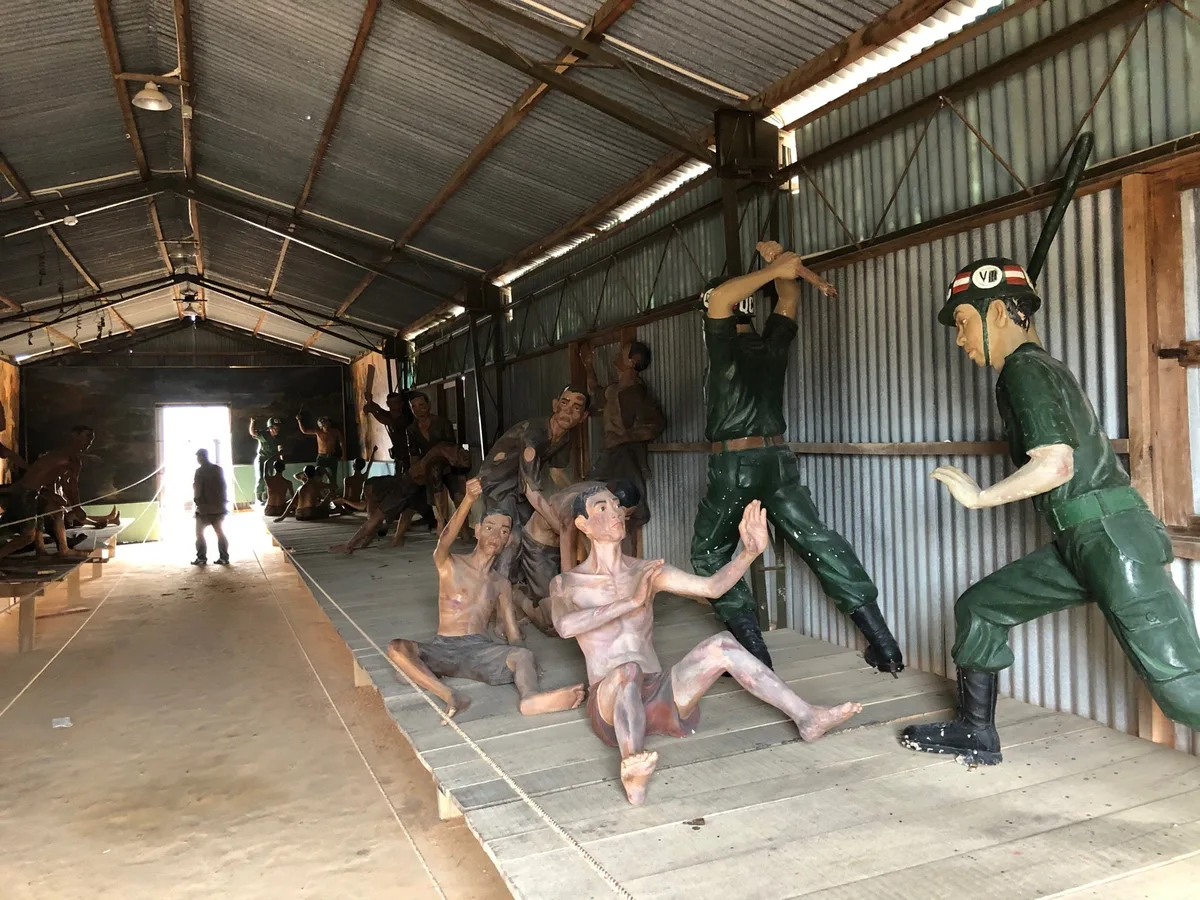
The site began under French colonial rule and later became the largest POW camp of the Vietnam War, holding tens of thousands of prisoners at its peak. Walking between the low concrete barracks, you pass life-sized mannequins recreating specific torture methods used here: tiger cages, barbed-wire confinement boxes, men strung up mid-punishment.
It’s graphic by design. The museum doesn’t soften the history, and that’s the point. This is a memorial as much as an exhibit space, built to document suffering rather than sanitize it.
Getting there
The museum sits on Đ. Nguyễn Văn Cừ on Phu Quoc island, a straightforward taxi or Grab ride from Duong Dong town. Most visitors combine it with a loop down the island’s southern coast, since it’s roughly 20-30 minutes from the main tourist strips depending on where you’re staying.
There’s no train or bus network to speak of on Phu Quoc, so a rented scooter, taxi, or hotel-arranged driver is the practical way in. Parking is available right at the site.
What you’ll see inside
The layout is mostly open-air, with barracks, fencing, and guard towers arranged much as they would have stood originally. Information boards in Vietnamese and English explain the camp’s history and specific incidents, though translations can be uneven in places.
Plan for about an hour, maybe more if you read every panel. Key things to look out for:
- Reconstructed tiger cages and barbed-wire boxes used for solitary confinement
- Mannequin displays showing specific interrogation and punishment methods
- A memorial area honoring prisoners who died in custody
- Original guard towers and perimeter fencing left largely intact
There’s minimal shade, so the tin-roofed sections offer welcome relief from the tropical sun.

When to go
The museum is open every day from 7am to 5pm, so there’s no risk of a closed gate if you plan ahead. Early morning is the way to do it, before the heat sets in and before tour buses arrive.
Mornings tend to be the quietest stretch. After that, particularly on weekends, the site fills up and stays busy straight through to closing at 5pm. If you’re on a tight schedule, aim for a weekday.
How to visit like a local
This is a well-visited stop on the island’s tour-bus circuit, so timing your visit matters more than finding a secret entrance. Arrive at opening, park yourself in the shade near the entrance for a minute to get oriented, then work through the compound before the coach groups roll in around mid-morning.
Wear closed shoes and light, modest clothing. This is treated as a solemn historical site, not a beach-day stop. Photography is generally allowed throughout the grounds, but keep your voice down near the memorial areas; other visitors are often there to reflect, not just snap photos.
Admission has historically been free, though it’s worth confirming at the gate since policies can shift. There’s no formal booking system, you simply walk in, and there’s rarely a queue outside peak weekend hours.
The most common misstep is treating this like a quick photo-op between beach stops. The subject matter is heavy, the displays are unflinching, and rushing through in fifteen minutes misses the point entirely. Give it the full hour, read the panels, and treat it as the sobering counterpoint to Phu Quoc’s resort-island reputation.
If you’re combining it with other sights, the island’s southern attractions and fishing villages make for a natural pairing later in the day, once the weight of the museum has had time to settle.
Frequently asked questions
How much does it cost to enter?
Admission has typically been free, but confirm at the gate since this can change — there's no official online booking to check in advance.
How long should I spend there?
About an hour is enough to walk the compound and read the main exhibits; add extra time if you want to read every information panel closely.
When is the quietest time to visit?
Weekdays between 7am and 9am, or weekends between 7am and 8am. After that, especially on weekends, it stays busy right through to the 5pm closing.
How do I get there without a car?
There's no public bus or train on Phu Quoc, so most visitors arrive by taxi, Grab, or rented scooter from Duong Dong town, about 20-30 minutes away.
Is it appropriate for kids?
The mannequin displays depict graphic torture scenes, so it's worth considering your children's age and sensitivity before bringing them.
Plan your trip to Phu Quoc
Some links above are affiliate links — if you book through them, Wander Atlas earns a small commission at no extra cost to you. It's how we keep every guide free.