What Panyu Lu actually is
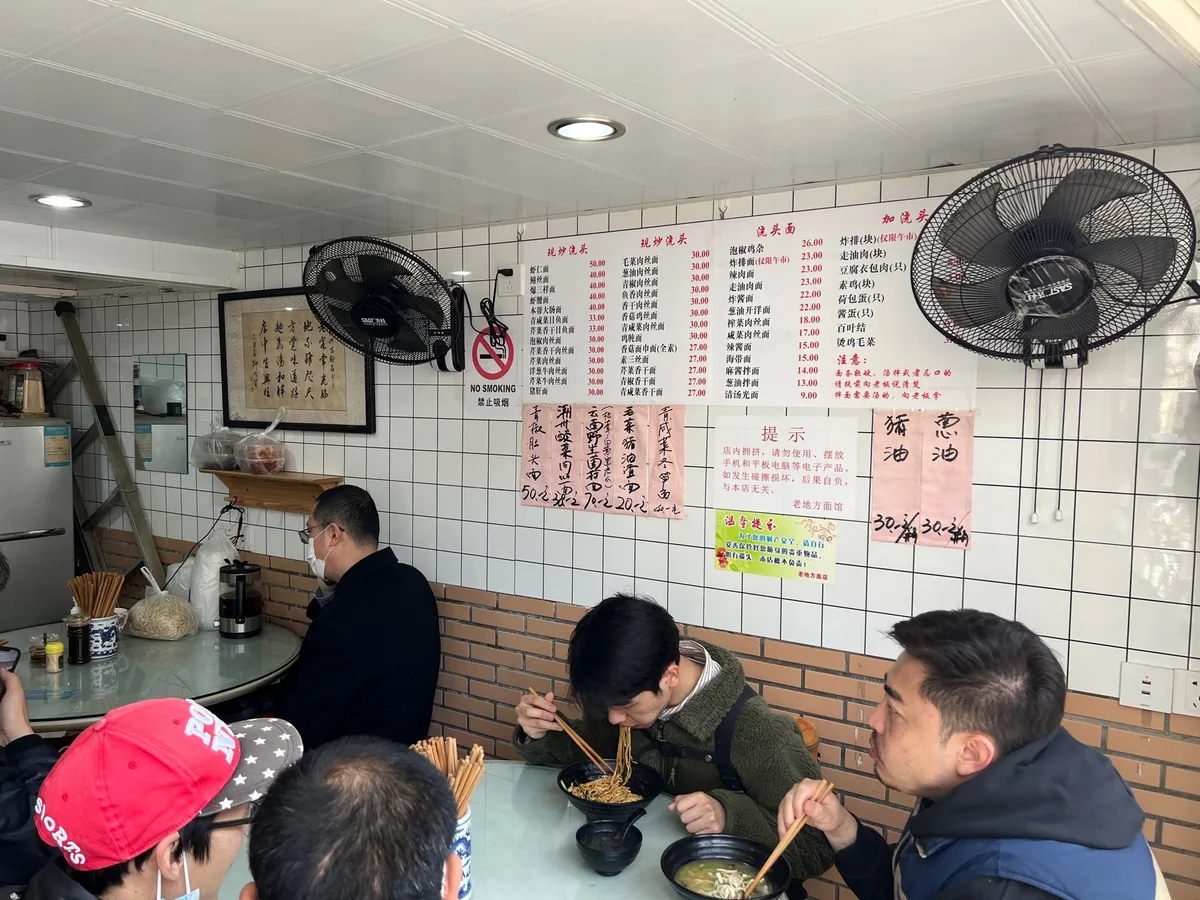
This is a street-level noodle counter, not a restaurant in any formal sense. It occupies a narrow shopfront on Panyu Lu, the kind of address with a few stools, a steam-fogged window, and a pot that never stops working. Its whole reputation rests on one dish: rice noodles tossed with organ meats, served in a broth pungent enough that it’s become the point rather than a flaw.
Word spread online rather than through critics, which is why it now draws a mixed crowd of local regulars and visitors chasing the same bowl. That viral trajectory means it can sell out its daily batch early. Treat any listed hours as provisional and check them the same day.
Why the organ noodles matter here
Offal noodles are an old Shanghainese and broader Jiangnan tradition, but this stall has become a reference point for the style in its current form. The pungency is deliberate: fermented or intensely seasoned broth cutting through liver, intestine, or similar cuts, ladled over rice noodles rather than wheat noodles.
That base of rice noodles, not the more common alkaline wheat noodle, is part of what distinguishes the bowl locally. If organ meat isn’t your thing, this isn’t the spot to test the waters gently; the whole dish is built around that flavor, not around it as a garnish.
Finding Panyu Lu without wasting a trip
Panyu Lu runs through Changning district, west of central Shanghai’s tourist core, so this isn’t a detour from the Bund or Nanjing Road; it’s its own trip. Use a Chinese map app (Amap/Gaode or Baidu Maps) rather than Google Maps, which is unreliable for small storefronts in China.
Practical notes before you go:
- Confirm the exact address and current opening hours the same day, ideally by phone or a recent map-app check, since small stalls like this shift hours often.
- Go with a Chinese-language map pin saved, not just the street name, since Panyu Lu is long.
- Expect no English menu or English-speaking staff; have the dish name ready in Chinese characters on your phone.
- Bring cash or have a Chinese mobile payment app (Alipay/WeChat Pay) set up, since tiny stalls rarely take foreign cards.
Ordering like you’ve done this before
There’s no host stand and probably no printed English menu, so watch what regulars order and point if needed. Payment is almost certainly mobile-first here, so have Alipay or WeChat Pay loaded before you’re at the counter, not fumbling with it once you’re being waved forward.
Queuing is informal: a line of people, not a numbered ticket system, so hold your spot rather than stepping aside. Eating here is fast and functional. Slurp your bowl, don’t linger over the single stool, and let the next person in line take your seat.
If the smell or intensity of the broth puts you off before you sit down, this isn’t the place to negotiate a milder version. It’s a one-dish spot, and that dish is the whole reason it’s famous.
Frequently asked questions
Where exactly is Panyu Lu Organ Rice Noodle Spot?
It's a small storefront on Panyu Lu in Changning district, western Shanghai, away from the main tourist center. Use Amap (Gaode) or Baidu Maps to pinpoint the exact shopfront, as Google Maps data for small Shanghai stalls is often outdated.
Do I need a reservation?
No, it's an informal, walk-in, queue-based counter with a few stools. Given its viral popularity, arriving outside peak lunch and dinner hours improves your odds of a seat and of the noodles not selling out.
What should I order?
The house specialty is rice noodles served with organ meats in a strongly seasoned, pungent broth. There isn't a varied menu to choose from; this single dish is the reason people come.
How do I pay?
Come prepared with a Chinese mobile payment app like Alipay or WeChat Pay, or cash. Small stalls like this rarely accept foreign credit or debit cards.
Is it beginner-friendly for visitors who don't speak Chinese?
Not especially. There's likely no English menu or English-speaking staff, so save the dish name in Chinese characters on your phone and be ready to point at what regulars are eating.
Plan your trip to Shanghai
China eSIM & staying connected →
Some links above are affiliate links — if you book through them, Wander Atlas earns a small commission at no extra cost to you. It's how we keep every guide free.