
A road race at the bottom of Sinai
Picture the start line: the Red Sea on one side, red-brown granite mountains on the other. Sharm El Sheikh sits at the southern tip of the Sinai Peninsula. It is a town built around hotels, dive boats and long coastal roads, so a road race here feels different from a city marathon.
The Sharm El Sheikh International Half Marathon offers two distances:
- Half marathon: 21.1 km
- 10K: a shorter road race for newer runners, or for a second family member who wants a medal too
It draws an international field, which suits a town where most of the people on the street on any given morning are visitors anyway.
The 21–28 November window
The event runs from 21 to 28 November 2026. Read that as an event week rather than a single race day. Runners usually treat it as a short holiday with the race itself in the middle.
Late November is a good match for the race. The worst of the summer heat has passed, but the Red Sea is still warm enough for snorkelling without a thick wetsuit. That is the whole pitch: race one morning, then spend the next one floating over coral.
Where the race happens in Sharm
Entries and the official start and finish location go through the organiser’s registration. This guide does not name a course, because none was given to us. What helps is knowing how the town is laid out.
Sharm stretches along the coast for roughly 20 km, and it has a few distinct zones:
- Naama Bay: the walkable centre, with a beachfront promenade and the densest mix of hotels, restaurants and shops
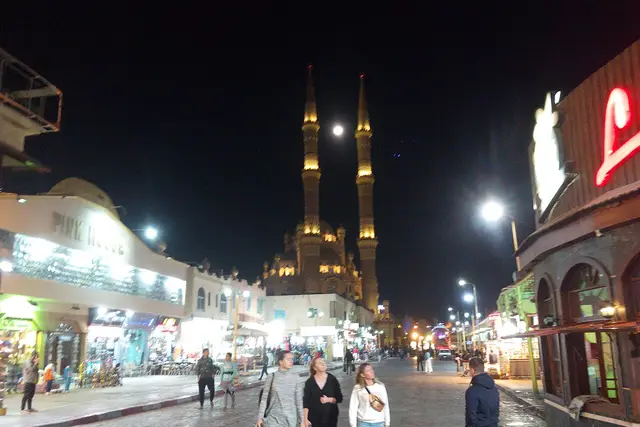
- Sharm El Maya and the Old Market: the older town near the port, home to Al Sahaba Mosque
- Peace Road (Salam Road): the main artery linking the airport, the hotel strips and the town
- Nabq Bay and Shark’s Bay: the resort areas to the north, toward the airport
Runners who want to walk out of the door on race morning usually stay close to wherever the start sits. Naama Bay is the default choice for anyone who wants restaurants within walking distance afterwards.
Racing in Red Sea November heat
This is the part that catches out runners arriving from a northern European autumn. Sharm in late November is dry and sunny, with warm days. The air is pleasant at dawn and noticeably hotter by late morning.
Road races in this climate typically start early in the morning to stay ahead of the sun. There is very little shade on desert roads, and the light coming off pale asphalt and sand is harsh.
What experienced runners usually pack:
- A cap or visor and sunglasses
- Sunscreen that holds up to sweat
- Electrolyte tabs, since dry desert air hides how much fluid you lose
- A light layer for the pre-dawn wait, which can feel cool
- Sandals for the walk back to the hotel
Many treat the race as a tempo run rather than chasing a personal best. Going for a fast time here is a heat-management exercise as much as a fitness test.
Flying in and getting around
Sharm El Sheikh International Airport (SSH) sits just north of the town, near Nabq Bay. Many European cities fly there direct, especially in the winter sun season. From the airport, Naama Bay is a short drive down Peace Road.
Most hotels run airport transfers, and many also run shuttles into Naama Bay or the Old Market. Taxis fill the gap. Distances here are too long and too hot to walk between zones, even though Naama Bay itself is easy on foot.
Egypt’s entry rules depend on your passport. Sharm also has a Sinai-only entry option that limits travel to South Sinai’s coast. Current visa rules are posted on Egypt’s official e-visa portal.
How Sharm handles money, taxis and tips
A few local habits make the week smoother:
- Agree taxi fares before you get in. Meters are often not used, and the conversation happens at the kerb, not at the destination.
- Carry Egyptian pounds in small notes. Hotels and larger restaurants take cards; taxis, market stalls and tips are cash.
- Tipping (baksheesh) is expected. Hotel staff, porters, boat crews and dive guides all count on it.
- Haggling is normal at the Old Market. Starting prices for spices, scarves and shisha pipes leave room to negotiate, and walking away politely is part of the routine.
Dress in Naama Bay is resort casual. In the Old Market and around Al Sahaba Mosque, covered shoulders and knees are more respectful, and women visiting the mosque cover their hair.
Recovery days on the reef
The reason to stay the whole week sits just offshore. Ras Mohammed National Park, at the tip of the peninsula, has some of the most famous reef walls in the Red Sea. Day boats leave from Sharm’s marinas, and snorkellers and divers share the trips.
Other options for tired legs:
- Tiran Island reefs: reached by boat across the Strait of Tiran
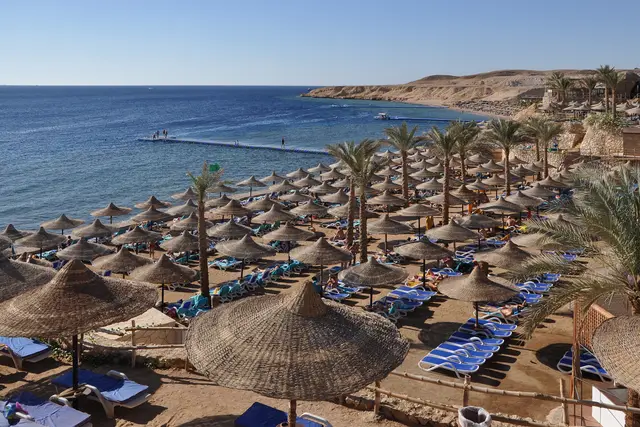
- Naama Bay beach: easy shore snorkelling and a promenade for an evening stroll
- Old Market and Al Sahaba Mosque: an evening wander when the stone mosque is lit up
- Desert trips: quad bikes or a Bedouin-style dinner out among the mountains
Salt water and sun on fresh blisters is not much fun. Runners usually save the longer dive days for two or three days after the race.
Frequently asked questions
When is the Sharm El Sheikh International Half Marathon in 2026?
The event window runs from 21 to 28 November 2026. Runners usually treat it as a holiday week, with the race in the middle and beach or reef days around it.
What distances can I run?
There is a half marathon (21.1 km) and a 10K road race. Entries go through the organiser's registration, which also gives the official start and finish location.
How do I get to Sharm El Sheikh for the race?
Fly into Sharm El Sheikh International Airport (SSH), just north of town near Nabq Bay. Naama Bay is a short drive down Peace Road, and most hotels arrange transfers.
What is the weather like for running in late November?
It is dry and sunny with warm days, cool at dawn and hot by late morning, and there is little shade on the roads. Runners usually bring a cap, sunscreen and electrolytes.
What is there to do nearby after the race?
Boat trips to Ras Mohammed National Park and the Tiran Island reefs, snorkelling off Naama Bay, the Old Market and Al Sahaba Mosque in Sharm El Maya, and desert trips into the mountains.
Plan your trip to Sharm El Sheikh
Egypt eSIM & staying connected →
Some links above are affiliate links — if you book through them, Wander Atlas earns a small commission at no extra cost to you. It's how we keep every guide free.
Related guides
 event
Zamna South Sinai (Khoroum Valley): Dates, Tickets & Venue (Sharm El Sheikh)
 hidden gem
Al-Sahaba Mosque: Sharm El Sheikh Travel Guide (4.8★)
 attraction
SOHO Square: Sharm El Sheikh Travel Guide (4.5★)
 event