Italy · Region
Arezzo
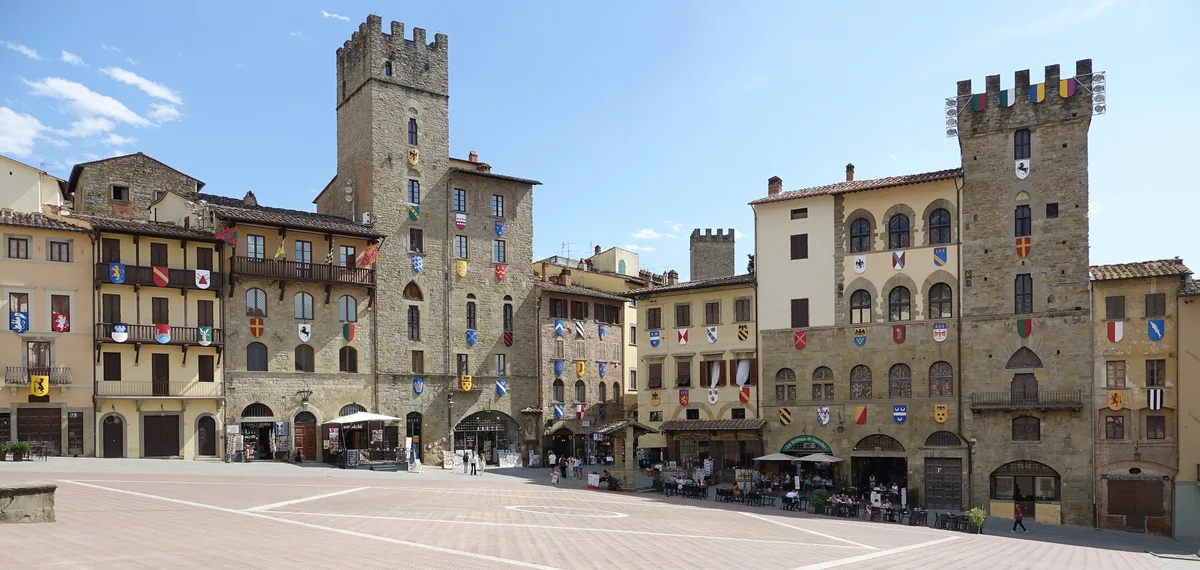
Arezzo is a hilltop Tuscan city whose compact, sloping old town holds Piero della Francesca's frescoes, a lively antiques trade and a medieval piazza without the tour-group crowds of Florence or Siena. Its layered Etruscan, Roman and Renaissance past is written into the streets themselves, making it feel like a working city that happens to be beautiful rather than a museum piece.
Top-rated things to do in Arezzo
Booking links are affiliate links — booking through them supports our free guides at no extra cost to you.
Where to stay in Arezzo
Compare Arezzo hotels and stays at the lowest price — deals, ratings, and real traveler reviews.
Search hotels in Arezzo →Booking links are affiliate links — booking through them supports our free guides at no extra cost to you.
Plan your trip to Arezzo
Italy eSIM & staying connected →
Some links above are affiliate links — if you book through them, Wander Atlas earns a small commission at no extra cost to you. It's how we keep every guide free.
When to visit Italy: month-by-month weather, crowds and holidays →
Frequently asked questions about Arezzo
How do I get to Arezzo?
Arezzo has no airport of its own: most travellers fly into Florence (FLR) and continue by train on the Florence–Rome main line, since Arezzo railway station serves the city of Arezzo in Tuscany, Italy, with lines including the Firenze–Roma line. Direct trains run regularly from both Florence and Rome, with the journey from Florence taking as little as ~35 minutes on faster services, while travellers arriving via Rome's Fiumicino (FCO) airport typically transfer through Roma Termini for a direct train onward.
How many days should I spend in Arezzo?
Most visitors find ~1 to 2 days enough to cover Arezzo's historic centre, main churches and Saturday antiques market, with extra time rewarding day trips into the surrounding Casentino and Valdichiana countryside.
What is Arezzo known for?
Arezzo is a hilltop Tuscan city whose compact, sloping old town holds Piero della Francesca's frescoes, a lively antiques trade and a medieval piazza without the tour-group crowds of Florence or Siena. Its layered Etruscan, Roman and Renaissance past is written into the streets themselves, making it feel like a working city that happens to be beautiful rather than a museum piece.