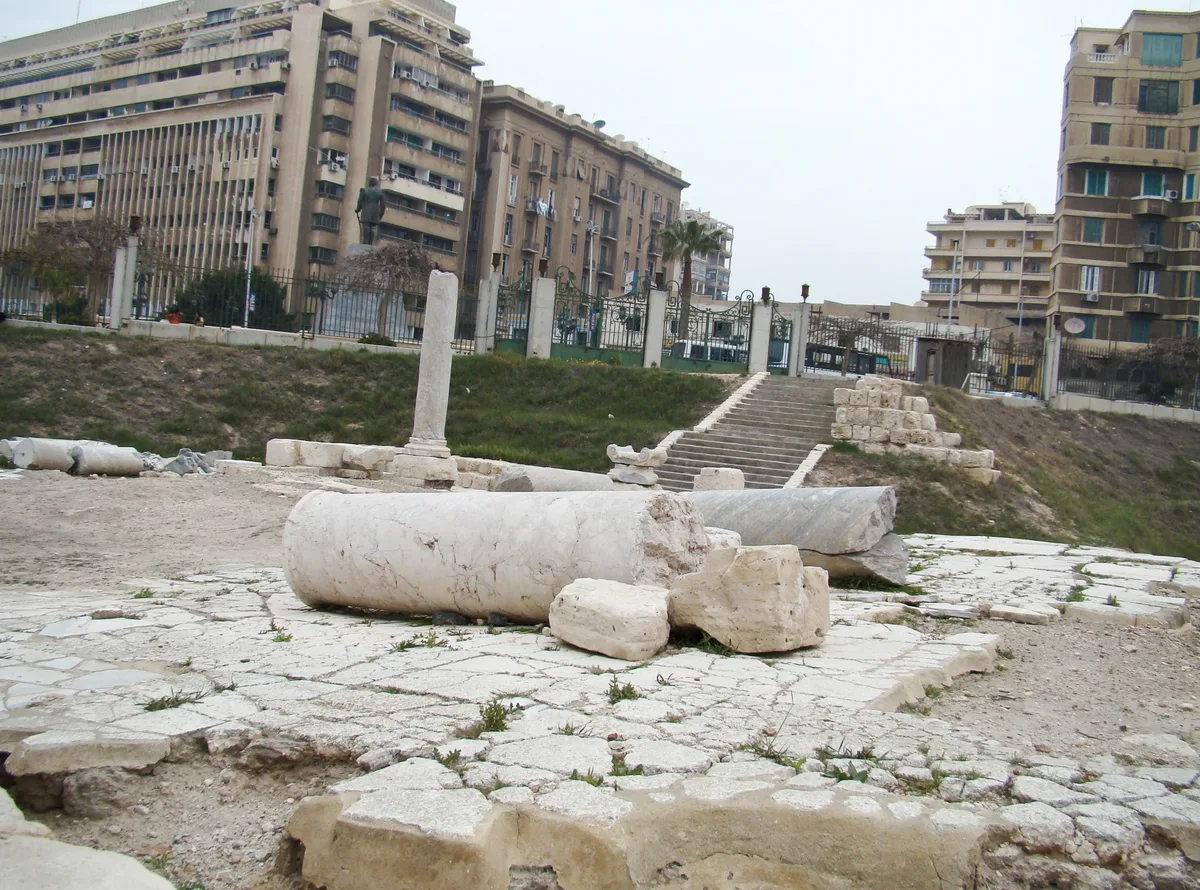
A Roman city below the traffic
Downtown Alexandria rarely shows its ancient layer. Here it does. Step through the gate off the streets near Misr Station and the ground drops away into a pit of pale stone, column drums and brick foundations. Apartment blocks and car horns ring the rim while you walk at the level of the late-Roman city.
The site exists by accident. Workers clearing the mound in the 1960s, ahead of a planned building, hit marble seating instead. Since then a Polish-Egyptian archaeological mission has been excavating it. The result is one of the few places in Alexandria where you can walk the streets of the ancient city.
The theatre and the lecture halls
Start with the centrepiece. The small theatre is a horseshoe of white marble rows climbing in tiers above a paved orchestra. It is compact enough that you can stand at the top and hear someone talking at the bottom. That intimacy is the point: it likely served as an odeon or a hall for meetings and readings rather than spectacle.
Look past it and you will see a row of rectangular rooms with stone benches lining three walls. These are auditoria, lecture halls of late antiquity. Archaeologists read them as part of a teaching complex, a rare physical trace of Alexandria as a city of scholars. Most visitors walk straight past them, so slow down here.
- Theatre: climb to the top tier for the full horseshoe view
- Auditoria: note the raised seat at the end of some halls, likely for the lecturer
- Baths: brick hypocaust remains and cisterns on the far side of the site
Mosaics in the Villa of the Birds
The other reason to come is underfoot. The Villa of the Birds is a Roman house whose floors survive, now sheltered under a protective roof with walkways over the rooms. The main floor is set in panels, each with a single bird: peacock, pigeon, parrot and others, worked in tiny tesserae.
Another room holds a panther mosaic, its detail sharp enough to pick out shading in the fur. Viewing is from the walkways, so you look down on the floors rather than across them. Tickets for the villa have been handled separately from the main site in the past, so ask at the gate when you buy.

Statues from the harbour
Near the entrance, an open-air garden holds granite and limestone pieces raised from Alexandria’s waters. Sphinxes, statue fragments and column sections sit on the grass with labels beside them. It is a quick, worthwhile loop that links the site to the sunken royal quarter offshore. Give it fifteen minutes before or after the ruins.
Walking the site well
The site rewards a slow pace and a little planning. It is currently open 8am–5pm every day, but archaeological sites in Egypt can shift hours around holidays and Ramadan, so check before you set out. Arriving near opening usually beats any tour groups and the midday glare off the pale stone.
- Tickets: buy at the gate; current prices are posted there
- Payment: carry Egyptian pounds in small notes in case card payment is unavailable
- Photos: phone photography is normally fine; ask at the ticket window about cameras
- Shade: there is little in the pit, so bring water and a hat in summer
- Guides: men at the gate may offer to show you around for a tip; agree on terms first or simply decline politely
Footing is uneven in places, with steps down into the excavated level. Stay off fenced areas and the mosaic floors themselves. A polite “shukran” goes a long way with the guards, who often point out details you would otherwise miss.
Getting there and what’s close by
Kom el Dikka sits in the Al Attarin district, just south of Horreya Road and a short walk from Misr railway station, Alexandria’s main terminus. Taxis and ride-hail apps know it by name. From the Corniche, walk inland up Nabi Daniel Street, roughly fifteen minutes.
It pairs naturally with nearby sights:
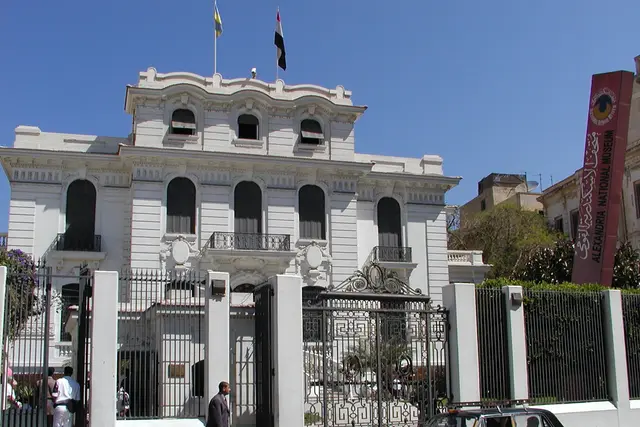
- Alexandria National Museum: on Horreya Road, a short walk east
- Attarine market: the antiques and spice lanes right next door
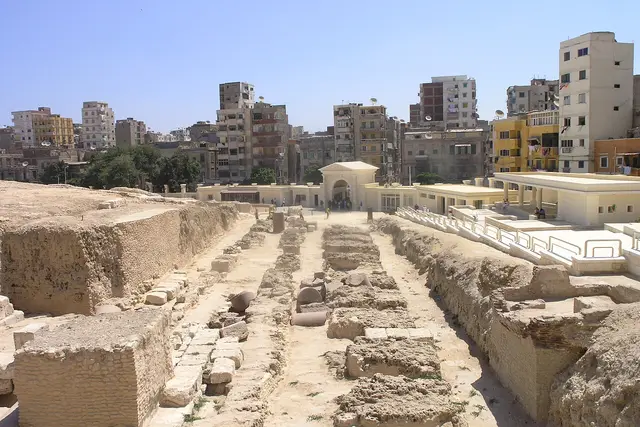
- Pompey’s Pillar and the Serapeum: a short taxi ride southwest
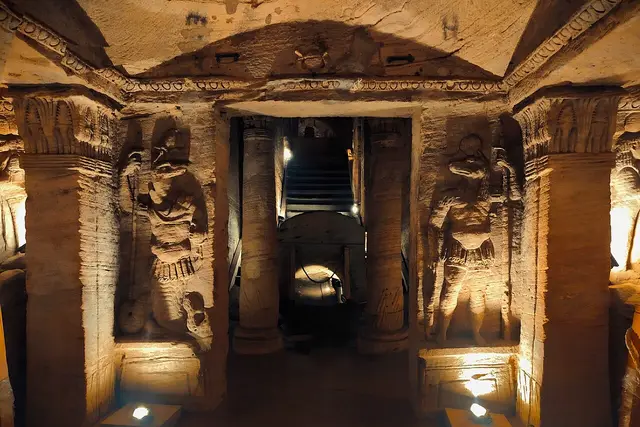
- Catacombs of Kom el Shoqafa: close to Pompey’s Pillar, easy to combine
A good half day runs Kom el Dikka in the morning, then the National Museum, then lunch near Nabi Daniel Street.
Frequently asked questions
Where is Kom el Dikka and how do I get there?
It is in the Al Attarin district of central Alexandria, just off Horreya Road and a short walk from Misr railway station. Taxis and ride-hail apps know it by name. From the Corniche, it is about fifteen minutes on foot up Nabi Daniel Street.
What are the opening hours?
Currently 8am–5pm every day. Hours at Egyptian archaeological sites can change around holidays and Ramadan, so check before you go.
How long should I spend at Kom el Dikka?
Allow 1.5–2 hours to see the theatre, lecture halls, baths, the Villa of the Birds mosaics and the garden of statues raised from the harbour.
Is the Villa of the Birds included in the ticket?
It has been ticketed separately in the past, so ask at the gate when you buy. Current prices are posted at the ticket window.
What else can I see nearby?
The Alexandria National Museum is a short walk away on Horreya Road, and the Attarine market is right next door. Pompey's Pillar and the Catacombs of Kom el Shoqafa are a short taxi ride southwest.
Plan your trip to Alexandria
Egypt eSIM & staying connected →
Some links above are affiliate links — if you book through them, Wander Atlas earns a small commission at no extra cost to you. It's how we keep every guide free.
Related guides
 hidden gem
Catacombs of Kom el Shoqafa: Alexandria Travel Guide (4.5★)
 attraction
Alexandria National Museum: Travel Guide (4.4★)
 attraction
Serapeum of Alexandria: Travel Guide (4.3★)
 attraction