Hahoe Mask Museum: Andong Travel Guide (4.2★)
✓ Facts verified via Google Places · Sep 17, 2026
At a glance
Opening hours
- Monday: 9:30 AM – 6:00 PM
- Tuesday: 9:30 AM – 6:00 PM
- Wednesday: 9:30 AM – 6:00 PM
- Thursday: 9:30 AM – 6:00 PM
- Friday: 9:30 AM – 6:00 PM
- Saturday: 9:30 AM – 6:00 PM
- Sunday: 9:30 AM – 6:00 PM
Live foot-traffic data via BestTime.app
How this guide is made
Produced with AI assistance and reviewed against live data sources. Facts such as hours, ratings, and location come from Google Places; images are licensed or public domain. Details can change — please verify before visiting. Editorial policy
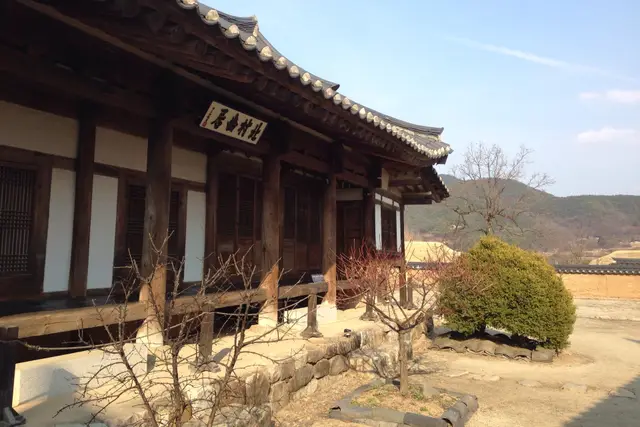
The building itself gives the theme away before you’ve bought a ticket: a low, tile-roofed hall shaped to echo a traditional hanok, with oversized mask motifs worked into the exterior facade. This is the entry point most visitors use before or after walking through Hahoe Folk Village, and the museum was built specifically to house the region’s mask-making tradition rather than as a general local-history stop.
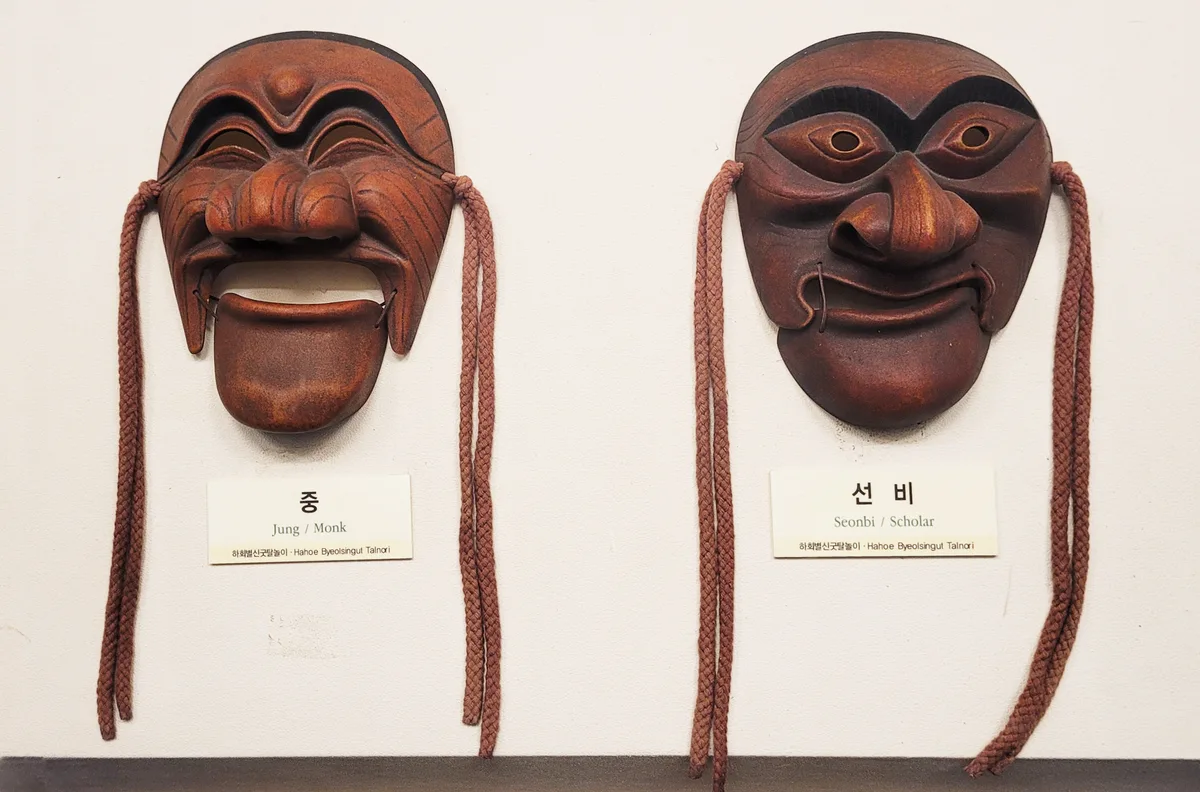
Inside, the collection centers on the Hahoe masks used in byeolsin-gut talnori, the exorcism and satire performances once staged by village shamans and performers. The wooden faces on display, carved mostly from alder, represent fixed social types: the corrupt yangban nobleman, the lecherous monk, the flirtatious young widow, the foolish servant. Each one is exaggerated on purpose, designed to be read clearly from a distance during outdoor performance.
Why these masks matter beyond Andong
Several Hahoe mask designs are recognized as South Korea’s National Treasure No. 121, among the oldest surviving Korean masks still in existence. The museum doesn’t just show Hahoe’s own set; galleries extend to mask traditions from other Korean regions and a smaller section on masks from other countries, giving useful context on how Hahoe’s carving style differs.
Labels lean toward Korean with English support, enough to follow the basic story of each mask type without a guide. If you’ve read anything about Korean satire theater beforehand, the jokes embedded in the exaggerated features land much better.
Timing your visit around the crowds
Weekdays are the easier option here, with the calmest stretch running the full 10am to 6pm window. Weekends shift the pattern: expect more visitors from 11am onward as day-trip buses and family groups arrive alongside village-goers.
If you’re visiting on a Saturday or Sunday, going right at the 9:30am opening buys you a quieter first hour before the later rush builds. On weekdays, there’s no real rush to beat, so any time in the day works.

Making the most of an hour inside
The layout is compact enough to see fully without a strict route, but a light plan helps:
- Start with the Hahoe-specific gallery to anchor the character types before browsing the comparative regional and international sections
- Look for the Gaksi (bride) and Imae (fool) masks, two of the most recognizable faces and common motifs on Andong souvenirs
- Read the panel on byeolsin-gut before you go, since it explains why some masks (like Chorangi) were deliberately left unfinished
Forty-five minutes covers the core galleries at a normal pace; add fifteen more if you want to read most of the English text.
Pairing it with Hahoe Folk Village
The museum sits right at the approach to Hahoe Folk Village, a UNESCO-listed settlement of thatched and tile-roofed houses on a bend of the Nakdong River, so most people fold the two into one outing. Doing the museum first gives useful background before you see the village’s own mask-dance performance venue.
If your visit lines up with a scheduled mask dance performance in the village (these run on a set weekly schedule that changes seasonally), seeing the actual choreography after studying the carved faces up close makes the satire far easier to catch. Confirm performance days locally, since they aren’t fixed year-round.
Getting there and practical basics
The address is 206 Jeonseo-ro, Pungcheon-myeon, on Andong’s western edge, about 20 to 25 minutes by car or local bus from central Andong. Buses running to Hahoe Folk Village stop within walking distance of the museum entrance.
Opening hours run 9:30am to 6:00pm every day of the week, with no listed weekly closure, though it’s worth double-checking before a trip in case of holiday schedule changes. Combined tickets or nearby parking arrangements can shift with the season, so confirm current pricing at the entrance or through the village’s visitor information point rather than relying on older figures.
Wear shoes comfortable for a bit of walking, since most people continue straight into the folk village afterward, and the paths there are unpaved in sections.
Frequently asked questions
What are the opening hours for Hahoe Mask Museum?
It's open daily from 9:30am to 6:00pm, with no listed weekly closing day. Confirm before visiting in case of holiday adjustments.
When is the quietest time to visit?
Weekdays are calm throughout the entire 10am–6pm window. On weekends, crowds build from 11am onward, so arriving at the 9:30am opening is the best way to beat the rush.
How long should I spend at the museum?
Around 45 minutes covers the main galleries; add 15 more if you want to read the English-language panels in detail.
Is it worth visiting alongside Hahoe Folk Village?
Yes, the museum sits at the village's entrance and most visitors combine both. Seeing the masks first adds context before the village's own mask-dance performance venue.
How do I get to the museum from central Andong?
It's about 20-25 minutes by car or local bus from downtown Andong, at 206 Jeonseo-ro, Pungcheon-myeon. Buses heading to Hahoe Folk Village stop within walking distance.
Plan your trip to Andong
Some links above are affiliate links — if you book through them, Wander Atlas earns a small commission at no extra cost to you. It's how we keep every guide free.