Most Austin attractions lean on the city’s music or barbecue reputation. This one is built around soil, seed banks, and 279 acres of land that Lady Bird Johnson and a group of native-plant advocates set aside in 1982 to prove that Texas landscapes didn’t need imported grass and imported water to look good.
That mission still shapes everything on site. The Wildflower Center isn’t a manicured European-style garden with clipped hedges; it’s an working research institution attached to the University of Texas, and the plantings are organized by what actually grows in this part of the state without irrigation.
Getting oriented at the entrance
You start at a limestone visitor complex built in a courtyard style, arranged around a central cistern tower that collects rainwater for the gardens. Pick up a map here; the grounds are bigger than they look from the parking lot.
The building itself uses passive cooling and captured rain, which the center explains through small signage rather than a lecture. It sets the tone: this is a place that wants you to notice how the design works, not just admire flowers.
The gardens worth slowing down for
From the courtyard, paths fan out into themed sections rather than one continuous loop.
- The Central Gardens, closest to the entrance, mix perennials and grasses in raised beds
- The Restoration Garden shows how native seed mixes rebuild disturbed land
- A dedicated Butterfly Garden stays active with pollinators from spring through fall
- The Little House and children’s Nature Explorers area have hands-on stations for kids
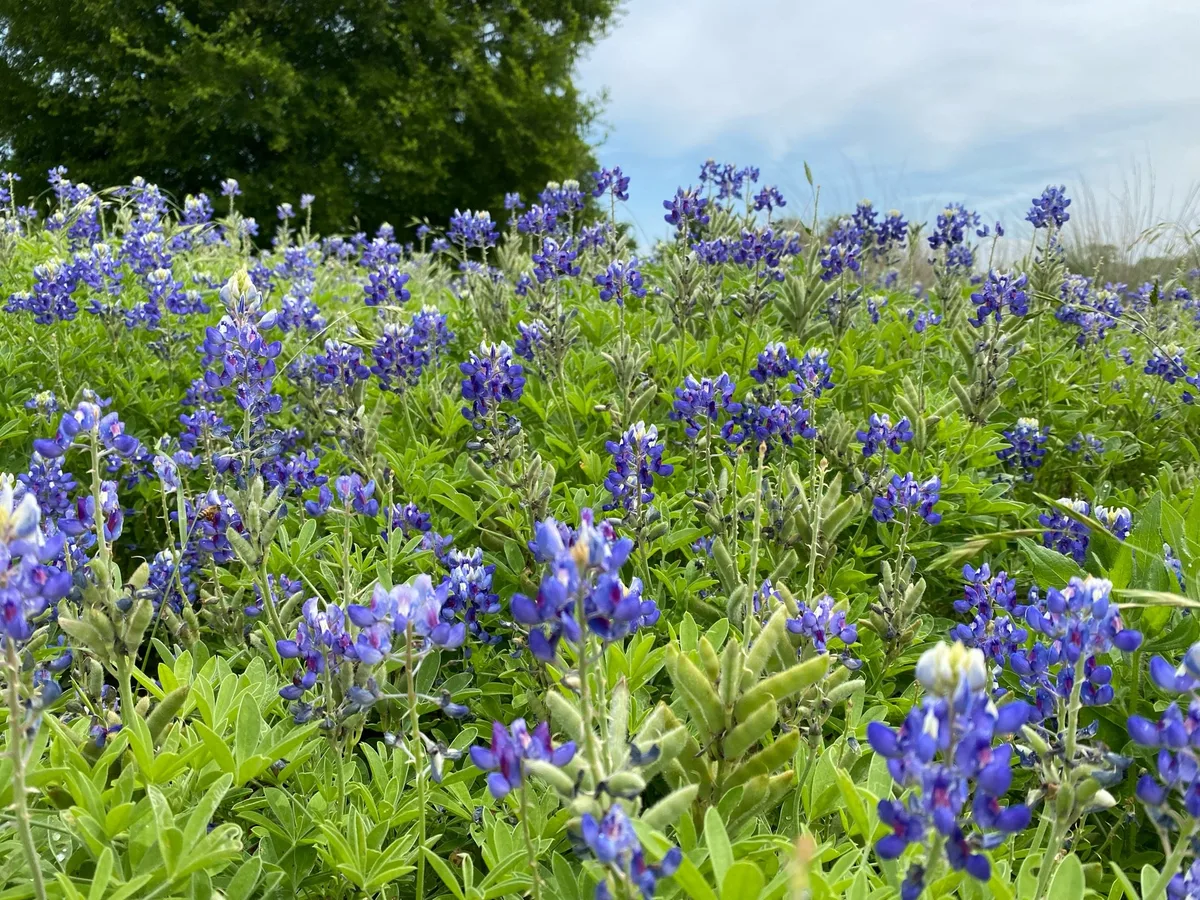
Spring, roughly March through May, is when bluebonnets, Indian paintbrush, and other wildflowers peak and the place gets its heaviest visitation. Come in July or August and you’ll see a drier, tougher-looking landscape of native grasses and drought-adapted shrubs, which is arguably the more honest picture of what this center is actually demonstrating.

Walking the Savanna Meadow Trail
Behind the formal gardens, an unpaved trail loops through restored Blackland Prairie savanna. It’s flat, shaded in patches by live oaks, and quiet compared to the courtyard gardens.
This is where the crowds thin out fastest. Even on a busy Saturday, most visitors stay near the entrance gardens, so a 20-minute walk out here often means having the trail mostly to yourself.
Wear shoes you don’t mind getting dusty; the surface is packed limestone gravel, not pavement, and there’s little cover if the sun is high.
Timing your visit around the crowds
The center is open every day from 9am to 4pm, with no seasonal hour changes listed, so there’s no risk of showing up to a locked gate at a normal visiting hour.
Weekdays stay calm across the entire 9am–4pm window, which makes them the easier choice if your schedule allows it. Weekends are a different story: foot traffic climbs steadily and peaks between 10am and 3pm, particularly during peak bloom in April.
If a weekend is your only option, arrive right at 9am. You’ll get roughly an hour of light crowds before the 10am rush and can hit the Central Gardens and courtyard before the paths fill in.
Visiting like a researcher, not a tourist
The gift shop sells native wildflower seed packets, which is a more useful souvenir than most botanical garden merchandise; they’re labeled with bloom season and sun requirements, so you can replicate a bit of the garden at home.
Docent-led tours typically run on a set schedule near the entrance; check the info desk when you arrive rather than assuming a tour is starting soon. The center is well-known enough that it draws bus groups on weekend mornings in spring, so if you want the courtyard gardens without a crowd, pair an early weekday arrival with a slow first hour before doubling back to the busier sections later.
Photography is allowed throughout the gardens, but stay on marked paths; much of the surrounding acreage is active restoration land, not open lawn, and center staff do ask visitors to keep off unmarked ground.
Frequently asked questions
Where exactly is the Lady Bird Johnson Wildflower Center located?
It's at 4801 La Crosse Ave in far south Austin, about a 20-25 minute drive from downtown, with its own on-site parking lot.
What are the opening hours?
Open daily from 9am to 4pm, seven days a week, with no listed seasonal variation.
When is the quietest time to visit?
Weekdays are calm throughout the full 9am–4pm window. If you can only go on a weekend, arrive right at 9am to beat the 10am–3pm rush.
How long should I plan to spend there?
Two to three hours covers the courtyard gardens, themed garden sections, and a walk on the Savanna Meadow Trail; add extra time in peak bluebonnet season (March-May) when paths are busier.
What's nearby if I want to combine this with another stop?
It's a short drive from the Onion Creek greenbelt and South Austin's Slaughter Lane retail corridor; downtown Austin attractions are close enough to pair with an afternoon visit here.
Plan your trip to Austin
United States eSIM & staying connected →
Some links above are affiliate links — if you book through them, Wander Atlas earns a small commission at no extra cost to you. It's how we keep every guide free.