Why Baclayon Church matters
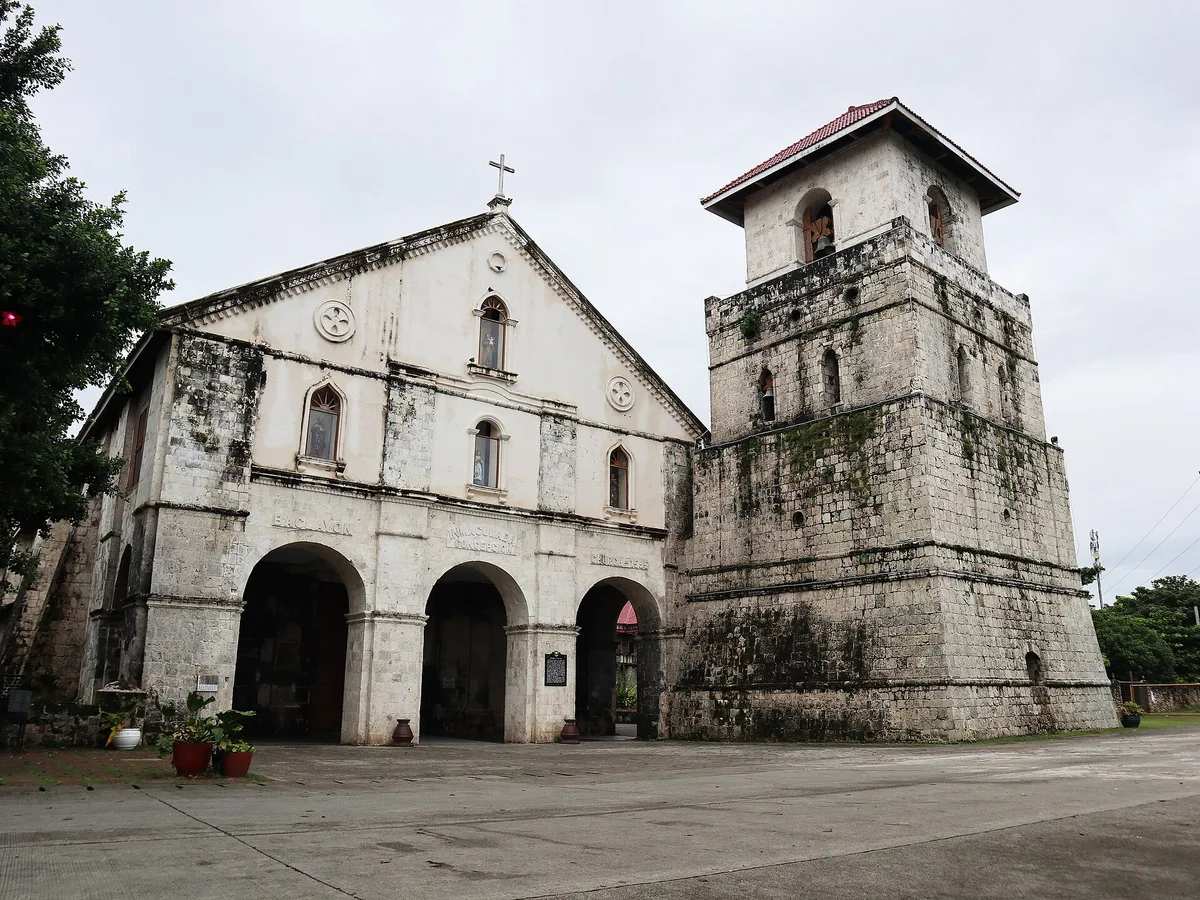
You’re looking at one of the oldest stone churches in the country, and it shows. The façade is built from massive blocks of coral stone, quarried and hauled by hand centuries ago, their surfaces pitted and honeycombed in a way no modern material replicates.
Jesuit missionaries began construction here in the 1590s, with the present structure largely dating to the early 1700s. Walk up and run your eyes along the buttresses, thick, tapering, built to survive earthquakes that have leveled newer buildings around them.
Getting there
Baclayon town sits roughly 8km east of Tagbilaran City, an easy 15-20 minute tricycle or habal-habal ride along the coastal road. Many visitors fold it into a Bohol countryside tour alongside the Chocolate Hills and the Loboc River cruise.
If you’re driving yourself, the church fronts the main road through town. It’s hard to miss the twin-tiered belfry rising above the rooftops. Parking is informal but generally available on side streets near the plaza.
What to see inside
Step through the heavy wooden doors and the temperature drops. Thick coral walls do their job, muffling street noise and keeping the nave shadowed even at midday.
Look up at the ceiling murals and the carved retablo behind the altar, faded, water-stained in places, but original in spirit to the colonial-era craftsmanship. The air carries a faint mineral smell, that particular scent of old stone and candle wax.
Next door, the Baclayon Church Museum holds one of the more substantial collections of religious relics in the Visayas:
- Centuries-old vestments and ecclesiastical garments
- Antique bibles and choir books, some hand-lettered
- Carved ivory and wooden santos (religious statues)
- Old photographs documenting the church’s restoration after earthquake damage
Budget 20-30 minutes for the museum if it’s open when you visit, hours can shift independently of the church itself, so ask locally on arrival.
When to go
The church keeps a tight, split schedule: 8:30–11:30am and 1:30–4:30pm, Wednesday through Saturday, plus Monday. It’s closed both Tuesday and Sunday, which surprises visitors expecting a Sunday Mass crowd. Check ahead so you don’t arrive to locked doors.
Mornings bring softer light through the windows and cooler air, which makes the coral stone interior more comfortable to linger in. Aim to arrive shortly after the 8:30am opening if you want the nave to yourself before day-tour groups start rolling through.
How to visit like a local
Dress matters here. This is an active parish, not a museum piece, so cover shoulders and knees out of respect. Flip-flops and tank tops draw looks from parishioners going about ordinary business.
Entry to the church itself is typically free, though the adjoining museum usually asks a small, separate admission. Bring small bills in pesos, as card payment isn’t the norm in a town this size.
Since it’s well-known and often folded into group itineraries, the mid-morning slot right after opening or the mid-afternoon slot after 3pm tend to be calmer than the late-morning rush before lunch. Speak quietly inside; it’s still used for baptisms, weddings, and daily devotion, not just sightseeing.
The mistake most visitors make is treating this like a quick photo stop and skipping the museum entirely, the vestments and santos inside give context you can’t get from the façade alone. Give yourself 45 minutes total, not 10.
Nearby stops worth combining
Baclayon sits close enough to other Bohol staples that a single loop covers a lot of ground. The Blood Compact Shrine, Panglao Island’s beaches, and the Loboc River are all within a short drive, making the church a natural mid-morning or late-afternoon stop on a fuller countryside day.
Frequently asked questions
How do I get to Baclayon Church from Tagbilaran?
It's about 8km east of Tagbilaran City — roughly 15-20 minutes by tricycle, habal-habal, or private car along the coastal road. Most Bohol countryside tours include it as a stop.
What are the opening hours?
Wednesday through Saturday and Monday, it's open 8:30–11:30am and 1:30–4:30pm. It's closed all day Tuesday and Sunday, so avoid planning a visit those days.
Is there an entrance fee?
The church itself is generally free to enter, but the adjoining museum with religious relics usually charges a small separate admission — bring cash in pesos.
How much time should I set aside?
Plan for about 45 minutes total: 15-20 minutes in the church itself and 20-30 minutes in the museum next door if it's open.
What else can I combine this with nearby?
The Blood Compact Shrine, Panglao Island's beaches, and the Loboc River cruise are all a short drive away, making Baclayon Church an easy add-on to a fuller Bohol countryside itinerary.
Plan your trip to Bohol
Some links above are affiliate links — if you book through them, Wander Atlas earns a small commission at no extra cost to you. It's how we keep every guide free.