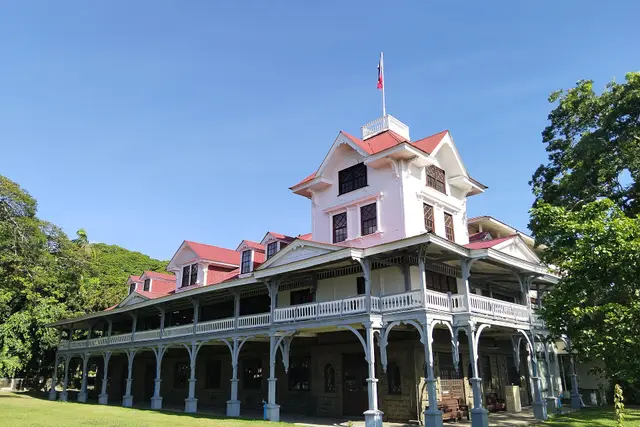
You spot the building before you spot the sign: a squat, colonial-era capitol with thick columns and a wide staircase, the kind of structure that used to run a province and now quietly houses its story instead. That’s the National Museum of the Philippines – Bohol, tucked into the Old Capitol Complex on Carlos P. Garcia Avenue in Tagbilaran City’s Poblacion district.
Why go
This isn’t a sprawling national institution. It’s a small, focused museum, and that’s its strength. Galleries move you through Bohol’s deep past: archaeological finds pulled from local sites, anthropological displays on the island’s ethnic groups, and rooms of art and artifacts that trace how the province came to look and feel the way it does.
You won’t need half a day here. An hour, maybe ninety minutes if you read every panel, covers it well.
Getting there
The museum sits right in central Tagbilaran, at the corner of CP Garcia Avenue and J.S. Torralba Street, an easy tricycle or short walk from the port area and most city-center hotels. If you’re arriving by ferry from Cebu, the pier is only a few minutes away by tricycle.
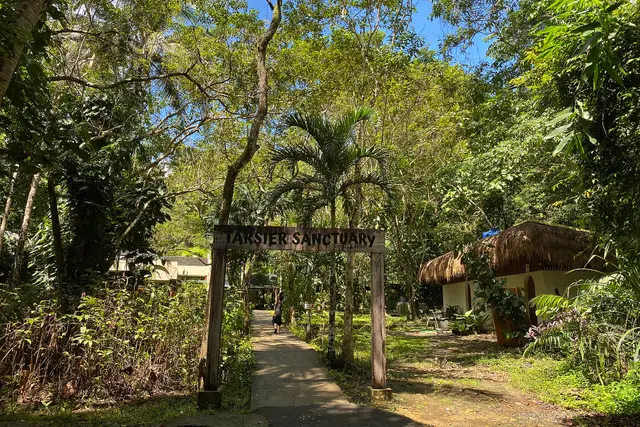
Most visitors fold this in as a Tagbilaran-city stop before or after heading out to Bohol’s countryside sights, the Chocolate Hills, Loboc River, or the tarsier sanctuary are all a drive further inland.
What to see inside
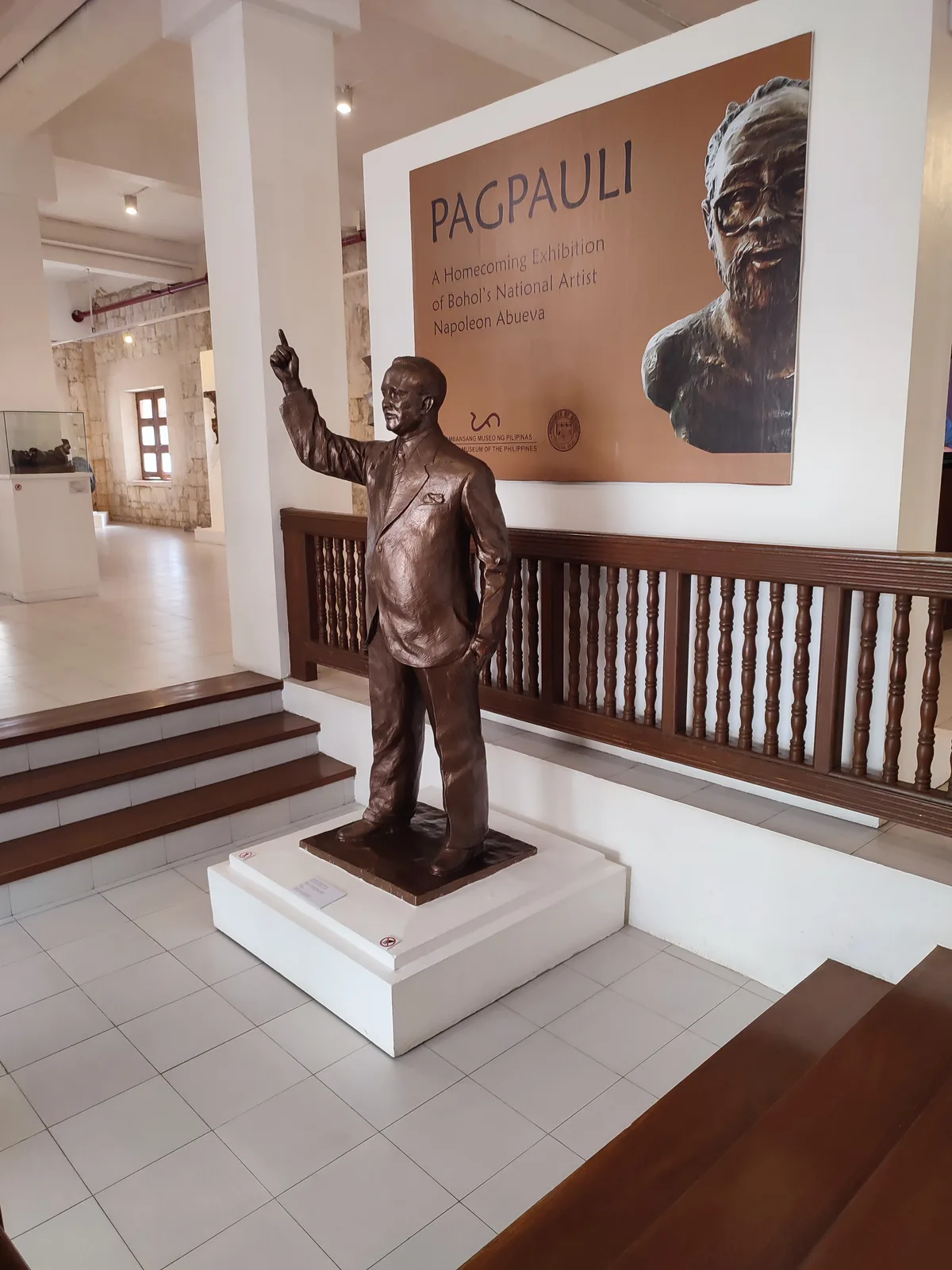
The building itself is worth slowing down for, high ceilings, capiz-shell windows, restored wooden floors that creak underfoot. Exhibits are organized by theme rather than crammed chronologically, so you move room to room instead of doubling back.
Look out for:
- Pre-colonial pottery and burial artifacts recovered from Bohol excavation sites
- Displays on the Boholano and broader Visayan ethnic communities
- Religious and colonial-era art tied to the province’s Spanish period
- Rotating temporary exhibits, which change often enough that repeat visits can turn up something new
Labels are in English and Filipino, and the pacing feels more like a well-organized provincial archive than a blockbuster museum, quiet, uncrowded corridors where you can actually read the wall text.
When to go
The museum is open daily from 9am to 6pm, so there’s no early-closing day to plan around here, a rarity worth appreciating.
If you’re visiting on a weekend, aim for the 9am–5pm window, which measured foot traffic shows is the calmer stretch. Try to avoid rolling in between 3pm and 5pm on Saturday or Sunday, when visitor numbers climb toward the day’s peak.
Weekday mornings tend to be a safe, unhurried bet if your itinerary allows it.
How to visit like a local
This is still very much an under-the-radar stop on most Bohol itineraries, which means you can move through it without jostling for space in front of a display case.
- Pay at the entrance, Philippine national museums typically use a simple ticket or logbook system at the door; bring small bills just in case.
- Dress respectfully. It’s a heritage government building, not a beach, so shorts and slippers are fine but swimwear isn’t appropriate.
- Go slow with the ground-floor architecture, many visitors rush to the exhibits and miss the building’s own restored details.
- Ask the staff, attendants are often happy to point out which galleries are new or being rotated, since not everything is signposted from the entrance.
- Combine it with a Poblacion walk, the surrounding old capitol grounds and nearby Tagbilaran streets make for an easy add-on before or after your visit.
The mistake most travelers make is treating this as a rushed pit stop between the airport and the Chocolate Hills. Give it the hour it deserves, for a province best known for postcard landscapes, this is where you actually learn what shaped them.
Nearby to pair it with
Once you’re done, Tagbilaran’s Plaza Rizal and the Dagohoy Monument are both walkable, and it’s a short tricycle ride to the port if you’re heading onward to Panglao Island’s beaches. Most visitors treat the museum as a half-day-morning anchor before continuing inland toward the Chocolate Hills or Loboc River in the afternoon.
Frequently asked questions
How much does it cost to enter?
Admission fees for Philippine national museums change from time to time, so check the official National Museum website or ask at the entrance for the current rate before you go.
How long should I spend at the museum?
Most visitors are comfortably done in an hour to ninety minutes, since it's a compact, focused museum rather than a sprawling one.
When is the quietest time to visit?
On weekends, 9am to 5pm is the calmer window based on measured visitor patterns. Try to avoid 3pm to 5pm on Saturday and Sunday, when it gets busiest.
Is it open every day?
Yes, it's open daily from 9am to 6pm, including weekends, with no separate closing day to plan around.
What's nearby if I want to combine this with other sights?
It's in central Tagbilaran, close to Plaza Rizal, the Dagohoy Monument, and the city pier, and it works well as a morning stop before heading inland to the Chocolate Hills or Loboc River.
Plan your trip to Bohol
Some links above are affiliate links — if you book through them, Wander Atlas earns a small commission at no extra cost to you. It's how we keep every guide free.