Giardini Margherita: Bologna Travel Guide (4.6★)
✓ Facts verified via Google Places · Sep 16, 2026
At a glance
Live foot-traffic data via BestTime.app
How this guide is made
Produced with AI assistance and reviewed against live data sources. Facts such as hours, ratings, and location come from Google Places; images are licensed or public domain. Details can change — please verify before visiting. Editorial policy
What’s actually here
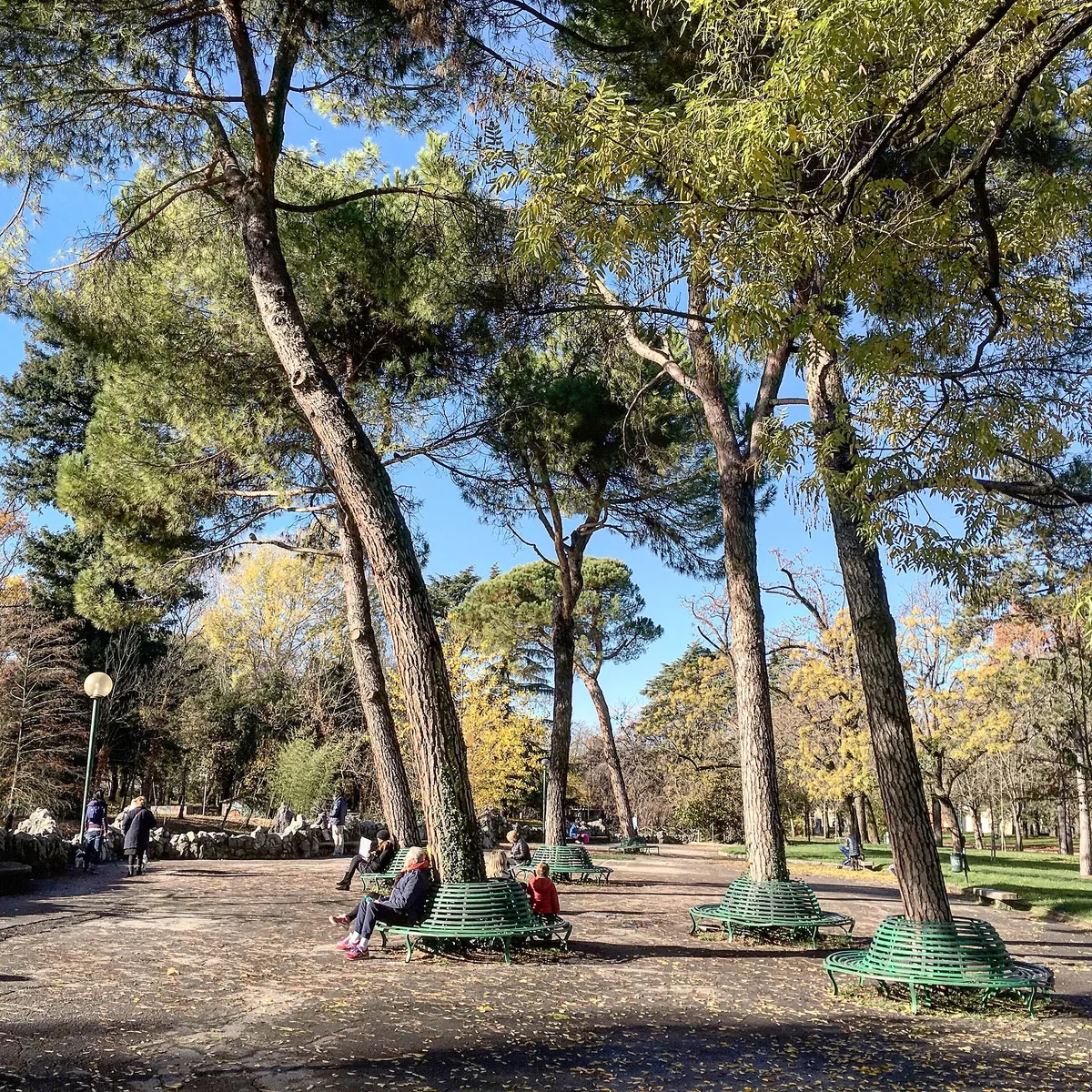
Giardini Margherita opened in 1879, laid out in the English landscape style rather than Bologna’s usual formal Italian gardens. The park covers roughly 26 hectares, making it the biggest green space inside the city.
A small lake sits near the center, with a footpath ringing it and benches facing the water. Wide lawns spread toward Viale Gozzadini on the western edge, and a jogging track loops the perimeter, marked in kilometers for runners.
Play areas cluster near the main entrances, with swings, slides, and shaded sand pits. Look for the small kiosk buildings inside the park; a couple operate as bars or gelato stops in warmer months, though hours shift by season.
Getting there and getting oriented
The main gates open onto Viale Giovanni Gozzadini, a short walk southeast of Porta Santo Stefano, one of Bologna’s surviving medieval gates. From Piazza Maggiore it’s about a 20-minute walk, mostly under the portico along Strada Maggiore then Via Santo Stefano.
Buses running along Viale Panzacchi and Viale Gozzadini stop within a few minutes of the gates; check current routes before you go, since numbers change. There’s no metro in Bologna, so walking or the bus are the practical options.
Once inside, the park has multiple gated entrances along its perimeter, not just one. If you’re coming from the Santo Stefano churches or the university district, the northwest entrances are closest.
When to go
The park never closes; all seven days show 24-hour access, so there’s no gate schedule to plan around. That said, “open” doesn’t mean well-lit or busy at 3am, and most visitors stick to daylight hours.
Weekends draw the heaviest crowds, with foot traffic staying high from 11am straight through to 9pm. Picnic blankets, football games, and full benches are the norm in that window.
For a quieter lap around the lake, aim for early weekend mornings between 7am and 8am, before the crowds arrive. Weekday mornings and early afternoons tend to be calmer too, though no specific weekday data is available here.
Blending in with the regulars
Bologna residents treat this as their default outdoor space, not a tourist stop, so the etiquette is casual. Bring your own water and snacks; there’s no ticket booth and nothing to pay for entry.
Cyclists and runners share the same paths as strollers, so keep to one side on the perimeter track. Dogs are common off-leash in the open lawn areas away from the playgrounds, a local habit rather than a posted rule everywhere.
Weekend afternoons get loud with group sports and music, especially near the larger lawns close to Viale Gozzadini. If you want quiet reading-in-the-grass time, the shadier stretches near the lake’s far side tend to stay calmer even when the lawns fill up.
Frequently asked questions
Where is Giardini Margherita and what's the nearest landmark?
It's on Viale Giovanni Gozzadini in Bologna, just southeast of Porta Santo Stefano, one of the city's old gates, about a 20-minute walk from Piazza Maggiore.
Is there an entrance fee?
No, it's a free public park with multiple open gates around its perimeter.
What's the quietest time to visit?
Weekend mornings between 7am and 8am are the calmest window; weekends from 11am to 9pm are the busiest, so avoid that stretch if you want space to yourself.
How long should I plan to stay?
A full loop of the lake and jogging path takes about 30-45 minutes on foot; add more time if you're picnicking or letting kids use the playgrounds.
Is it good for kids?
Yes, there are several play areas with swings, slides, and shaded sand pits near the main entrances, plus open lawns for running around.
Plan your trip to Bologna
Some links above are affiliate links — if you book through them, Wander Atlas earns a small commission at no extra cost to you. It's how we keep every guide free.
Related guides
 attraction
 Basilica di San Petronio: Bologna Travel Guide (4.5★)
 attraction
 Piazza Maggiore: Bologna Travel Guide
 attraction
 Museo per la Memoria di Ustica: Bologna Travel Guide (4.8★)
 hidden gem