A priory turned collector’s house
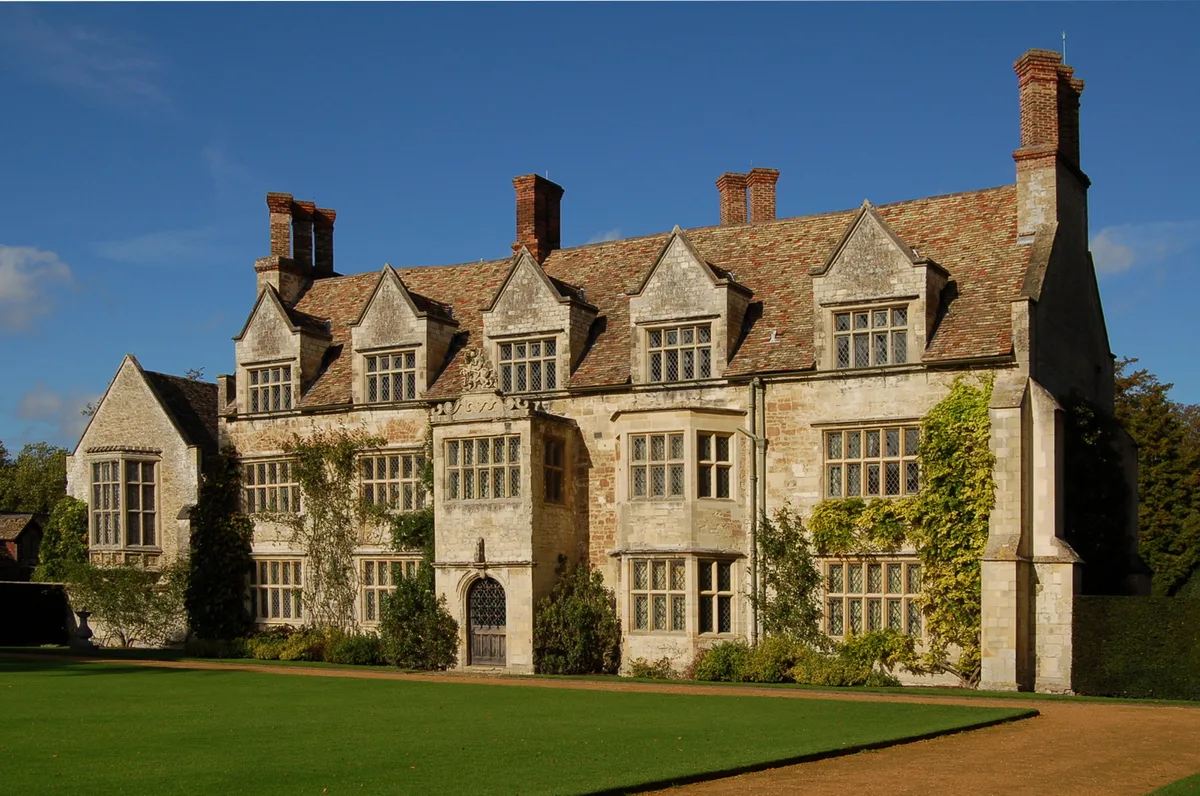
The name is older than the house. Anglesey Abbey grew from a medieval Augustinian priory, and around 1600 it was rebuilt as a gabled stone country house. Lord Fairhaven bought it in the 1920s, filled it with art and left it to the National Trust when he died in 1966.
Inside, the rooms keep the dense look of a private collection. You’ll find these:
- Landscape paintings, including two works by Claude Lorrain
- Clocks and carved furniture in nearly every room
- Panelled libraries and sitting rooms arranged as Fairhaven left them
Gardens by the season
The 98 acres are the real draw. They were laid out for set pieces rather than borders, with long avenues lined by Fairhaven’s statuary. Every season has a different reason to come:
- Winter (December–February): the Winter Garden, a winding path of coloured stems, scented shrubs and a grove of white-barked Himalayan birches
- February: snowdrops in large drifts, which bring the year’s heaviest weekend crowds
- Spring: the formal Hyacinth Garden
- Late summer: the Dahlia Garden at its fullest
On the northern edge stands Lode Mill, a restored watermill on the River Lode. When it is running you can watch flour being ground.

Timing the crowds
This is a very popular property, so when you arrive shapes the visit. On weekdays the grounds are calmest from 10am to 11am and again from 4pm to 5pm. On Saturdays and Sundays, try not to arrive between 11am and 4pm, the busiest stretch, when the car park, café and paths fill up.
The only quiet weekend window is 4pm–5pm, which suits a short garden walk more than a full visit. At the moment the site opens 9:30am–5pm every day of the week. Opening times change through the year, and the house and mill often keep shorter hours than the grounds, so check the National Trust website for this month’s times. Give yourself three to four hours to see the house, the mill and a full lap of the gardens.
Getting in, the National Trust way
Entry works through the visitor centre by the car park, which is reached from Quy Road (postcode CB25 9EJ). National Trust members scan their card there. Everyone else buys a ticket at the desk or online, and current prices are posted on the National Trust website.
Some habits help:
- Pre-book in snowdrop season. On busy February weekends, timed slots or full car parks are common.
- Ask about house entry when you arrive. House access is sometimes timed, so the visitor centre can tell you the next slot and save you walking out to the front door only to wait.
- Stay on the paths. The garden lawns and statuary avenues are kept pristine, and staff will remind you.
- Pay by card. Card and contactless are standard at the café, shop and plant sales.
From Cambridge, the drive takes about 20 minutes via Quy and the B1102. Cyclists can follow quiet lanes out through Stow cum Quy. Buses to Lode run from central Cambridge, but timetables change, so check the current route before relying on one.
Frequently asked questions
When is the quietest time to visit Anglesey Abbey?
On weekdays it's quietest from 10am to 11am and from 4pm to 5pm. On weekends the only quiet window is 4pm–5pm. Avoid weekends between 11am and 4pm, which is the busiest stretch.
How do I get to Anglesey Abbey from Cambridge?
It's about six miles northeast of the city in Lode, off the B1102 via Quy. The drive takes roughly 20 minutes and there's an on-site car park at CB25 9EJ. Buses run from central Cambridge, but check the current timetable first.
How long should I spend there?
Allow three to four hours to see the house, Lode Mill and a full loop of the 98-acre gardens.
What is the best season to visit?
Winter is the most famous season, for the Winter Garden's birch grove and February's snowdrops. Spring brings the Hyacinth Garden and late summer the Dahlia Garden. February weekends are the most crowded, so book ahead.
Are the house and gardens open the same hours?
Not always. The grounds currently open 9:30am–5pm, but the house and mill often keep shorter or seasonal hours. Check the National Trust website for the current month's times.
Plan your trip to Cambridge
United Kingdom eSIM & staying connected →
Some links above are affiliate links — if you book through them, Wander Atlas earns a small commission at no extra cost to you. It's how we keep every guide free.
Related guides
 attraction
The Fitzwilliam Museum: Cambridge Travel Guide (4.7★)
 hidden gem
Museum of Archaeology and Anthropology: Cambridge Travel Guide
 attraction
Two Temple Place: London Travel Guide (4.6★)
 attraction