A statue that faces the river
Uncle Ho stands looking out over the water. The Ho Chi Minh Monument sits on the Ninh Kiều waterfront at 24 Hai Bà Trưng, with the wide brown Hậu River behind the railings in front of it. Tourist boats tie up a few steps away.
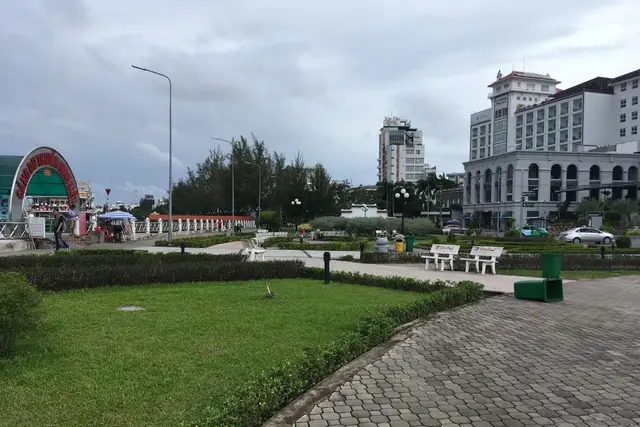
Vietnamese visitors call it Tượng Bác Hồ, the statue of Uncle Ho. The figure stands on a tall plinth inside a paved, landscaped stretch of Ninh Kiều Park. It’s the most formal spot on a promenade otherwise given over to strolling, snacking and boat touts.
For a visitor, it works as Can Tho’s reference point. Most things worth doing in the city centre, from the Cái Răng boat departures to the night market, sit within a short walk of the plinth.
Why it’s worth a stop
It’s small, and it gets fewer visitors than you’d expect. Reviewers rate it highly, but the number of reviews is modest for a city of Can Tho’s size. Many travellers walk straight past on their way to a boat without stopping.
Stop anyway, for a few reasons:
- Context. Statues of Ho Chi Minh mark civic centres across Vietnam, and this one anchors Can Tho’s best-known public space.
- The view. Standing at the base, you see the full sweep of the wharf, the river traffic and the far bank.
- Easy timing. It sits on the route to everything else nearby, so it costs you almost no detour.
Boats at dawn, Uncle Ho behind you
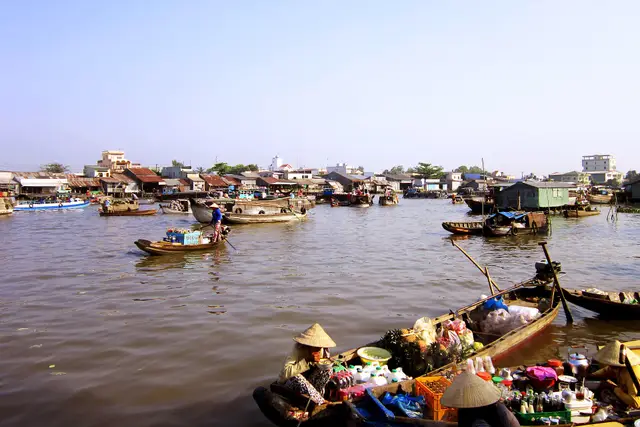
Here, the morning starts early. The boats to Cái Răng floating market leave from Ninh Kiều wharf. The market trades busiest early in the day, so departures tend to cluster around first light, and the stretch around the statue fills with drivers, touts and passengers.
That rush is why Saturday and Sunday from 7am–8am are among the monument’s busiest hours. If you’re catching a boat, use the waiting time to walk up to the plinth. If you’ve come for the statue alone, avoid that weekend window. On weekdays, 7am–9am is one of the calmest stretches of the day, because the early boats have already gone.
Getting there and finding it
The monument is on Hai Bà Trưng, the riverside street that runs along central Ninh Kiều. Most hotels in the centre are within walking distance, and any Grab driver will know “Bến Ninh Kiều” or “Tượng Bác Hồ”.
From Ho Chi Minh City, long-distance buses arrive at Can Tho’s central bus terminal. From there a short taxi or Grab ride brings you to the waterfront. Can Tho International Airport is a longer drive across town, so book a car or Grab.
Once you reach Hai Bà Trưng, walk towards the river. The statue’s plinth stands above the trees and kiosks of the park, so you’ll spot it easily.
Paying respects by the plinth
Locals treat the spot as a place of respect. Families pose for formal photos here, and some visitors bring flowers on national holidays and Ho Chi Minh’s birthday. Follow their lead:
- Stay off the plinth. Don’t climb it, sit on it or lean against it for photos.
- Keep photos straight. Jokey poses with the statue go down badly. A standing photo in front is fine and very common.
- Dress modestly. You don’t need temple rules, but swimwear-style outfits look out of place here.
- Keep it calm. Use the open promenade for drone flights, speakers and loud groups.
- Expect to be asked. Vietnamese families may ask you to take their picture, or to be in theirs. A smile and a quick yes is the local norm.
There’s nothing to buy and no ticket office at the statue itself. Snack and drink sellers along the promenade usually expect cash in đồng. Have small notes ready, because they may struggle to break large ones.
When to come
Google lists the monument as open 24 hours, since it sits in an open riverside park. Treat that as a listing, not a promise: the city can close the area for ceremonies and holiday events.
The crowd forecast gives a clear pattern:
- Weekdays, quietest: 7am–9am and 4pm–5pm.
- Weekends, quietest: 10am–1pm and 3pm–7pm.
- Weekends, busiest: 7am–8am and 8pm–9pm.
The weekday 4pm–5pm slot is the best one. The heat starts to ease, the light turns warmer on the river, and you can stay for dusk on the promenade. Try not to arrive on a weekend at 8pm. That’s when Ninh Kiều fills with evening strollers and the area by the statue gets crowded.
Along the wharf from here
The monument works best as the start of a waterfront walk. Everything below sits along or just off Hai Bà Trưng:
- Ninh Kiều Pedestrian Bridge. The curved footbridge crosses a creek off the river and lights up after dark. The evening crowds gather here.
- Can Tho Old Market (Chợ Cổ Cần Thơ). The restored riverside market hall on Hai Bà Trưng. It’s a short walk upriver from the statue.
- Ông Pagoda (Quảng Triệu Hội Quán). A Cantonese assembly hall and temple at the corner of Hai Bà Trưng and Châu Văn Liêm. Coils of incense hang from its ceiling.
- Ninh Kiều Night Market. Food stalls and clothes stands set up in the streets just behind the waterfront each evening.
Allow 20–30 minutes at the statue itself. For the full loop, with the market, the pagoda and a slow walk back along the river, give it an hour or two.
If you’re in Can Tho for a single night, try this order. Take a boat to Cái Răng at dawn. Walk past the statue on your way back, then return in the late afternoon for the light and the bridge.
Frequently asked questions
Where exactly is the Ho Chi Minh Monument in Can Tho?
It's at 24 Hai Bà Trưng on the Ninh Kiều wharf in Ninh Kiều district, facing the Hậu River. Ask a driver for "Bến Ninh Kiều" or "Tượng Bác Hồ".
When is the quietest time to visit?
On weekdays, 7am–9am and 4pm–5pm are the calmest. On weekends, it's 10am–1pm and 3pm–7pm. Avoid weekends from 7am–8am, when the floating-market boats leave, and from 8pm–9pm, when evening strollers fill the area.
Is it open at night?
Google lists it as open 24 hours because it sits in an open riverside park. The city can still close the area for ceremonies or holiday events.
How long should I spend there?
Allow 20–30 minutes for the statue and the river view. Allow an hour or two if you add the Old Market, Ông Pagoda and the pedestrian bridge nearby.
Can I combine it with the Cái Răng floating market?
Yes. The boats to Cái Răng leave from Ninh Kiều wharf, right beside the monument, so you can visit before you board or on your way back.
Plan your trip to Can Tho
Vietnam eSIM & staying connected →
Some links above are affiliate links — if you book through them, Wander Atlas earns a small commission at no extra cost to you. It's how we keep every guide free.