
Why Cai Rang is worth the early wake-up
The alarm goes off absurdly early, and that’s the point. Cai Rang is a working wholesale market, not a staged photo-op, and by mid-morning the boats have already sold off and scattered.
You’re floating on the Hau River, a branch of the Mekong, roughly 6km from central Can Tho. Wooden boats stacked with pineapples, watermelons, dragon fruit and jackfruit jostle for space, engines puttering, hulls knocking gently against each other.
Getting there
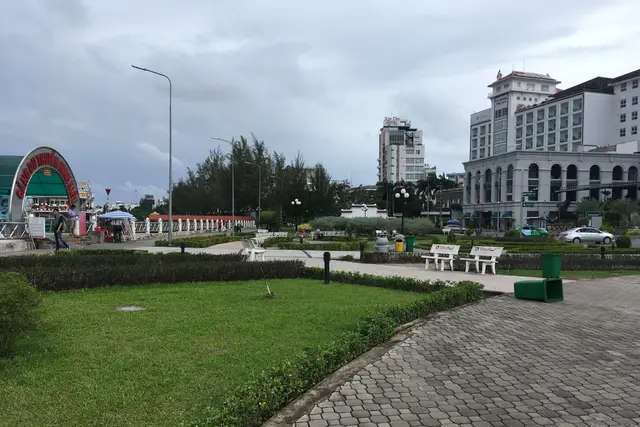
Most visitors start at Ninh Kieu wharf, Can Tho’s main riverfront dock. From there, small motorized boats take about 30-45 minutes downstream to reach the market.
- Book through your hotel or homestay the night before, most arrange a boat and driver
- Independent travelers can negotiate directly with boatmen at Ninh Kieu, though prices vary with bargaining skill
- Faster speedboats cut travel time but skip the slow river-life scenery along the banks
- A shared boat trip typically runs 2-3 hours round trip, sometimes bundled with a stop at a smaller canal market or fruit orchard
What you’ll actually see
The market itself is a maze of color and noise. Sellers rig a tall bamboo pole to each boat’s bow, hanging a sample of whatever they’re selling (a pineapple, a bundle of onions, a cluster of bananas), so buyers can spot cargo from a distance without shouting over the engines.
This system is called “bẹo,” and it’s essentially a floating billboard, unique to Mekong Delta markets.
Smaller boats weave between the big wholesale vessels selling breakfast: iced coffee poured over crushed ice, bowls of hủ tiếu (rice noodle soup) ladled straight from a floating kitchen, and sticky rice wrapped in banana leaf. Buy your coffee from the boat itself. It’s part of the experience, not just a snack.
Look past the produce boats too. Some vendors sell fuel, hardware, even karaoke machines rigged onto their decks, a reminder this is a full floating economy, not a tourist set piece.

When to go
Arrive as early as you can manage, ideally your boat should be on the water by 6am. The market technically runs from 2am to 9pm, since wholesale trading starts in the middle of the night, but the visual spectacle of dozens of boats trading is concentrated in the early morning hours.
By 8:30 or 9am, many vendors have already sold their stock and headed home, leaving the river noticeably emptier. Weekdays tend to be calmer than weekends, when more domestic tour groups join the water.
How to visit like a local
Cai Rang isn’t overrun the way markets closer to Ho Chi Minh City can be, and locals still use it for actual wholesale trade, not tourist theater.
- Bring small Vietnamese dong notes, vendors sell fresh fruit and coffee for a few thousand dong at a time, and nobody wants to make change from a large bill on a rocking boat
- Skip the negotiation drama over your ride, agree on a price with your boatman before departing, whether from a hotel or independently at the wharf
- Don’t expect English signage or menus; pointing at what you want on a neighboring boat works fine
- Wear a hat and sit low, boats are narrow, and the morning glare off the water is stronger than it looks
- If a vendor paddles up selling coffee or fruit, a small purchase is appreciated even if you’re not hungry, since this is their livelihood, not a performance
Combine the market with a slow paddle through the narrower canals nearby, where sampan boats thread past stilt houses and fruit orchards. A quieter contrast to the open-water bustle of Cai Rang itself. Many boat operators build this into the return trip without extra charge, so ask before you set off.
Give yourself the full morning. Rushing the visit means missing the transition from dead-of-night wholesale chaos to the gentler retail hours when the market softens into something closer to a floating breakfast stop.
Frequently asked questions
What time should I arrive at Cai Rang floating market?
Aim to be on the water by 6am. The market technically opens at 2am for wholesale trading, but the lively boat-to-boat commerce visitors come for is best between roughly 5am and 8am, before vendors start heading home.
How do I get to Cai Rang from Can Tho city center?
Take a boat from Ninh Kieu wharf, about a 30-45 minute ride downstream on the Hau River. Hotels and homestays typically arrange this the night before; independent travelers can also negotiate directly with boatmen at the wharf.
How much does a boat trip cost?
Prices vary by boat size, group size, and negotiation, so there's no fixed rate — agree on the price with your boatman or tour operator before setting off rather than after boarding.
How long should I spend at the market?
Budget 2-3 hours round trip from Ninh Kieu wharf, including time drifting through the market itself. Many trips also add a short detour into narrower canals for a quieter, slower contrast.
Is Cai Rang crowded with tourists?
It stays relatively under-the-radar compared to markets nearer Ho Chi Minh City, and is still primarily a working wholesale market. Weekdays are calmer than weekends, when more group tours arrive.
Plan your trip to Can Tho
Some links above are affiliate links — if you book through them, Wander Atlas earns a small commission at no extra cost to you. It's how we keep every guide free.
Related guides
 attraction
 Cai Rang Floating Market: Can Tho Travel Guide (4.1★)
 attraction
 Ninh Kieu Wharf: Can Tho Travel Guide (4.4★)
 attraction
 Can Tho Museum: Travel Guide (4.3★)
 hidden gem