Why Zelve is different
Most of Cappadocia’s cave sites feel curated. Zelve doesn’t.
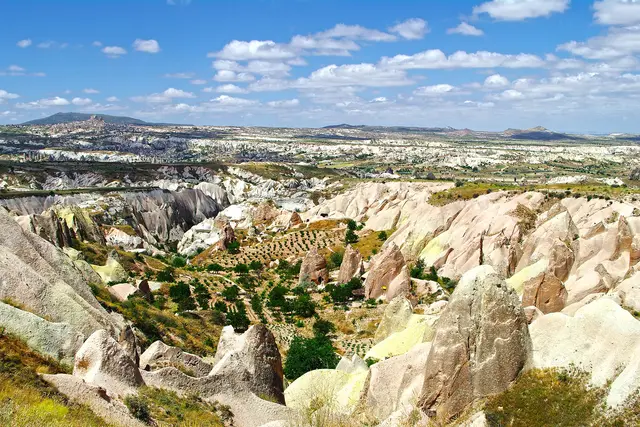
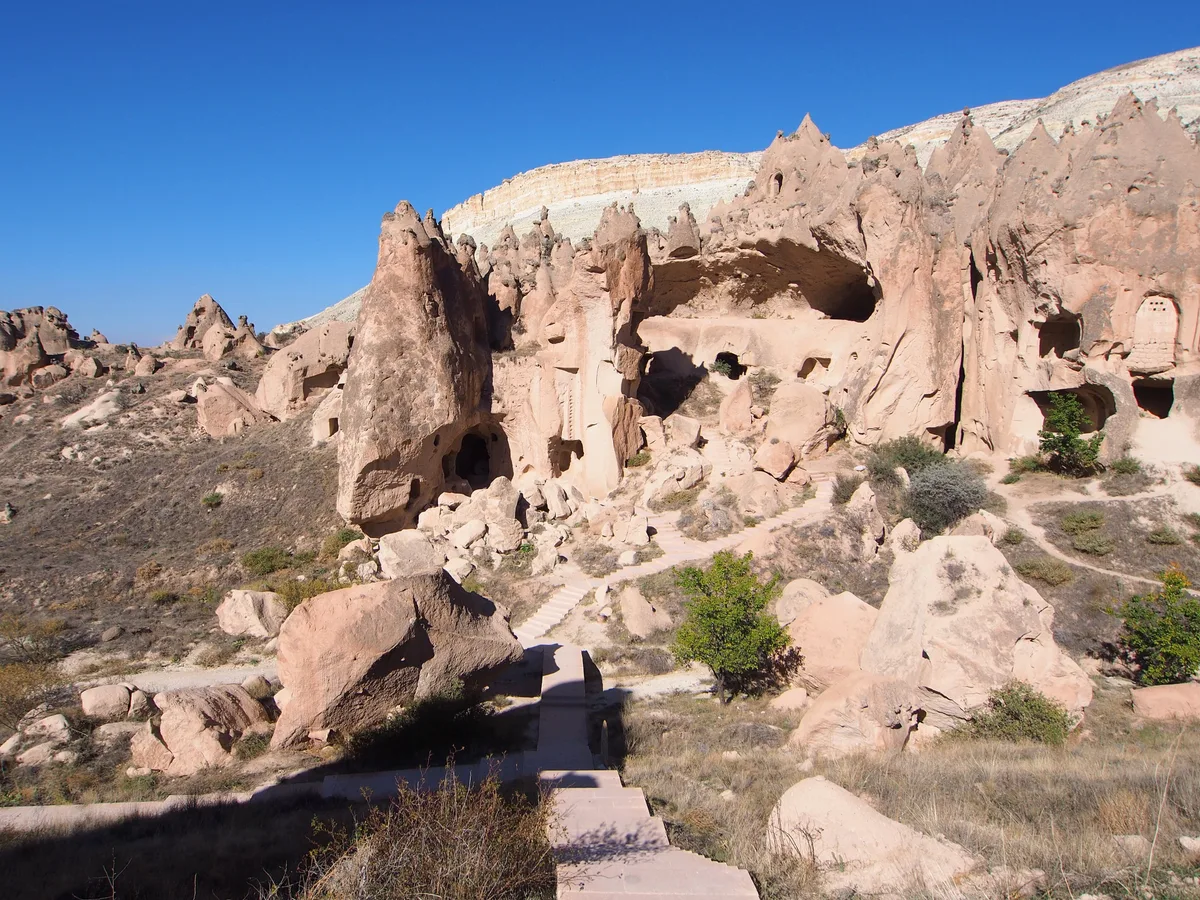
You’re walking into a village that people actually lived in until 1924, when the last residents, Christian and Muslim families who’d shared these cliffs for centuries, were relocated because the rock had become too unstable. What’s left are three converging valleys pocked with carved-out homes, stables, a mosque, and chapels, all abandoned mid-life and left to crumble at their own pace.
There’s no reconstruction here, no polish. That’s the appeal.
Getting there
Zelve sits about 5km from Avanos and roughly 10km from Göreme, in the Aktepe area of the Nevşehir region. Most visitors arrive by rental car, taxi, or as part of a Cappadocia “Red Tour,” which typically pairs Zelve with Pasabag (Monks Valley) and Avanos itself.
If you’re driving, there’s a car park right at the entrance. Public buses run less predictably out here, so a private driver or organized tour is the more reliable option if you don’t have your own wheels.
What you’ll actually see
Once through the entrance, three valleys fan out in front of you, and you can walk into all of them without a fixed route.
Highlights include:
- A rock-cut mosque with a slender minaret, one of the few structural giveaways of the village’s Muslim residents
- Faint traces of religious paintings and carved crosses marking former chapels
- A tunnel connecting two valleys, low and narrow, that most visitors duck through for the novelty
- Pigeon houses carved high into the cliff faces, once used to collect droppings for fertilizer
- Collapsed dwellings and staircases that go nowhere, evidence of the erosion that forced the evacuation
Bring a flashlight or use your phone’s if you plan to go deep into the darker chambers. Some interiors have no natural light at all.

When to go
The museum runs 8am to 8pm every day of the week, so there’s a wide window to work with. Crowd data shows weekends get busiest between 10am and 5pm, when tour buses cluster in.
Both weekday and weekend mornings and evenings stay calmer, so aim for right at opening or the last couple of hours before close. Spring and autumn bring the most comfortable temperatures for scrambling over rock; summer midday sun in the open valleys gets brutal fast.
How to visit like a local
Zelve is firmly on the tour-bus circuit now, so this isn’t an undiscovered corner of Cappadocia. The trick is timing, not secrecy.
- Arrive at 8am or after 5pm. You’ll have long stretches of trail without another visitor in sight, even though the site draws heavy weekend crowds midday.
- Pay at the gate. Ticket booths take cash and card; if you hold a Museum Pass Cappadocia, it typically covers entry here, confirm current validity before you go.
- Wear real shoes. This is uneven, dusty rock scrambling, not paved museum flooring, trainers or hiking shoes, not sandals.
- Skip the guided-tour bottleneck. Independent visitors can linger in the quieter side valleys while bus groups stick to the main path, wander left or right of the crowd for space.
- The common mistake: rushing through in 30 minutes because it’s bundled into a half-day tour. Give it at least 90 minutes. The smaller passages and side chapels are easy to miss if you’re moving fast.
- Don’t climb where fencing suggests otherwise. The rock is genuinely soft and still eroding; that’s exactly what emptied the village in 1924.
Nearby stops worth combining
Zelve pairs naturally with two other short detours in the same direction.
Pasabag, just a few minutes away, has some of the region’s most photographed multi-headed fairy chimneys. Avanos, a working pottery town on the Kızılırmak River, makes a good lunch stop afterward, with generations-old ceramic workshops you can walk into and watch in action.
Between the two, you can turn a single trip out to Zelve into a half-day loop without backtracking.
Frequently asked questions
How long should I spend at Zelve Open Air Museum?
Plan for 1.5 to 2 hours. It's a large, uneven site across three valleys, and rushing through in under an hour means missing the tunnel, mosque, and side chapels.
When is the quietest time to visit?
Early morning right at the 8am opening or after 5pm, on any day of the week. Weekends see the heaviest crowds between 10am and 5pm.
How do I get to Zelve from Göreme or Avanos?
It's about 10km from Göreme and 5km from Avanos. Most visitors come by rental car, taxi, or as a stop on a Cappadocia 'Red Tour' alongside Pasabag and Avanos.
Is Zelve included in the Museum Pass Cappadocia?
It's typically covered by the regional museum pass, but pass terms change, so confirm current validity at the ticket booth before relying on it.
What should I wear or bring?
Sturdy closed-toe shoes for scrambling over uneven rock, and a flashlight or phone light for the darker cave interiors and the connecting tunnel.
Plan your trip to Cappadocia
Some links above are affiliate links — if you book through them, Wander Atlas earns a small commission at no extra cost to you. It's how we keep every guide free.