Two blocks, one courtyard, dozens of studios
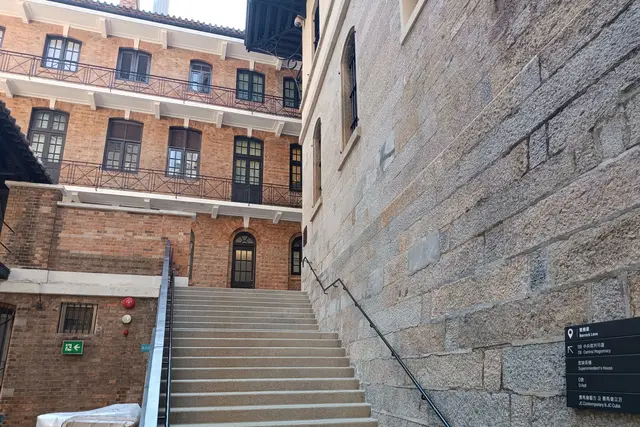
You walk through a gap off Aberdeen Street and the walls rise on both sides. Two long, mid-century blocks face each other across an open courtyard: Staunton on one side, Hollywood on the other. Studios line the open-air corridors on every floor, and a bridge links the two blocks up top.
The buildings were the Police Married Quarters, flats for police officers and their families. Before that, the site held the Central School, where Sun Yat-sen studied. Foundations of the old school were uncovered on the site and are kept on view. Look for them near ground level before you start climbing.
What fills the corridors
The former flats are now small units run by Hong Kong designers and makers. Expect each doorway to open onto a different trade:
- Jewellery, ceramics and leather goods
- Locally designed clothing and accessories
- Stationery, prints and homeware
- Cafés and eateries, mostly on the lower floors
The courtyard and ground-floor halls host rotating exhibitions, pop-up markets and design events. Check PMQ’s official site before you go to see what’s on that week. Shopping and browsing are free. Prices are set by each shop and shown on its own tags.
Plan on one to two hours if you browse properly. The units are small, so you take in each one quickly, but there are a lot of floors.
Getting up the hill
PMQ sits in the Mid-Levels slopes above Central, so every route climbs. From Central MTR Station (Island and Tsuen Wan lines), take Exit D2 and walk to the Central–Mid-Levels Escalator. Get off at Hollywood Road or Staunton Street and walk a few minutes west.
From Sheung Wan Station (Island Line), the walk is steeper but takes you along Hollywood Road. On the way you pass the antique shops and Man Mo Temple. Tai Kwun, the old Central Police Station compound, is a short walk east, so the two pair well in one afternoon. SoHo’s restaurants start right outside the gates.
Timing your loop of the floors
PMQ currently opens 12pm–10pm every day, but individual studios set their own hours. Many shopfronts open later than the gates or close earlier. A visit right at noon may find some shutters still down.
On weekends, don’t arrive between 1pm and 7pm unless you want to share narrow corridors with a crowd. This is one of the city’s best-known design spots, and those are its busiest hours. Weekdays between 9pm and 10pm are typically the calmest. The courtyard is quieter and the lit corridors are easy to photograph, though some shops will already be closing.
A few habits help here:
- Start at the top. Take the lift to the highest floor and walk down level by level. That way you aren’t climbing stairs between studios.
- Ask before photographing products. Many units are one-person studios selling their own designs, and some makers would rather you didn’t photograph them.
- Pay as each shop prefers. Most accept cards or contactless payment. Some small stalls lean on Octopus or cash, so carry a little.
- Talk to the person at the counter. Very often they made the piece themselves, and asking about materials or process is normal here.
Frequently asked questions
When is the quietest time to visit PMQ?
Weekdays between 9pm and 10pm are typically the quietest. On weekends, avoid 1pm–7pm, the forecast busiest window.
How do I get to PMQ by MTR?
Take Exit D2 at Central Station and ride the Central–Mid-Levels Escalator up to Hollywood Road or Staunton Street. From there it's a short walk west to Aberdeen Street. Sheung Wan Station is the other option, with a steeper walk along Hollywood Road.
What are PMQ's opening hours?
The complex currently opens 12pm–10pm daily. Individual studios set their own hours, so some open later or close earlier. Check the official site before you go.
How long should I spend at PMQ?
One to two hours covers both blocks and the courtyard. Allow longer if there's an exhibition or market on.
What is near PMQ?
Tai Kwun is a short walk east. Man Mo Temple and the antique shops are along Hollywood Road, and SoHo's restaurants are right outside.
Plan your trip to Central
Hong Kong eSIM & staying connected →
Some links above are affiliate links — if you book through them, Wander Atlas earns a small commission at no extra cost to you. It's how we keep every guide free.