Why go
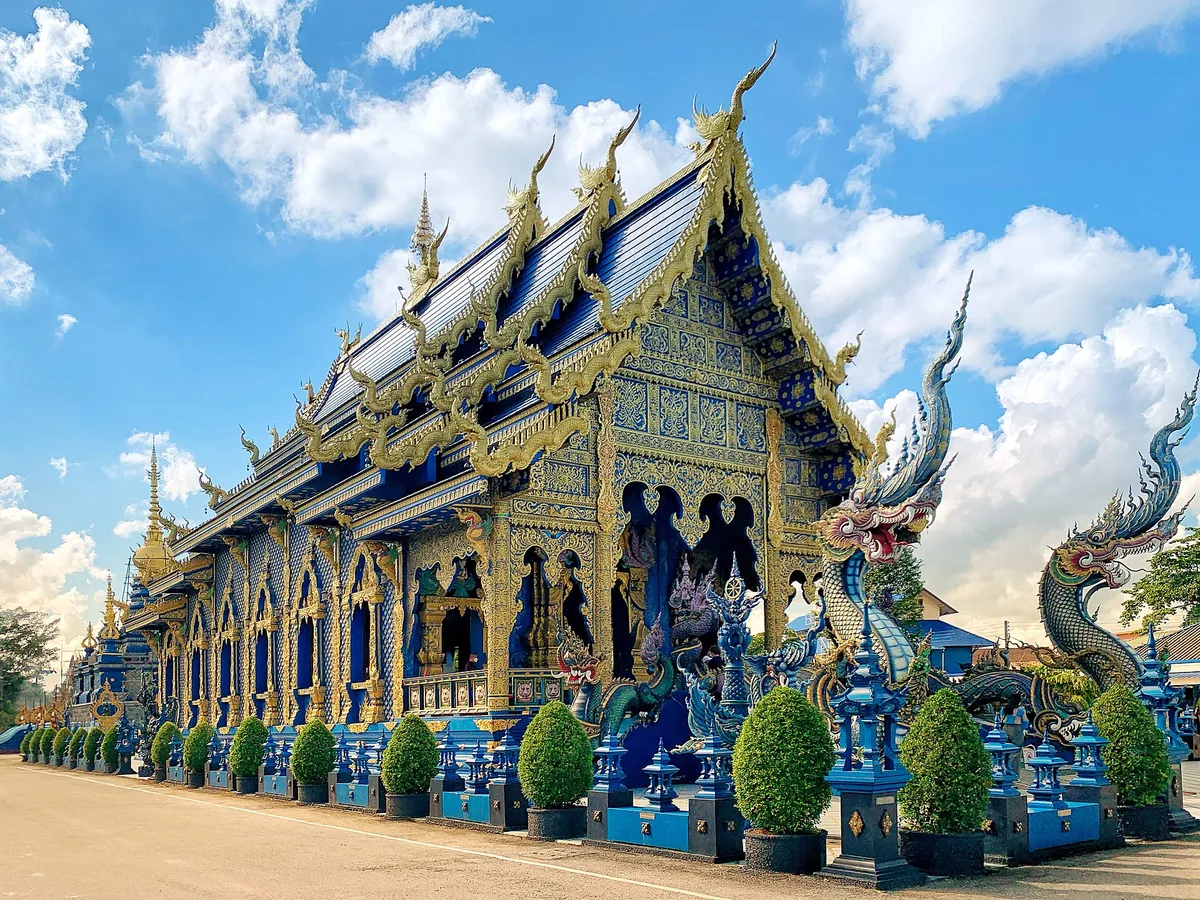
Rong Suea Ten, universally nicknamed the “Blue Temple,” is one of the most photographed modern religious buildings in Thailand, and with a 4.6 rating across nearly 27,000 reviews, it’s clearly earned its reputation beyond social media hype. Unlike the stark white of its famous cousin Wat Rong Khun, this temple is drenched in a deep indigo blue, accented with gold detailing, naga serpents, and intricate stucco carvings that shimmer under the tropical sun.
The name translates roughly to “Dancing Tiger Temple,” a nod to the tigers once said to roam this area outside Chiang Rai city before it was settled. Inside, a striking white Buddha image sits beneath a canopy of blue-and-gold ornamentation, flanked by murals and mythological figures that reward a slow, unhurried look rather than a quick photo stop.
Getting there
The temple sits at 306 Moo 2, Maekok Road, Tambon Rim Kok, on the northern outskirts of Chiang Rai city, roughly a 10–15 minute drive (about 5-6 km) from the city center and the Chiang Rai Bus Terminal. There’s no public bus route running directly to the site, so most visitors arrive by rented scooter, private car, taxi, or a hired songthaew (shared red truck) negotiated for a round trip.
Many travelers combine the ride with a stop at the Chiang Rai Clock Tower or Night Bazaar beforehand. If you’re staying near the Old City, a scooter ride along the Kok River side of town takes you past rice fields and small local eateries before reaching the temple grounds. Chiang Rai International Airport is about 15–20 minutes away by car, making this a convenient first or last stop for those flying in or out.
What to see
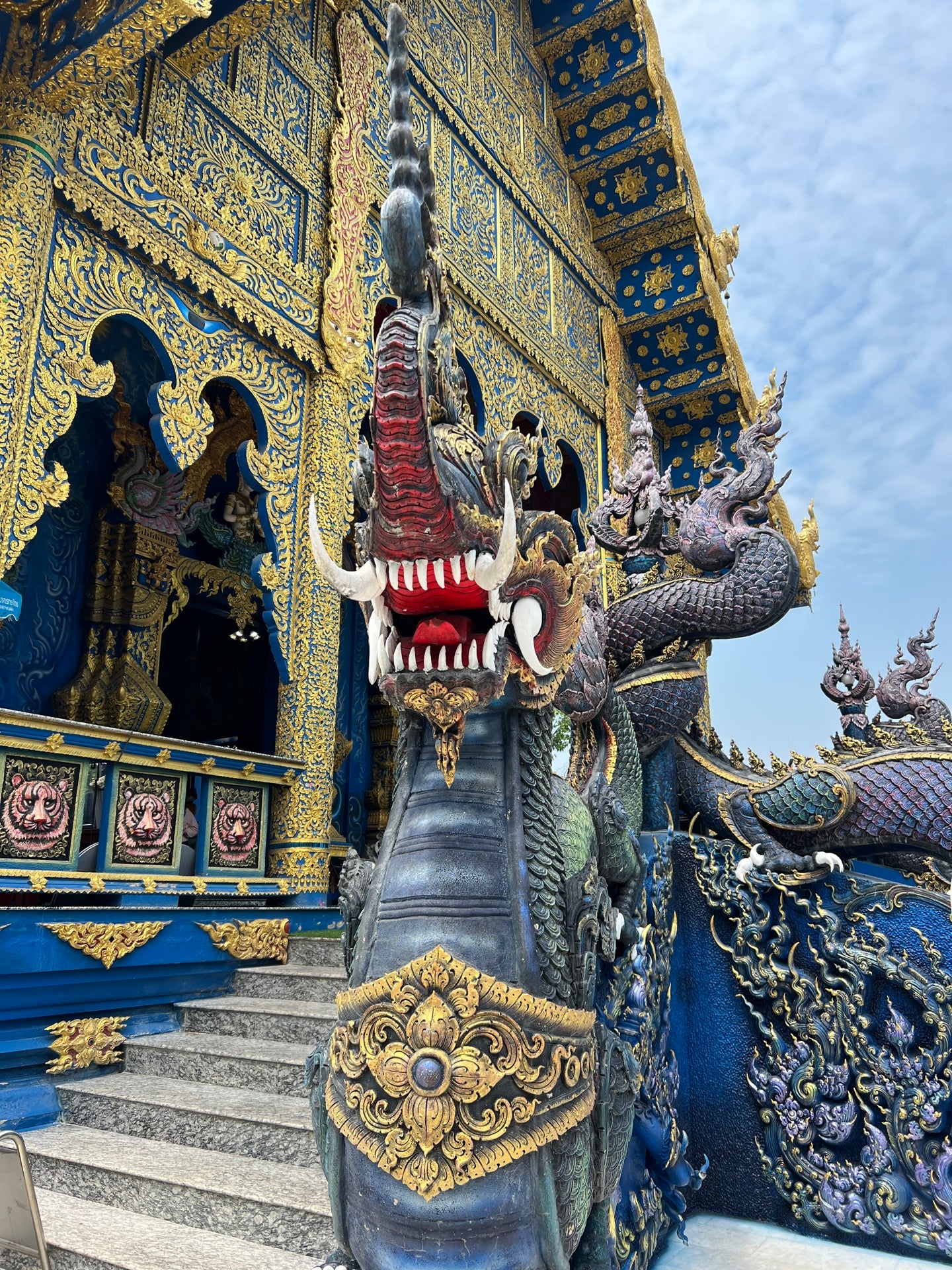
Budget 30–45 minutes for a full walk-through. The exterior alone (soaring blue spires, dragon-like naga staircases, and gilded finials) merits a full circuit of the building before heading inside. Once inside, look up: the ceiling and interior walls are painted with cosmic, almost psychedelic patterns in blue, gold, and white that frame the central Buddha statue. Photographers favor the reflecting pool and the ornate entrance gate, especially in the hour after opening when the crowds are thinner and the light is softer.
Just outside the main hall, smaller shrines and a large white elephant statue are worth a look, and there’s usually space to sit quietly and observe rather than just snap photos.
When to go
Early morning (soon after opening, generally around 6:30–7am) or late afternoon light gives the best photos and the smallest crowds, since tour buses tend to arrive mid-morning through early afternoon. Chiang Rai’s cool season, November through February, brings comfortable temperatures and clearer skies, while March–April can bring haze from regional agricultural burning that dulls visibility. The rainy season (roughly June–October) means fewer tourists but a real chance of afternoon downpours, so a morning visit is safer during those months.
Nearby & tips
Rong Suea Ten is the third point in Chiang Rai’s informal “temple trilogy,” alongside Wat Rong Khun (White Temple), about 20–25 minutes south, and Baan Dam Museum (Black House), roughly 15 minutes away. Many visitors do all three in a single half-day loop by car or scooter. Entry to the Blue Temple has generally been free (confirm locally in case that changes), though donation boxes are placed throughout for upkeep.
As with any active temple, modest dress is expected: cover shoulders and knees, and remove shoes before stepping onto any raised platform or into the main hall. There’s limited shade around the grounds, so bring water and sun protection, and keep voices low near worshippers. Public restrooms and a small parking area are available on-site, but food options are minimal, so plan to eat before or after at one of the local noodle or khao soi shops back toward the city center.
Frequently asked questions
Is there an entrance fee for Rong Suea Ten?
No, entry to the Blue Temple is free, though donation boxes are placed around the grounds for temple upkeep.
How do I get to the Blue Temple without a car?
There's no direct public bus; most visitors use a rented scooter, taxi, or hired songthaew from Chiang Rai city, about a 10–15 minute ride.
How much time should I plan for a visit?
Most visitors spend 30–45 minutes, enough to walk the exterior, view the interior murals and Buddha image, and take photos at the entrance gate.
What should I wear?
Dress modestly with shoulders and knees covered, as this is an active place of worship, and be ready to remove shoes before entering raised areas.
Can I combine this with other Chiang Rai temples in one day?
Yes — it's commonly visited alongside Wat Rong Khun (White Temple) and Baan Dam Museum (Black House), both within a 15–25 minute drive, forming a popular half-day temple loop.
Plan your trip to Chiang Rai
Thailand eSIM & staying connected →
Some links above are affiliate links — if you book through them, Wander Atlas earns a small commission at no extra cost to you. It's how we keep every guide free.
Related guides
 attraction
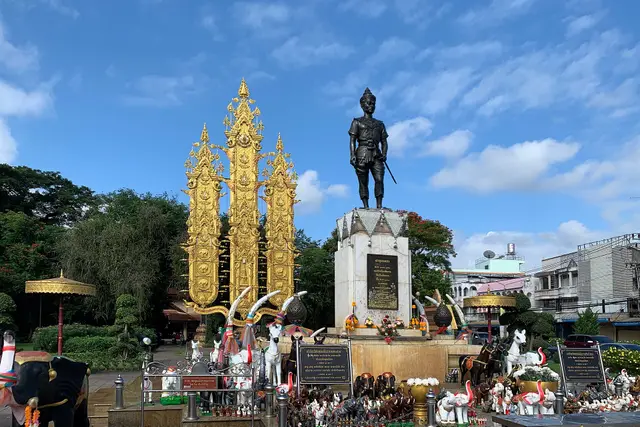
 King Mangrai Monument: Chiang Rai Travel Guide (4.7★)
 attraction
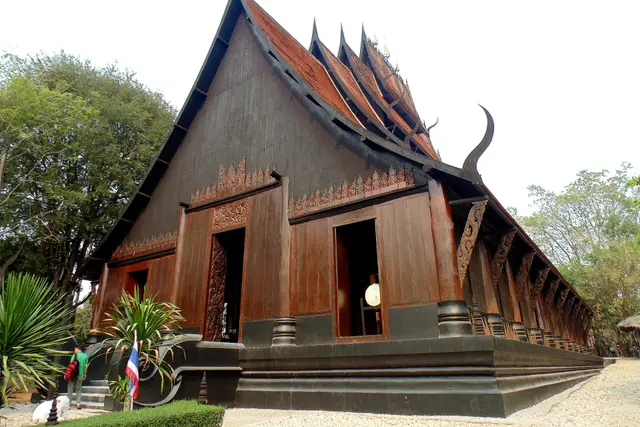
 Baan Dam Museum: Chiang Rai Travel Guide (4.1★)
 attraction
 Wat Rong Khun: Chiang Rai Travel Guide
 attraction