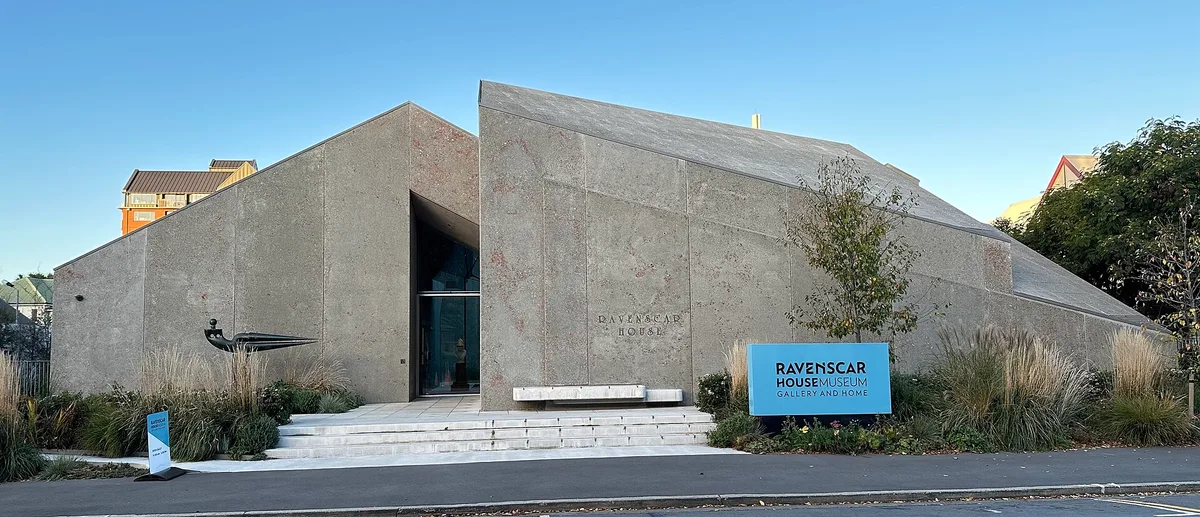
Walk down Rolleston Avenue with the Botanic Gardens on one side and you reach a building that doesn’t look like a museum. It’s low and solid, with no grand stairs or banners. Inside you’ll find a house: a living room, a dining room, a bedroom and a library. Paintings hang where a family would have hung them.
That’s the idea. Ravenscar is a home rebuilt as a museum, and it gives you a quieter, closer way to see New Zealand art than a big gallery does.
The house that came back from Scarborough
Ravenscar started as a real house. Jim and Susan Wakefield built their home on the hillside at Scarborough, near Sumner, and filled it with New Zealand paintings, furniture, ceramics, glass and classical antiquities. The Canterbury earthquakes of 2010–11 destroyed the house, and the collection lost its home.
The Wakefields gave the collection to Canterbury Museum. Their charitable trust then built a new home for it in the city. The rooms recreate a domestic layout instead of plain white galleries.
That background explains the feel of the place. You aren’t looking at objects lined up for study. You’re seeing how two collectors chose to live with them, from a McCahon above a sideboard to Greek and Roman pieces sharing a room with modern furniture.
What you’ll find in the rooms
The scale is domestic and the pace is slow. Each room holds a few dozen objects at most, so you can look properly without wearing out. Expect a mix like this:
- New Zealand painting, including work by Colin McCahon and Rita Angus, two central figures of the country’s 20th-century art
- Furniture and design objects, set out the way they’d be used
- Ceramics and glass, often on tables and shelves rather than plinths
- Classical antiquities from the ancient Mediterranean, an unusual sight in a New Zealand home
Since everything sits in a room setting, the labels matter less than usual. Notice what hangs next to what. The pairings were the collectors’ choices, and they are the reason to come.
Timing your visit around the weekday lulls
Ravenscar is still a quieter find. Most visitors on this strip head for the bigger institutions nearby, so the rooms rarely feel packed. Small rooms fill up fast, though, so timing still matters.
On weekdays it’s calmest from 10am–11am, again from 12pm–1pm, and in the last hour from 4pm–5pm. Weekends are a different story. Saturdays and Sundays usually stay busy from 10am–5pm, so if you can only come at the weekend, expect to share each room.
At the moment the museum opens 10am–5pm every day. Museum hours can change through the year and on public holidays, so check the official site for this month’s times before you go. Most people need 45 minutes to an hour and a half.
Moving through a house, not a gallery
The domestic setting changes how you should behave. These are tighter spaces than a gallery hall, and a few habits make the visit better for everyone.
- Keep your voice low. Sound carries in small rooms, and talking over a painting ruins it for the person beside you.
- Leave big bags behind. Turning around with a backpack in a furnished room is a real risk to the objects. Ask at the front desk about storing bags.
- Check the photo policy at the door. Private collections often have their own rules, so ask before you raise your phone.
- Let groups pass. If a guided group is in a room, go on to the next one and come back.
Admission prices are posted at the front desk and on the museum’s official site. In New Zealand, card and contactless payment are standard, so you rarely need cash.
Getting to Rolleston Avenue
The museum is at 52 Rolleston Avenue, on the western edge of the central city, where the grid meets Hagley Park. It’s an easy walk from Cathedral Square: head west along Worcester Boulevard and turn onto Rolleston Avenue.
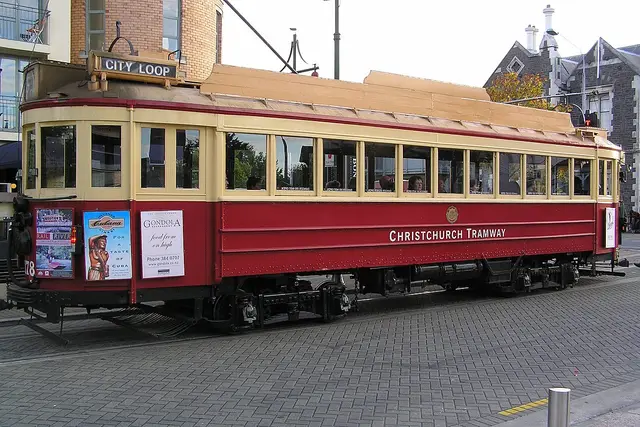
The Christchurch heritage tram runs along this stretch too. Its loop passes the Arts Centre and Canterbury Museum, both a short walk from the door, so a hop-on, hop-off tram ticket covers the trip.
If you’re driving, central Christchurch has paid parking buildings and metered streets nearby. Spaces along Rolleston Avenue fill up on weekends, which is one more reason to visit on a weekday.
Making an afternoon of the cultural mile
Ravenscar sits on one of the densest cultural streets in the South Island, and it pairs well with its neighbours. A comfortable half-day might look like this:
- Canterbury Museum, the institution that cares for the Ravenscar collection, is close by on Rolleston Avenue
- The Arts Centre, the Gothic Revival complex that was once Canterbury College, sits across the road with courtyards, shops and cafés
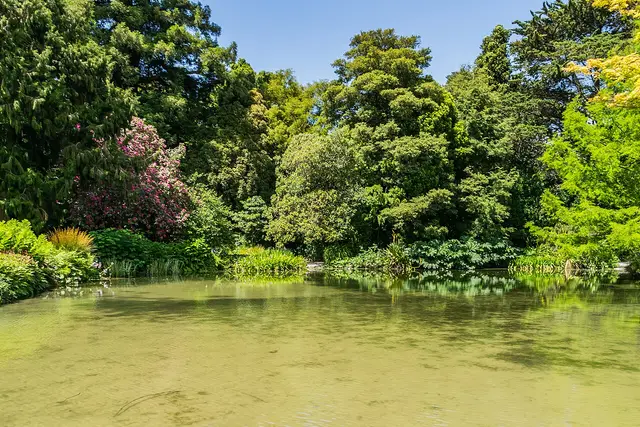
- Christchurch Botanic Gardens are just over the road, with the Avon River curving through
- Christchurch Art Gallery Te Puna o Waiwhetū is a few minutes’ walk east on Montreal Street
A good order: Ravenscar from 10am when it’s quiet, lunch at the Arts Centre, then the gardens in the afternoon. Or reverse it and finish at Ravenscar between 4pm and 5pm, when the weekday rooms tend to empty out.
Who it suits, and who might skip it
Come here if you like seeing art up close, without a crowd, in rooms built for living. It’s a strong choice for anyone curious about New Zealand painting and design. It also works on a grey Canterbury day, when the gardens over the road are less appealing.
If you’re travelling with young children who need room to roam, the larger Canterbury Museum nearby will likely suit them better. Ravenscar rewards slow looking. Give it an unhurried hour on a weekday morning and you’ll have seen it at its best.
Frequently asked questions
When is the quietest time to visit Ravenscar House Museum?
On weekdays, 10am–11am, 12pm–1pm and 4pm–5pm are usually the calmest. Weekends tend to stay busy all day, from 10am to 5pm.
What are the opening hours?
At the moment it opens 10am–5pm, Monday to Sunday. Museum hours can change through the year and on public holidays, so check the official site before you go.
How long should I spend there?
Most visitors need 45 minutes to an hour and a half. It's a small, house-scale museum, so it fits easily alongside Canterbury Museum or the Botanic Gardens in the same day.
How do I get there from the city centre?
Walk west from Cathedral Square along Worcester Boulevard to Rolleston Avenue. The museum is at number 52. The heritage tram also stops nearby at the Arts Centre and Canterbury Museum.
What else is nearby?
Canterbury Museum, the Arts Centre and Christchurch Botanic Gardens are all on Rolleston Avenue or just across it. Christchurch Art Gallery is a few minutes' walk east.
Plan your trip to Christchurch
New Zealand eSIM & staying connected →
Some links above are affiliate links — if you book through them, Wander Atlas earns a small commission at no extra cost to you. It's how we keep every guide free.
Related guides
 attraction
Christchurch Botanic Gardens: Travel Guide (4.7★)
 attraction
New Zealand World Peace Bell: Christchurch Travel Guide
 attraction
Christchurch Tram: Travel Guide (4.6★)
 attraction