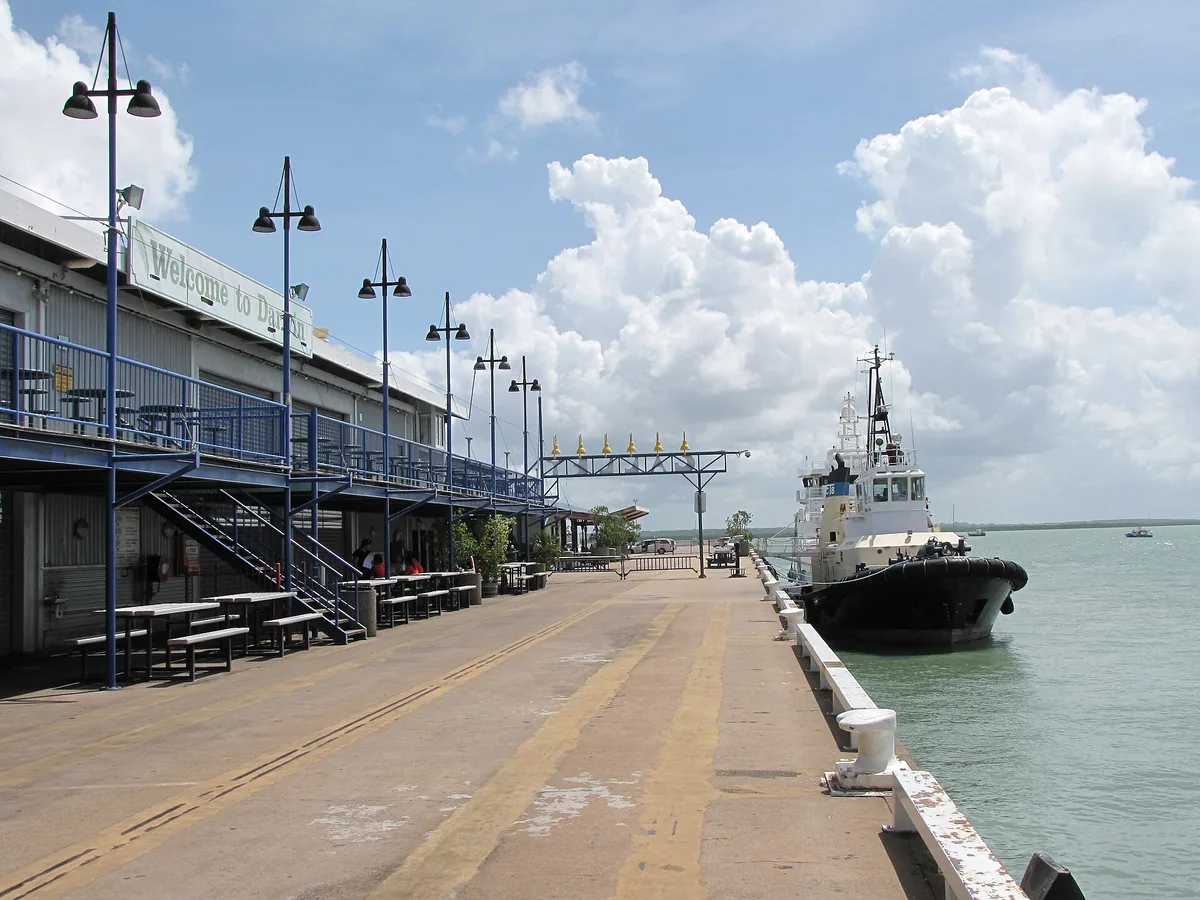
A wharf that still works for a living
Timber, concrete and salt water: that’s the whole stage. Stokes Hill Wharf pushes out into Darwin Harbour from the southern edge of the city centre. It’s still a working wharf, so you share the deck with lines of fishing rods, harbour cruise boats and people carrying trays of fried fish to the tables.
Darwin has plenty of nicer-looking spots. This one earns its visit through position. Open water wraps around three sides of you, the city skyline is behind, and the breeze off the harbour does a lot of work in Top End heat.
It’s well known and consistently well rated, so don’t expect to have it to yourself. Do expect a relaxed, unfussy place where nobody minds if you stay a while.
The tide decides what you see
Check the tide chart before you go. Darwin Harbour has one of the largest tidal ranges in Australia, at up to around eight metres on the biggest spring tides.
On a high tide the water sits close under the deck, and the wharf feels like a pier floating on the bay. At low tide the pylons stand tall and crusted. The drop to the water looks dizzying, and mud flats show along the shore. Both are worth seeing. If you come twice in one stay, try to catch each.
The tide matters to the anglers too. They usually line the rails when the water is moving rather than at slack tide.
Where the Bombing of Darwin began for many
The wharf’s history is the reason to slow down here. On 19 February 1942, Japanese aircraft attacked Darwin, and the harbour was the main target. Ships alongside the wharf were hit. The cargo ship Neptuna, carrying explosives, blew up in an explosion that killed many people at the waterfront.
The wharf’s tourist facility is the Royal Flying Doctor Service Tourist Facility. Its exhibits cover the Flying Doctor’s work in the outback and the 1942 raids. Give it an hour or more if the war history interests you.
Nearby you’ll find the WWII Oil Storage Tunnels, dug into the cliff below the city. They’re an easy add-on on the walk back towards town.

Eating at the end of the wharf
Food here is casual. Seafood is the theme you’ll see most, and fish and chips eaten over the water is the classic order. The tables are shared and set out along the wharf, so you sit with the harbour all around you.
Things worth knowing before you eat:
- Cards are the norm. Australians pay by tap almost everywhere, and the wharf is no different.
- Tipping isn’t expected. Rounding up for good service is fine, but nobody counts on it.
- Mind the gulls. Seabirds work the deck, so don’t leave food unattended on the table.
- Prices are on the menus at each outlet. Check there, as they change.
Sit at the western edge of the tables if you want the sunset across the harbour.
Beating the crowd to the rail
Timing makes more difference here than anything else. At the moment the wharf area is open 11am–9pm daily. BestTime’s forecast of typical foot traffic shows that weekdays from 11am to 12pm are usually the calmest. That’s the window for a quiet look at the history displays and a free spot at the railing.
Avoid weekend evenings from 5pm to 9pm if you can. That’s usually the peak, when sunset, dinner and cruise departures all happen at once. Tables fill up and the queues at the counters get long.
If sunset is the point of your trip, come on a weekday evening instead. Or arrive early on a weekend and claim a seat before the rush.
On the wharf itself, a few habits will make you look like you belong:
- Give the anglers room. Don’t walk behind someone mid-cast, and step around their buckets and tackle.
- Treat it as working space. Boats tie up here, so keep clear of mooring lines and crew moving gear.
- Don’t swim, and don’t dangle your legs low at high tide. Saltwater crocodiles live in Darwin Harbour, and box jellyfish are a risk in the warmer months.
Getting there on foot
The wharf sits at the far end of the Darwin Waterfront precinct, next to the Darwin Convention Centre. From Smith Street Mall in the city centre, it’s a walk of roughly 15–20 minutes. An elevated walkway and lift take you down the escarpment to the Waterfront, which saves you the steep slope.
On the way you pass the Wave Lagoon and the Recreation Lagoon at the Waterfront. Bring swimmers if you’d like a dip after the wharf, because the harbour itself is off limits.
There’s car parking in the Waterfront precinct if you’re driving. Taxis and rideshares can drop you at the wharf entrance on Stokes Hill Road.
Picking your season
Darwin has two seasons, and they change the visit. The dry season, roughly May to October, brings clear skies, lower humidity and the most reliable sunsets. It’s also when the Waterfront is at its busiest.
The wet season, roughly November to April, is hot, sticky and stormy. That has its own payoff: afternoon lightning storms rolling in over the harbour are a real Top End spectacle, best watched from under cover.
Plan on one to two hours for food, a walk to the end of the wharf and the views. Allow longer if you’re going into the tourist facility or joining a harbour cruise from the wharf.
Frequently asked questions
When is the quietest time to visit Stokes Hill Wharf?
BestTime's forecast of typical foot traffic shows weekdays between 11am and 12pm are usually the calmest. Weekend evenings from 5pm to 9pm are normally the busiest, so avoid them if you want a table without waiting.
How do I get to Stokes Hill Wharf from Darwin city centre?
Walk from Smith Street Mall towards the Darwin Waterfront, using the elevated walkway and lift down the escarpment. Then carry on past the Wave Lagoon and the Convention Centre. It takes roughly 15–20 minutes. The Waterfront also has parking, and taxis can drop you on Stokes Hill Road.
What are the opening hours?
At the moment the wharf is listed as open 11am–9pm every day. Hours for individual outlets and the tourist facility can change, so check before you go, especially on public holidays.
Can I swim or fish at Stokes Hill Wharf?
Fishing from the wharf is popular, and there's a fishing platform. Swimming in the harbour is not safe because of saltwater crocodiles and box jellyfish. Use the Wave Lagoon or Recreation Lagoon at the nearby Waterfront instead.
What else is nearby?
The Royal Flying Doctor Service Tourist Facility is on the wharf itself. The WWII Oil Storage Tunnels and the Darwin Waterfront lagoons are a short walk away, and Smith Street Mall is about 15–20 minutes on foot.
Plan your trip to Darwin
Australia eSIM & staying connected →
Some links above are affiliate links — if you book through them, Wander Atlas earns a small commission at no extra cost to you. It's how we keep every guide free.
Related guides
 attraction
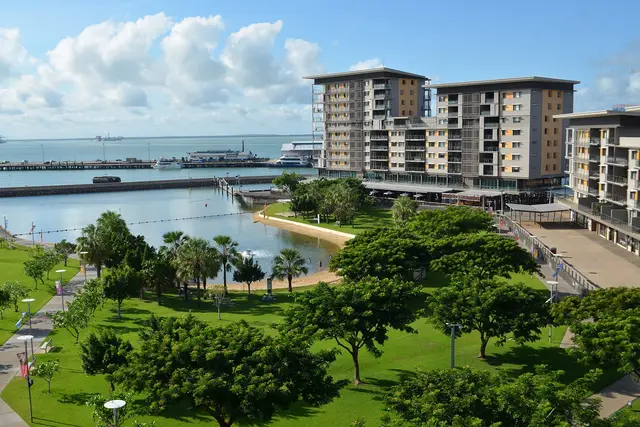
Darwin Waterfront Precinct: Travel Guide (4.6★)
 attraction
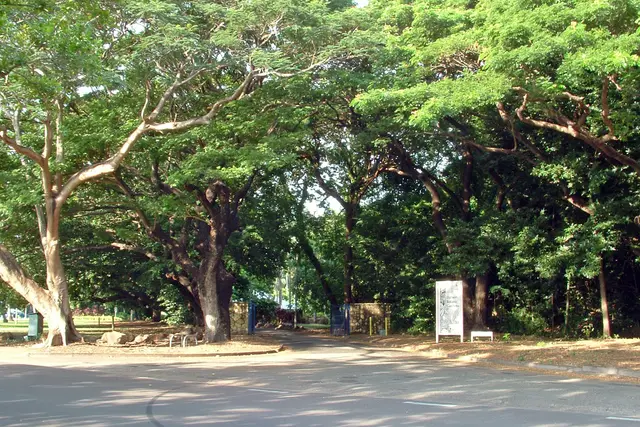
George Brown Darwin Botanic Gardens: Travel Guide (4.5★)
 attraction
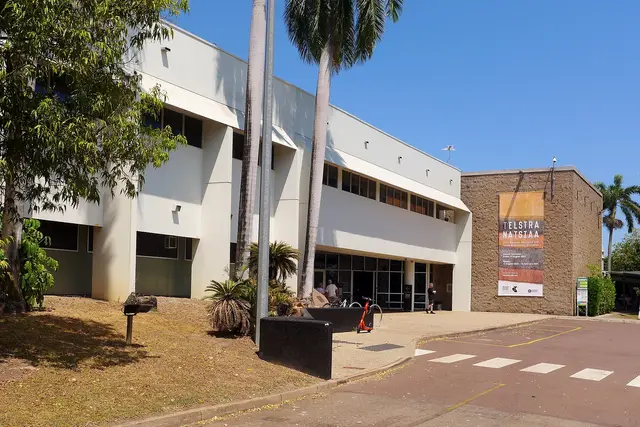
Museum and Art Gallery of the Northern Territory: Darwin Travel Guide
 hidden gem