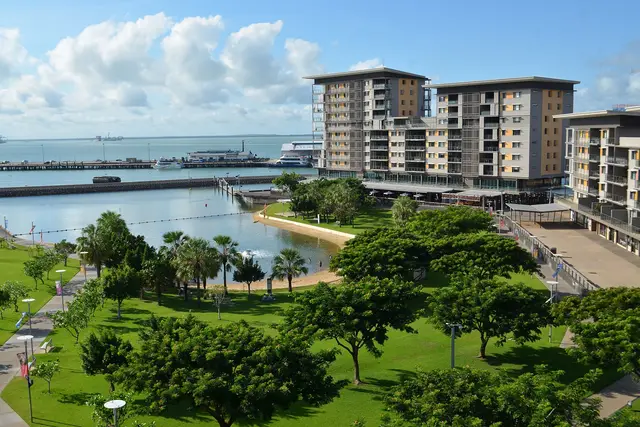
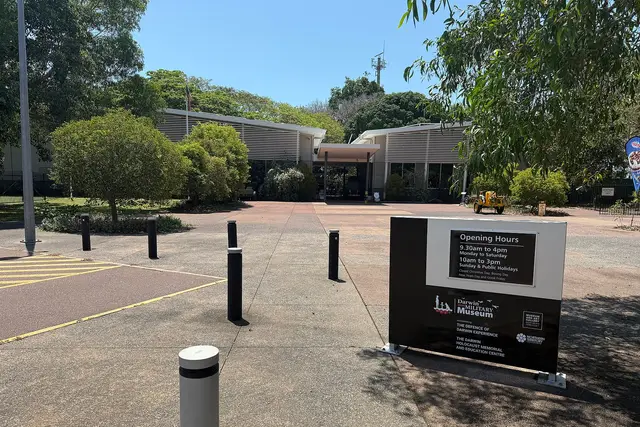
Low buildings sit on a grassy headland above the Arafura Sea, with the water visible across the lawn. The Museum and Art Gallery of the Northern Territory, usually called MAGNT, covers the Top End in one building. Its collections run from Aboriginal bark paintings and rock art to fossils, natural science and the boats that crossed the seas north of Darwin.
It’s among the best-reviewed attractions in the city. Expect company, especially on weekends.
What’s inside the galleries
Start with the art. The Aboriginal and Torres Strait Islander collections are the core of the building, and they include bark paintings, carved figures and rock art from across the Territory. Each August the museum also hosts the Telstra National Aboriginal and Torres Strait Islander Art Awards, one of the country’s major Indigenous art prizes, and the finalists’ exhibition takes over part of the gallery.
After the art, most visitors head for these:
- Cyclone Tracy. This gallery covers the storm that flattened Darwin on Christmas Eve 1974. A darkened sound room plays a recording of the wind, and the noise stays with people long after they leave.
- Sweetheart. This preserved saltwater crocodile is around five metres long. In the 1970s he became famous for attacking boats on the Finniss River region’s waterways.
- Natural sciences. Fossils and specimens of Top End wildlife, from marine life to birds.
- Maritime gallery. Seafaring history, including vessels from the region’s pearling and trading past.
Getting to Conacher Street
The museum is about four kilometres north of the Darwin CBD along the coast. Driving takes around ten minutes, and there is a car park on site. Cycling works well too. A shared path follows the foreshore from the city past Mindil Beach, which is flat and fully exposed, so ride it early in the day.
Public buses run from the city towards Fannie Bay. Routes and timetables change, so check the Darwin bus network’s current schedule before relying on one. A taxi or rideshare from the waterfront is short and simple.

Timing your visit around the 4pm close
The doors open at 10am and close at 4pm, seven days a week. The day is short, so plan around it. Two to three hours is about right. That covers the Indigenous art, Cyclone Tracy, Sweetheart and a walk through the maritime gallery without rushing.
The measured foot traffic is clear. On weekdays the calmest hour is 3pm to 4pm. Try not to arrive between 10am and 2pm on a weekend, because that’s when the galleries fill up.
The best plan is to arrive on a weekday around 1pm and do the art first. Keep Cyclone Tracy and Sweetheart for the final hour, when the rooms empty out.
In the wet season, roughly November to April, the building is a good escape from afternoon storms and humidity. In the dry season, the lawn and seafront outside are at their best.
Moving through the museum without the crush
Most people head straight for the crocodile, so start elsewhere. Go to the art galleries first while the crowds gather around Sweetheart, then work back the other way.
The Cyclone Tracy sound room is small and dark, and you take it in by listening. Keep your voice down inside, and be prepared if you have young children, because some find it frightening.
Treat the Indigenous collections with the same care. Some galleries show notices about images or names of people who have died. Read these before you go in, and follow any photography signs by the works. If you visit during the art awards, the finalists’ works are for looking at. Voting and sales follow the museum’s own process, which is explained on site.
Cards are widely accepted in Darwin. If a special exhibition needs a ticket, the price is posted at the entrance and on the museum’s official website.
Where to go when the doors close
Closing at 4pm works in your favour. You’re a short walk or drive from the best of Darwin’s late afternoon.
- Mindil Beach. It’s just south along the foreshore, and the sunset over the water is the city’s evening ritual. During the dry season, the Mindil Beach Sunset Market runs on Thursday and Sunday evenings.
- George Brown Darwin Botanic Gardens. Tropical plantings and shade are close by, across Gilruth Avenue.
- Fannie Bay Gaol. This historic prison is further north, towards East Point.
- East Point Reserve. Walking tracks, WWII military history and views across Fannie Bay.
Swimming off these beaches is risky. Box jellyfish are around in the warmer months and crocodiles are present all year, so follow the warning signs.
A weekday that runs from an afternoon in the galleries to sunset at Mindil gives you a good slice of Darwin in one outing.
Frequently asked questions
When is the quietest time to visit the Museum and Art Gallery of the Northern Territory?
Weekdays are quietest between 3pm and 4pm, the last hour before closing. Weekends are busiest from 10am to 2pm, so avoid that window if you can.
What are the opening hours?
It's open 10am to 4pm every day of the week, Monday to Sunday.
How long should I spend there?
Two to three hours covers the Indigenous art collections, the Cyclone Tracy gallery, Sweetheart the crocodile and the maritime displays.
How do I get there from Darwin city?
It's at 19 Conacher St in The Gardens, about four kilometres north of the CBD. Drive in about ten minutes and use the on-site car park, cycle the foreshore path past Mindil Beach, or catch a bus towards Fannie Bay. Check current bus timetables before you go.
What's nearby to combine with a visit?
Mindil Beach for sunset, plus its Sunset Market on Thursday and Sunday evenings in the dry season. The George Brown Darwin Botanic Gardens, Fannie Bay Gaol and East Point Reserve are all a short drive away.
Plan your trip to Darwin
Some links above are affiliate links — if you book through them, Wander Atlas earns a small commission at no extra cost to you. It's how we keep every guide free.