Why go
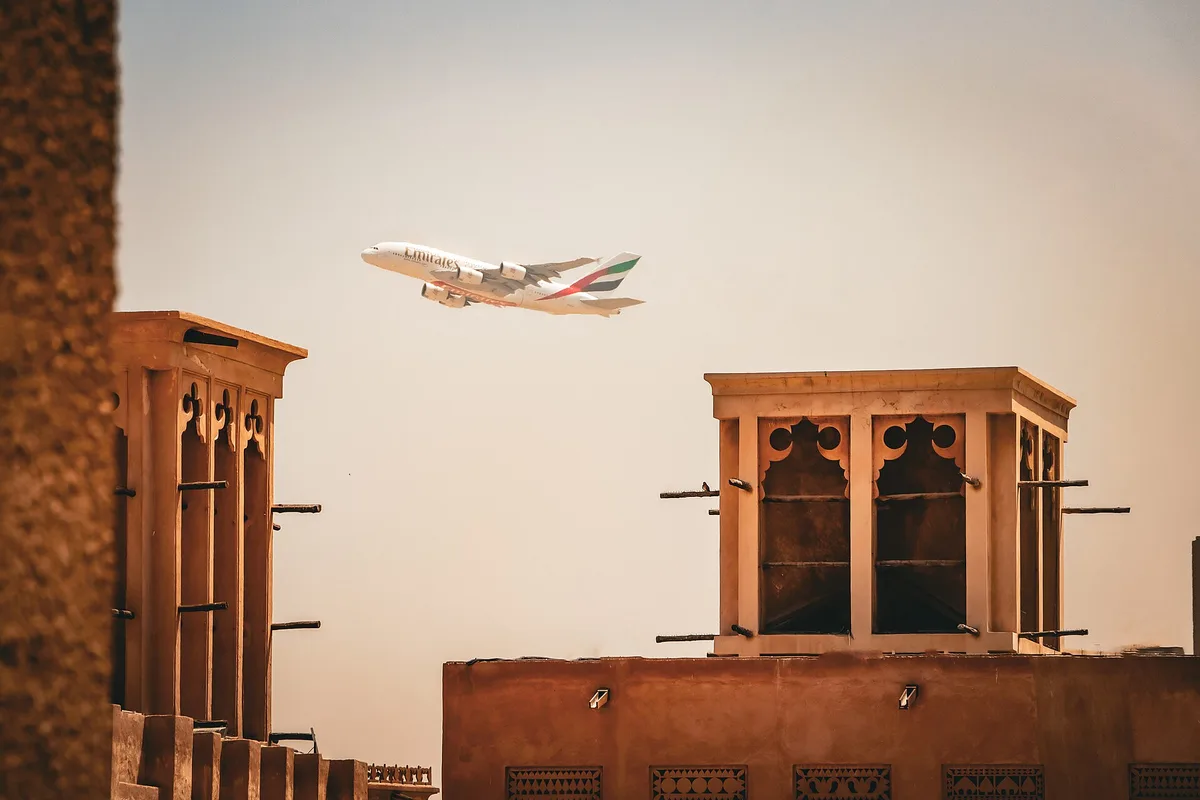
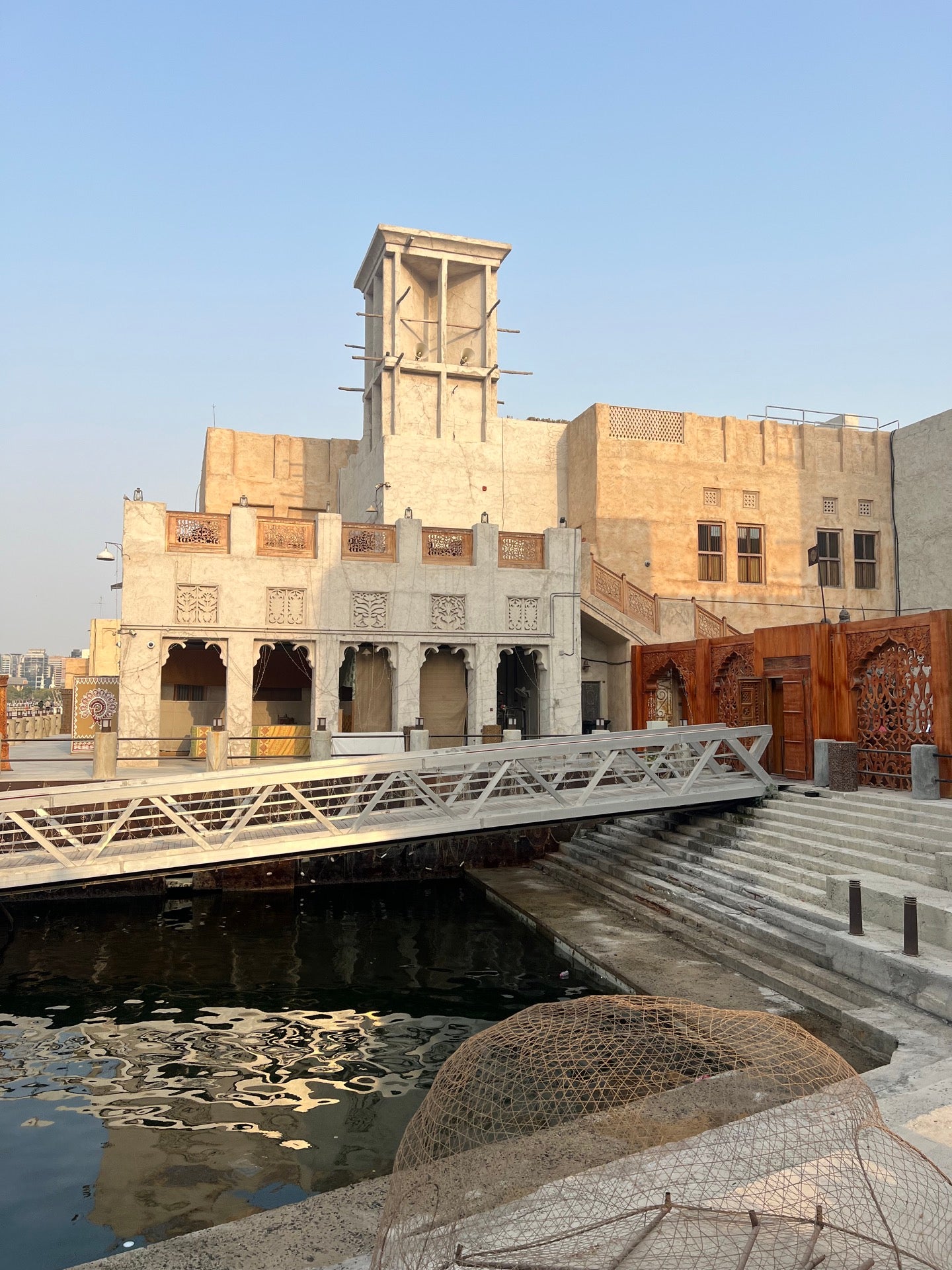
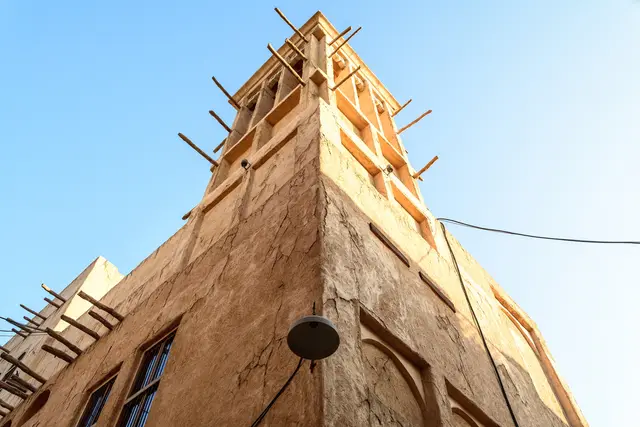
Al Fahidi (also called Bastakiya) is one of the few surviving pockets of pre-oil Dubai, built from the 1890s onward by Persian merchant families from Bastak who settled along the Creek to trade textiles and pearls. The low sand-and-gypsum buildings, coral-stone foundations, and barjeel wind towers were engineered to catch breezes and cool interiors long before air conditioning. The area is essentially an open-air lesson in desert architecture.
With a 4.6 rating across nearly 17,000 reviews, it’s one of the most consistently praised attractions in the city, so expect company, especially midday and on weekends.
Getting there
The neighbourhood sits in Al Souq Al Kabeer / Bur Dubai, on the southern bank of Dubai Creek. The closest metro stop is Al Fahidi Station on the Green Line; from there it’s roughly a 10-15 minute walk east through Bur Dubai’s side streets, or a short taxi/ride-share hop if the heat is heavy. Coming from Deira across the Creek, an abra (traditional wooden ferry) from the Deira Old Souk Abra Station to Bur Dubai Abra Station drops you a few minutes’ walk from the quarter.
The crossing costs a token fare and is itself one of the city’s most atmospheric short trips. Street parking and paid lots exist nearby but fill quickly, so metro or abra is the more reliable option.
What to see and do
Budget 2-3 hours to wander properly. Anchor points include:
- Dubai Museum, housed in Al Fahidi Fort (the city’s oldest existing building, dating to 1787), closed for renovation in recent years, so confirm current status before planning around it.
- Coffee Museum, a small, well-curated stop tracing coffee culture from Ethiopia to Arabia.
- Coin Museum and Sheikh Mohammed Centre for Cultural Understanding (SMCCU), which runs cultural breakfasts, heritage tours, and the “Open Doors, Open Minds” sessions where visitors can ask Emirati hosts direct questions about local life and Islam.
- XVA Gallery, a contemporary art space and boutique hotel tucked into a restored courtyard house, worth a look even if you’re not buying.
- Narrow lanes lined with wind-tower rooftops, small artisan shops, and pop-up exhibitions during Sikka Art Fair, usually held around March.
Just beyond the quarter, the Textile Souk and the abra crossing to the Gold and Spice Souks in Deira pair naturally with a visit, many people combine all three into a half-day loop.
When to go
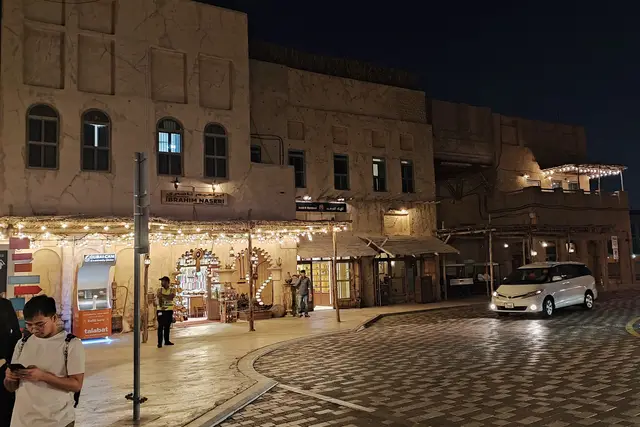
Outdoor walking is most comfortable October to April, in the early morning (soon after opening) or in the two hours before sunset, when the light on the sand-coloured walls is best for photos and the heat has eased. Summer (June-September) is intensely hot and humid; if visiting then, stick to early morning or evening and lean on the indoor museums and cafés for relief. Evenings also bring a calmer, more atmospheric version of the quarter once day-trip crowds thin out.
How to visit like a local
This is a heavily visited, well-known landmark rather than an undiscovered corner, so plan around the crowds instead of expecting to avoid them: arrive right at opening or in the last hour of daylight, when tour groups have dispersed. Dress modestly out of respect, shoulders and knees covered for both men and women, since this remains a lived-in, conservative area, not a theme park.
Most museums and the SMCCU sessions request or benefit from advance online booking, particularly the cultural breakfasts and heritage tours, which run on a schedule rather than a walk-up basis. Cash is useful for the abra crossing and small artisan purchases, though cards and mobile payment work at the cafés and larger museums. If you want an honest, unscripted introduction to Emirati customs, the SMCCU sessions are the closest thing on offer, sitting on the majlis floor for a Q&A is the standard, respectful way to engage rather than photographing residents or private courtyards uninvited.
The most common visitor mistake is treating it as a five-minute photo stop between the Gold Souk and Burj Khalifa; slowing down to enter two or three of the small museums is what actually rewards the detour.
Frequently asked questions
How do I get to Al Fahidi Historical Neighbourhood?
Take the Dubai Metro Green Line to Al Fahidi Station, then walk about 10-15 minutes east into Bur Dubai. Alternatively, cross the Creek by abra from Deira Old Souk Abra Station to Bur Dubai Abra Station, a few minutes' walk from the quarter.
How much time should I plan for a visit?
Around 2-3 hours covers a relaxed walk through the lanes plus one or two museums or galleries; add extra time if joining an SMCCU cultural session or continuing on to the Textile and Gold Souks.
Is there an entrance fee?
Walking through the lanes and courtyards is free; individual museums, galleries, and SMCCU cultural sessions charge their own small entry or program fees, which change from time to time, so check current rates locally or online before visiting.
What's the best time of day or year to go?
October through April is most comfortable for walking, ideally early morning or the last couple of hours before sunset. In summer, stick to early morning or evening and use the indoor museums to escape the heat.
What else is nearby worth combining with this visit?
The Textile Souk sits right at the edge of the quarter, and an abra ride across the Creek leads to the Spice Souk and Gold Souk in Deira, making a natural half-day loop.
Plan your trip to Dubai
United Arab Emirates eSIM & staying connected →
Some links above are affiliate links — if you book through them, Wander Atlas earns a small commission at no extra cost to you. It's how we keep every guide free.
Related guides
This spot is Day 1 of our Dubai 3-day itinerary