Bukhansanseong Fortress: Goyang Travel Guide (4.5★)
When to visit South Korea: month-by-month weather, crowds and holidays →
✓ Facts verified via Google Places · Sep 21, 2026
At a glance
How this guide is made
Produced with AI assistance and reviewed against live data sources. Facts such as hours, ratings, and location come from Google Places; images are licensed or public domain. Details can change — please verify before visiting. Editorial policy
What you’re actually walking into
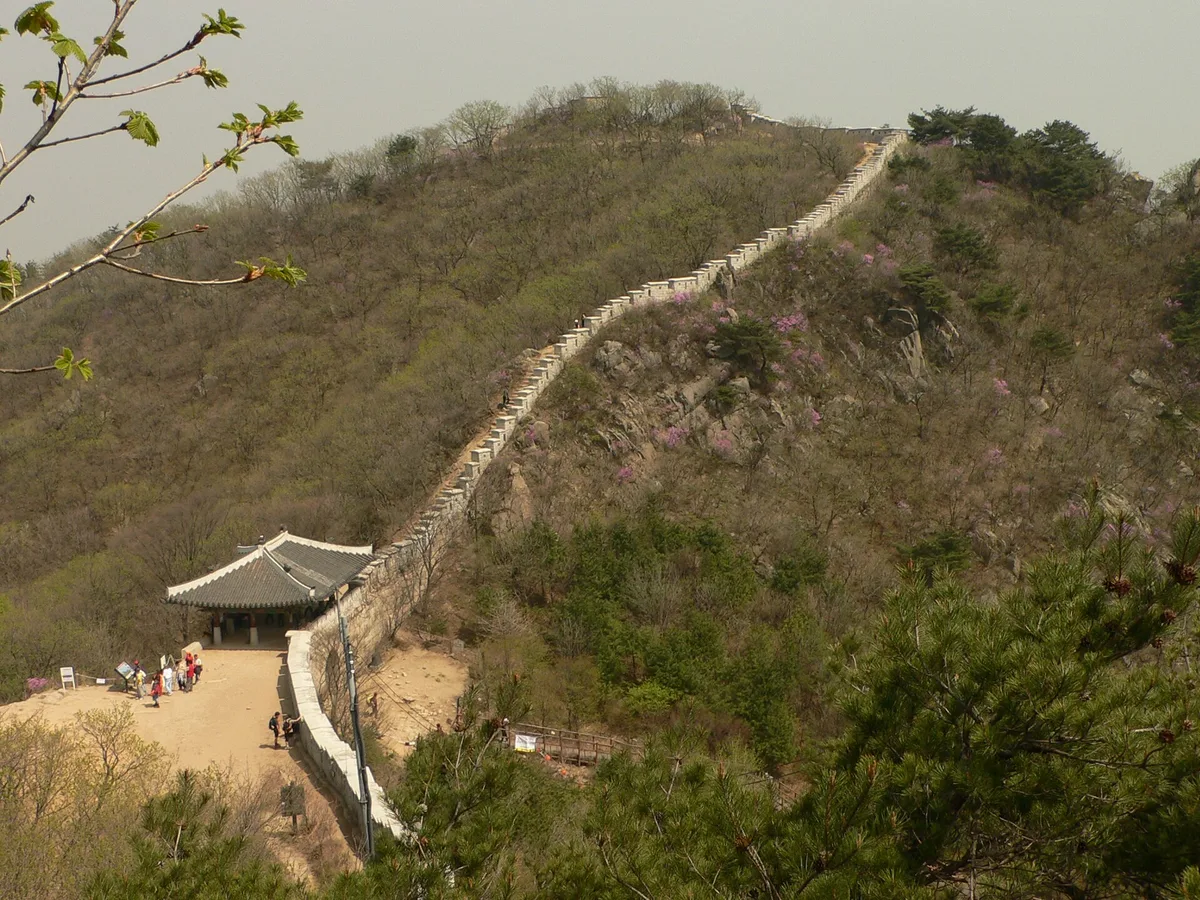
Bukhansanseong isn’t a single structure you photograph and leave. It’s a defensive wall built in the early 1700s under King Sukjong, strung across the ridgelines of Bukhansan to shield the approach to Seoul from the north. The circuit originally had six main gates, eight secret gates (called ammun, small low openings for troop movement rather than ceremony), and two water gates where streams pass through the wall line.
Long stretches survive in stone; other sections have been reconstructed. You’re not touring a museum piece, you’re hiking a militarized ridge that happens to have 300-year-old masonry running along its spine.
Getting to the Deogyang-gu side
This entrance sits on the Goyang side of the park, in Deogyang-gu, distinct from the more famous Bukhansan approaches used by Seoul hikers coming from Gupabal or Suyu stations. There’s no subway stop at the gate itself; the practical route is a bus to the Bukhansanseong trailhead area near the village of Sanggye-dong, then walking in past the fortress ticket booth and information center. Drivers can use the paid lots near the entrance village, though spaces fill fast once a clear weekend arrives.
Because this is the Goyang-facing flank of the mountain, it tends to draw a different crowd than the Seoul-side trails: more regional day-trippers, fewer large tour groups. That matches its current reputation as a quieter way into Bukhansan rather than the default one.
The climb from Daedongmun to the ridge
Most visitors start at Daedongmun, the fortress’s grand east gate, and work along the wall toward smaller gates like Bomunneungseonmun or Yongammun. The path alternates between packed dirt through pine and oak forest and exposed granite scrambles where you’re using both hands. Wear real hiking shoes, not sneakers; the rock sections are steep enough that grip matters.
Expect the full ridge walk between gates to take several hours round trip. If you only have an hour or two, walk in from the entrance to Daedaemun or the nearest secret gate, look at the stonework up close, and turn back rather than rushing a summit push you don’t have time for.
Junghakmun and Wichon-ru, the pieces worth pausing at
Two features reward a slower look rather than a fast pass-through. The gate structures themselves show variation, some rebuilt with heavier lintels, others still low enough that you have to duck through, a reminder they were built for soldiers moving quickly, not for parade traffic. On clear days the higher wall sections open onto views back toward Goyang’s built-up plain on one side and deeper into Bukhansan’s granite peaks on the other, including sightlines toward Baegundae in the distance.
Trail markers along the wall note original construction versus restoration, so if you’re the type who wants to know which rocks are actually 300 years old and which are 1990s-era rebuild, read the small signage rather than assuming every stone is original.
The water gate detour
The two suimun, or water gates, are easy to miss if you’re focused on the main ridge trail, since they sit lower where streams cross the fortress line rather than up on the walkable wall. They’re worth a short detour if the water is running, since they show a different engineering problem: letting a creek through a defensive wall without leaving a gap an army could use.
Ask at the information center near the entrance for the shortest path to the nearer of the two; it’s a flatter walk than the ridge sections and works as a lower-effort add-on if your knees are already done with granite steps.
Timing it right on a quiet mountain
Because Bukhansanseong currently sits under the radar compared to Bukhansan’s Seoul-facing trailheads, weekday mornings here can feel genuinely uncrowded, especially outside peak autumn foliage weeks. Weekends still bring a steady flow of regional hikers, so if solitude on the wall matters to you, start early and go on a weekday.
Spring (April-May) and autumn (October-November) are the standard windows: cooler temperatures for the climbing sections, and in autumn the maple color along the lower forest paths before you hit exposed rock. Summer means humidity and slick granite after rain; winter means ice on the steeper scrambles, so check conditions before attempting the ridge sections in cold months.
Walking the wall respectfully
This is a national park trail overlapping a historic site, so the etiquette is mostly hiking etiquette with a couple of fortress-specific habits layered in.
- Stick to marked paths; the wall itself is not a climbing structure and stepping on unstable sections damages original masonry.
- Pack out your own trash; there are limited bins once you’re past the entrance area.
- Yield on narrow gate passages, since the ammun openings are genuinely one-person-wide in places.
- Carry water and a trail snack. Facilities thin out fast once you’re past the entrance village and information center.
- If you’re unsure which fork leads to a gate versus a dead-end spur, ask at the entrance information center before you commit; signage improves once you’re deeper on the main ridge but can be sparse near junctions closer to the start.
Locals and regular Bukhansan hikers treat this as a legitimate full hike, not a stroll to a viewpoint, so pace yourself accordingly and don’t start a full gate-to-gate traverse in the last few hours of daylight.
Frequently asked questions
How do I get to Bukhansanseong Fortress from Seoul or central Goyang?
Take a bus to the Bukhansanseong trailhead area near Sanggye-dong in Deogyang-gu, Goyang; there's no direct subway stop at the entrance. Drivers can use paid lots near the entrance village, though these fill on clear weekends.
How long does it take to walk the fortress trail?
A short visit to the entrance gate and nearest wall section can take an hour or two. Walking gate to gate along the ridge, including Daedongmun and the smaller ammun, typically takes several hours round trip, so plan half a day if you want the full experience.
Is Bukhansanseong crowded like the main Bukhansan trails?
It's currently quieter than the Seoul-facing Bukhansan entrances near Gupabal or Suyu, drawing more regional day hikers than large tour groups. Weekday mornings are your best bet for an uncrowded walk.
What should I wear or bring for the hike?
Proper hiking shoes are essential since several sections are exposed granite scrambles requiring hand and foot placement. Bring water and snacks, as facilities are limited past the entrance information center.
What's nearby if I want to see more of Bukhansan National Park?
The fortress wall connects into the broader Bukhansan ridge system, with sightlines toward peaks like Baegundae on clear days. The park's Seoul-side entrances at Gupabal and Suyu offer alternative trailheads if you want to explore other sections another day.
Plan your trip to Goyang
Some links above are affiliate links — if you book through them, Wander Atlas earns a small commission at no extra cost to you. It's how we keep every guide free.
Related guides
 attraction
 Ilsan Lake Park: Goyang Travel Guide
 Ended
Ended BIGBANG 2026-2027 World Tour “XX: COSMOS” - Goyang Opening Shows: What to Know (Goyang)
 event
event Charlie Puth Seoul 2026: Dates, Tickets & Venue (Goyang)
 event
event