Hiroshima Peace Memorial Museum: Travel Guide (4.7★)
When to visit Japan: month-by-month weather, crowds and holidays →
✓ Facts verified via Google Places · Sep 3, 2026
At a glance
Opening hours
- Monday: 7:30 AM – 7:00 PM
- Tuesday: 7:30 AM – 7:00 PM
- Wednesday: 7:30 AM – 7:00 PM
- Thursday: 7:30 AM – 7:00 PM
- Friday: 7:30 AM – 7:00 PM
- Saturday: 7:30 AM – 7:00 PM
- Sunday: 7:30 AM – 7:00 PM
How this guide is made
Produced with AI assistance and reviewed against live data sources. Facts such as hours, ratings, and location come from Google Places; images are licensed or public domain. Details can change — please verify before visiting. Editorial policy
Why go
You come out of the streetcar or off the bridge and the park opens up green and quiet, and it’s hard to reconcile that calm with what you’re about to see inside. The Hiroshima Peace Memorial Museum isn’t a museum you “enjoy” in the ordinary sense. It’s one you sit with. Melted lunchboxes, a child’s tricycle, shadows burned into stone steps: the objects do the talking, and they do it without needing much text around them.
Few museums anywhere earn the kind of near-universal praise this one gets from visitors of every nationality, and that reputation is well deserved.
Getting there
The museum sits at the southern end of Peace Memorial Park, at 1-2 Nakajimachō in Naka Ward. From Hiroshima Station, the easiest route is the Hiroshima Electric Railway (the city’s iconic streetcars). Take a tram bound for Miyajima-guchi or Eba and get off at the Genbaku-Dome-mae stop, then walk south across the river into the park, about five minutes.
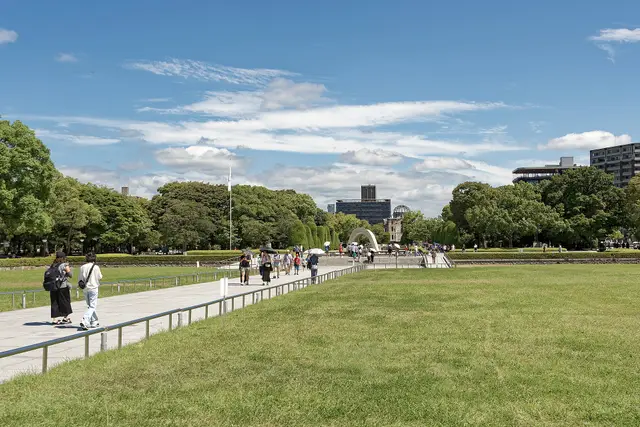
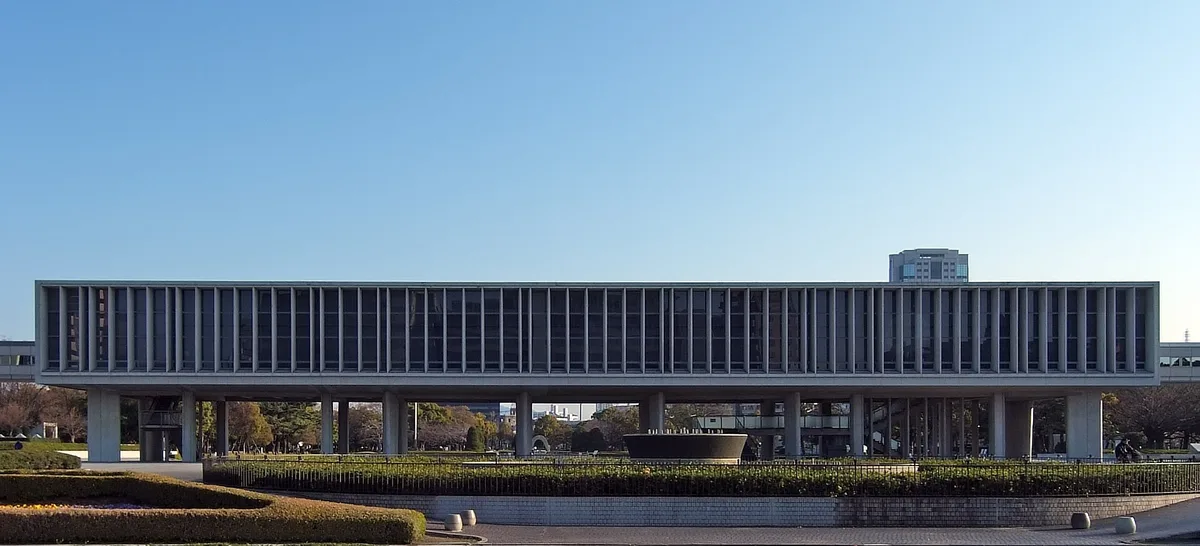
Alternatively it’s a flat, walkable 25–30 minutes from the station if you want to see the city street level first. Once you’re in the park, the museum is impossible to miss: it’s the long, raised concrete building designed by Kenzō Tange, straddling the park’s central axis with the Cenotaph and the Atomic Bomb Dome lined up beyond it.
What you’ll see inside
The museum is split across two connected structures, the Main Building and the East Building. Most visitors move through chronologically: the East Building sets the historical context (Hiroshima before the war, the lead-up to August 6, 1945, and the postwar reconstruction of the city) while the Main Building holds the harder material, personal belongings donated by survivors and bereaved families, photographs of the aftermath, and testimony from hibakusha (bomb survivors).
Everything is labeled in Japanese and English. Give yourself real time in front of the artifact cases rather than rushing past; this is a place where reading the small handwritten notes next to each donated object changes what you take away from it. Many visitors say the experience quietly sits with them for the rest of their trip, and that’s precisely the point of the museum’s design.
Around the park
Once you step back outside, the rest of Peace Memorial Park rewards an unhurried hour or two. The A-Bomb Dome (Genbaku Dome), the skeletal ruin of the former Industrial Promotion Hall, is a five-minute walk north across the Motoyasu River and remains the visual anchor of the whole site. Closer to the museum you’ll pass the Cenotaph, framing the Flame of Peace and the Dome in a single sightline, and the Children’s Peace Monument, hung with thousands of folded paper cranes sent from schools worldwide.
If you have time, the National Peace Memorial Hall for the Atomic Bomb Victims offers a quieter, more contemplative space with a survivor testimony archive.
When to go
Mornings, particularly on weekdays, are calmer than afternoons, when tour buses and school groups tend to arrive in waves. August 6th, the anniversary of the bombing, draws large crowds for the annual Peace Memorial Ceremony and is a moving but very busy day to visit, worth experiencing if your trip lines up with it, but not the day for a quiet, reflective walk through the exhibits.
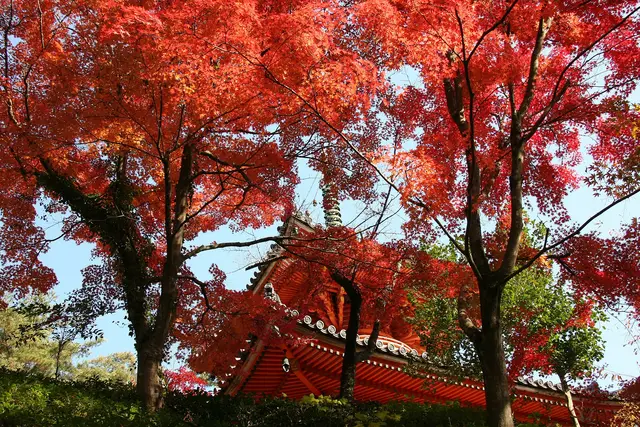
Spring cherry blossoms and autumn foliage in the surrounding park are worth building extra time around, since the grounds themselves are as much a part of the visit as the museum.
How to visit like a local
Buy your ticket at the counter or via the machine just inside the entrance. It’s a simple, affordable admission, and lines move quickly outside peak season. Photography without flash is generally permitted in most areas, but be conscious of other visitors reading quietly beside you; loud conversation feels genuinely out of place here. Audio guides are available in multiple languages and are worth the small rental fee if you want context beyond the English signage.
Locals visiting with children often start in the East Building to ease into the material before the Main Building’s harder exhibits. The single biggest mistake tourists make is treating this as a quick stop between photo spots. Budget real time, and don’t schedule anything emotionally demanding right afterward. Confirm current opening hours and any closed days on the museum’s official site before you go, since hours shift seasonally.
Frequently asked questions
How long should I spend at the museum?
Plan for 90 minutes to two hours to go through both the East and Main Buildings properly; add extra time if you want to read testimonies and watch any recorded survivor talks.
What's the nearest station or stop?
Take the Hiroshima streetcar toward Miyajima-guchi or Eba and get off at Genbaku-Dome-mae, then walk about five minutes south into Peace Memorial Park. It's also a flat 25–30 minute walk from Hiroshima Station.
When is it least crowded?
Weekday mornings tend to be quietest, before tour groups and school parties arrive later in the day. Avoid August 6th if you want a reflective, uncrowded visit, since that's the anniversary of the bombing and draws large ceremonial crowds.
What else is nearby worth seeing?
The Atomic Bomb Dome, the Cenotaph, the Children's Peace Monument, and the free National Peace Memorial Hall for the Atomic Bomb Victims are all within a few minutes' walk in the same park.
Is the museum suitable for children?
Some exhibits are graphic and emotionally intense; many local families start in the East Building's historical context before deciding whether younger children are ready for the Main Building's artifact displays.
Plan your trip to Hiroshima
Some links above are affiliate links — if you book through them, Wander Atlas earns a small commission at no extra cost to you. It's how we keep every guide free.