
A wide green lawn rolls away from a pale concrete building. Two tanks are parked on the grass. They are replicas of the tanks that broke through the front gates on 30 April 1975. Within hours of that moment, the Republic of Vietnam had ceased to exist.
Independence Palace, also called Reunification Palace (Dinh Độc Lập in Vietnamese), keeps that day in place. It’s one of the city’s most visited sights, so plan around the crowds rather than hoping for an empty building.
A palace built for a war it lost
The current building dates from the 1960s. It replaced the French Norodom Palace, which was badly damaged in a 1962 bombing raid by two of the South’s own air force pilots. President Ngô Đình Diệm ordered a new palace. He did not live to see it finished in 1966.
The architect was Ngô Viết Thụ. His façade is screened by a grid of concrete fins inspired by bamboo, which cut the tropical sun and give the building its striped, shaded look. Inside, wide corridors and open stairwells let air move through. It’s 1960s modernism adapted for Saigon heat, and the furnishings were left largely untouched after 1975.
Room by room, floor by floor
The tour runs vertically. Start on the ground floor and work up to the roof, then go down to the basement. Signs and arrows mark the route. Most rooms are viewed from roped doorways, so you see each space set out exactly as it was used.
Rooms to look out for:
- Cabinet Room with its long meeting table
- Banquet Hall, big enough for state dinners
- Credentials Presentation Room, where ambassadors were received
- President’s office and living quarters on the upper floors
- Private cinema and games room, the leisure side of palace life
- Rooftop terrace, with a helipad and a parked helicopter
From the roof, you look straight down Lê Duẩn Boulevard toward the cathedral. You also get a clear sense of how big the grounds are.
Down in the bunker
The basement is what most people remember. A narrow series of reinforced rooms runs under the palace. They hold the command and telecommunications centre, a war room with wall maps marked in military grids, and banks of old radio and cipher equipment.
The ceilings are low and the walls are painted in flat institutional colours. On a busy morning the corridors get tight. If you dislike cramped spaces, go through the bunker on a quieter weekday.
The tank at the gate
Everything here points back to 30 April 1975. North Vietnamese tanks rolled down what is now Nam Kỳ Khởi Nghĩa Street and smashed through the iron gates. Troops raised a flag on the roof. The photographs of that morning are some of the best-known images of the war, and the original tanks are national treasures, now kept elsewhere.
Stand on the lawn facing the gates and the scene is easy to picture. The display boards around the grounds tell this story from the official Vietnamese point of view. That’s worth knowing so you read them in context. Here the war’s end is presented as reunification, not as a fall.
Getting in without the crush
Hours run 7am to 6pm every day of the week. The crowd pattern is unusually clear. On weekdays the palace is at its quietest across the whole 7am to 6pm window, so any weekday slot works.
Weekends are different. Don’t arrive between 8am and 12pm on Saturday or Sunday. That’s the peak, with tour groups and families filling the bunker corridors. The calmest weekend window is 5pm to 6pm. That’s a short visit, though, so start as close to 5pm as you can and see the bunker first.
Some practical notes:
- The visitor entrance is on Nam Kỳ Khởi Nghĩa Street. Tickets are sold at the gate, and the current price is posted there and on the palace’s official website.
- An audio guide is available. It’s worth having, because the room signs say very little.
- The palace is still used now and then for official receptions. Check before you go if your schedule is tight.
- Dress as you would for a government building. Shoulders covered and no beachwear avoids awkward looks.
- Allow 90 minutes to two hours for the full route.
Getting there and what’s next door
The palace is in Ben Thanh ward, District 1. Many visitors take a Grab motorbike or car. Give the driver the name in Vietnamese, Dinh Độc Lập, and you’ll be dropped at the right gate.
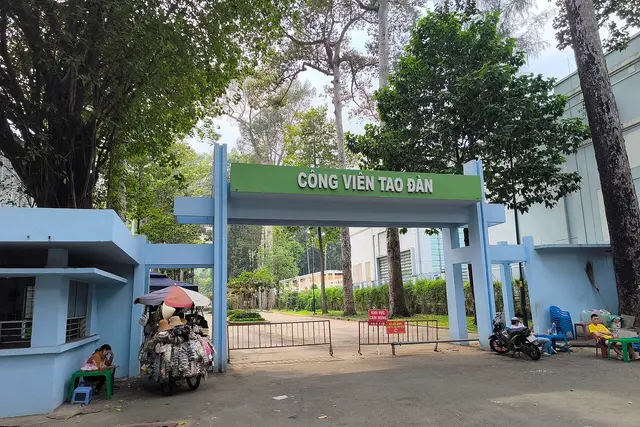
Metro Line 1 ends at Ben Thanh Station, about a 15-minute walk away. From central District 1 hotels you can usually walk. Tao Đàn Park runs along one side of the grounds and gives you shade on the way in.
Several sights are close enough to pair with the palace in one day:
- Notre-Dame Cathedral Basilica and the Central Post Office, about ten minutes’ walk northeast along Lê Duẩn
- War Remnants Museum, a short walk northwest on Võ Văn Tần. It’s a heavy but essential companion visit.
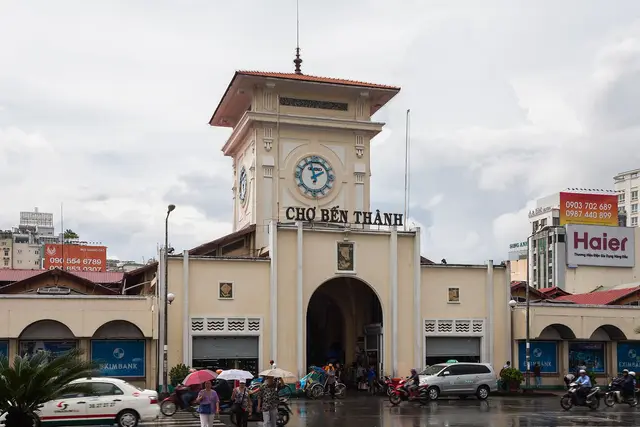
- Bến Thành Market, about 15 minutes south, for lunch afterward
A good order is the palace first, then the War Remnants Museum. Together they show the same war from the government’s halls and from the ground.
Frequently asked questions
When is the quietest time to visit Independence Palace?
Weekdays are quietest across the whole day, from 7am to 6pm. At weekends, 5pm to 6pm is the calmest window. Avoid 8am to 12pm on Saturday and Sunday, which is the busiest stretch.
What are the opening hours?
The palace is open 7am to 6pm every day, Monday through Sunday. It's sometimes used for official events, so check ahead if your day is tightly planned.
How long do I need at Independence Palace?
Allow 90 minutes to two hours. That covers the ground and upper floors, the rooftop helipad, the basement bunker and a walk on the lawn by the tanks.
How do I get to Independence Palace?
It's in Ben Thanh, District 1. Take a Grab to the Nam Kỳ Khởi Nghĩa Street gate (ask for Dinh Độc Lập), or walk about 15 minutes from Ben Thanh Station on Metro Line 1. Most central District 1 hotels are within walking distance.
What else is nearby?
Notre-Dame Cathedral Basilica and the Central Post Office are about ten minutes' walk up Lê Duẩn Boulevard. The War Remnants Museum is a short walk northwest, Bến Thành Market is about 15 minutes south, and Tao Đàn Park is right next to the grounds.
Plan your trip to Ho Chi Minh City
Some links above are affiliate links — if you book through them, Wander Atlas earns a small commission at no extra cost to you. It's how we keep every guide free.
Related guides
 hidden gem
 Ben Thanh Market: Ho Chi Minh City Travel Guide (4.0★)
 restaurant
 Ben Nghe Street Food: Where to Eat in Ho Chi Minh City
 attraction
 Tao Dan Park: Ho Chi Minh City Travel Guide (4.5★)
 trendy