Seven weeks of curtain calls
This is a long festival, not a weekend one. The 30th Istanbul Theatre Festival runs from October 22 to December 3, 2026, which gives it about six weeks of evenings spread across the city. It doesn’t sit in one hall. It moves between several Istanbul venues, so the shows come to different neighbourhoods rather than everyone heading to one site.
The programme mixes Turkish companies with international productions. That pairing has been the festival’s identity for three decades. You can see a new Turkish play one night and a touring foreign company the next, often a short ferry or metro ride apart.
Who runs it and where the details live
İKSV is the organiser. The Istanbul Foundation for Culture and Arts is the non-profit behind the city’s long-running music, film and jazz festivals and the Istanbul Biennial. Its theatre festival sits alongside those as one of the fixtures of the cultural calendar.
The organiser publishes the dates, the venue for each performance and the ticket links on its official site, iksv.org. That is the single reliable source for the 2026 line-up. Nothing in this guide names specific productions, because the programme is İKSV’s to state.
İKSV’s own base is the Nejat Eczacıbaşı Building in Şişhane, at the top of the slope that drops down to Karaköy. It’s a useful landmark if you’re getting your bearings in Beyoğlu.
Crossing the water to curtain-up
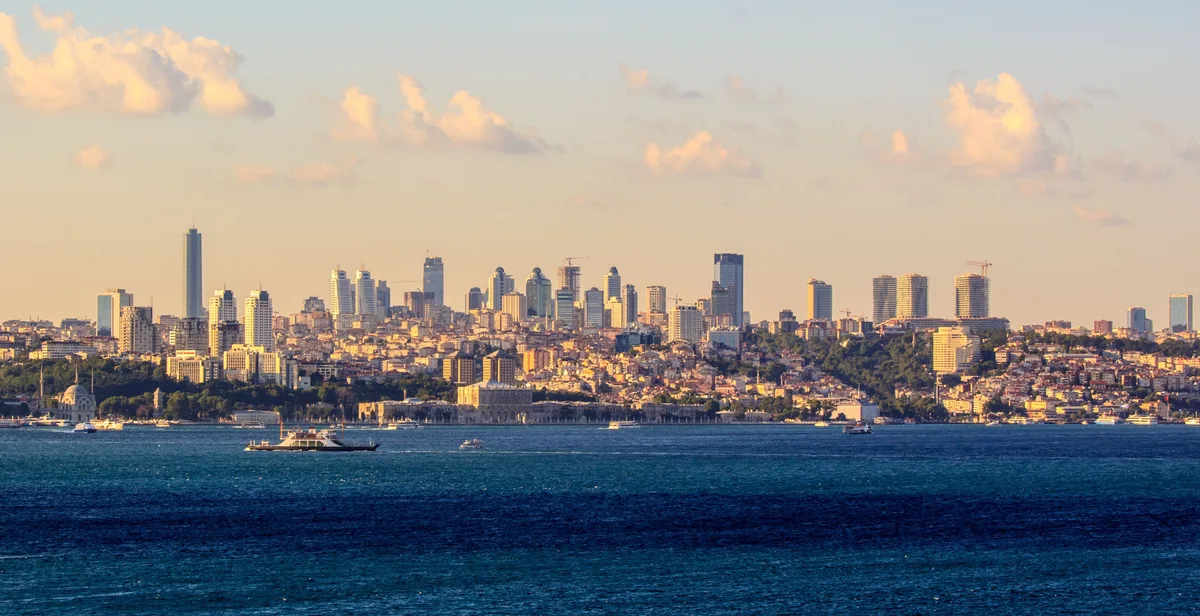
A festival scattered across Istanbul means some evenings start on a ferry. The city’s theatre life is split mainly between the European side (Beyoğlu, Taksim, Harbiye) and the Asian side, where Kadıköy has its own dense stage scene. A show across the Bosphorus is normal here, not an expedition.
The commuter ferries are the most pleasant way across:
- Kadıköy to Karaköy or Eminönü takes roughly 20 minutes on the open water.
- Üsküdar to Beşiktaş or Eminönü is a similar short hop further north.
- Marmaray, the rail line under the Bosphorus, is the fallback when the wind is up.
Ferries run less often late at night than at rush hour. After a long performance, theatregoers heading back across the water usually look at the last sailing times for their pier before the house lights go down, or plan on Marmaray or a taxi.
Getting between the stages
One card covers almost everything. An Istanbulkart, the rechargeable transit card sold from machines at stations and piers, works on the metro, trams, funiculars, buses and ferries. Several people can tap through on one card, which helps a group heading to the same show.
For the European-side venues, a few lines do most of the work:
- M2 metro runs through Şişhane, Taksim and Osmanbey, covering Beyoğlu and Harbiye.
- The Kabataş–Taksim funicular links the tram and ferries at Kabataş to Taksim Square.
- T1 tram threads along the shore through Karaköy, Eminönü and the old city.
Evening traffic in Istanbul is heavy, especially on weekdays between 5pm and 8pm. Rail and ferry beat a taxi for curtain times far more often than not.
In the seat: how a festival night works
Turkish theatres run on punctuality. Doors close when the performance begins, and festival staff commonly hold latecomers until a suitable break, or don’t admit them at all. Regulars build in a margin for Istanbul traffic and use it for a tea in the lobby.
A few customs you’ll see in the house:
- Coats go to the cloakroom, called the vestiyer. By December most people arrive in a heavy coat, and seats are tight without one on your lap.
- Phones are switched off, not just silenced. Photography and filming during performances is generally not allowed.
- Applause is generous and long. Curtain calls often run to several returns, and a standing ovation for a visiting company is common.
Tickets are sold through the links İKSV publishes for each performance. Paper and phone tickets both appear at the door; the usher scans or tears and points you to your row.
Language on stage
Not every show is in a language you speak. Turkish productions are performed in Turkish, and international companies perform in their own languages. Whether a given performance carries surtitles, and in which language, is part of each production’s own listing.
Physical theatre, dance-theatre and strongly visual work travel best across a language gap. Visitors without Turkish often lean towards these, or towards international shows whose language they know. A new Turkish text without surtitles is a richer evening for those who follow the language.
Autumn Istanbul around the shows
Late October to early December is a good stretch to be in Istanbul. The summer crowds have thinned, and the air turns cool, then cold and damp by late November. Darkness falls early, so evening performances start after the sun is down.
The neighbourhoods around the main theatre districts fill the hours before a show:
- Beyoğlu: İstiklal Avenue, the Galata Tower and the steep lanes of Karaköy down to the Golden Horn.
- Kadıköy: the produce and fish market streets around Güneşlibahçe Sokak, and the seafront at Moda.
- Harbiye and Nişantaşı: wide avenues, cafés and the green slope of Maçka Park.
Autumn is also chestnut season. Street carts roasting kestane appear on busy corners across the city, and a paper cone of them is the classic walk-to-the-theatre snack.
The festival closes on December 3, 2026. Most of the venues around it keep running their own theatre seasons through the winter.
Frequently asked questions
When is the 30th Istanbul Theatre Festival?
It runs from October 22 to December 3, 2026, with performances spread across that period at several venues in Istanbul.
Who organises the festival and where is the programme?
İKSV, the Istanbul Foundation for Culture and Arts, organises it. The organiser publishes the programme, the venue for each performance and the ticket links on its official site, iksv.org.
Where are the venues?
The festival uses multiple venues around Istanbul rather than one site. The city's theatre scene is concentrated mainly in Beyoğlu, Taksim and Harbiye on the European side and Kadıköy on the Asian side. İKSV's listing gives the venue for each show.
Are the shows in English?
Some are and many aren't. Turkish productions are performed in Turkish, and international companies perform in their own languages. Surtitle information is part of each production's listing, and visual or physical theatre works best if you don't speak the language on stage.
What is the easiest way to get between venues?
An Istanbulkart transit card covers the metro, trams, funiculars and ferries. The M2 metro serves Şişhane, Taksim and Osmanbey, and ferries link Kadıköy with Karaköy and Eminönü in about 20 minutes. Late-night ferries run less often, so Marmaray or a taxi is the usual fallback after a late show.
Plan your trip to Istanbul
Turkey eSIM & staying connected →
Some links above are affiliate links — if you book through them, Wander Atlas earns a small commission at no extra cost to you. It's how we keep every guide free.