Bamboo you feel in your chest
Jegog is unlike any other gamelan on Bali. Most Balinese ensembles use bronze keys. A jegog ensemble plays tuned tubes of thick bamboo hung in carved wooden frames, and the largest bass tubes are taller than the musicians who strike them. Players sit on top of those frames and hit the tubes with rubber-tipped mallets.
The low notes are so deep that you feel them more than you hear them. The fast interlocking patterns on top come from the smaller tubes. The style belongs to Jembrana, and the festival is the regency’s showcase for it within Bali’s annual cultural calendar.
The tradition people come to see is jegog mebarung, a contest in which rival groups take turns playing and then play over each other. The winner is the group whose sound holds together while the other’s falls apart.
Getting to Jembrana in November 2026
The festival takes place in November 2026. Jembrana is a long way from the resort strip in the south, and the drive is a big part of the trip.
- From Ngurah Rai Airport or Denpasar: follow the Denpasar–Gilimanuk road west along the coast. The drive takes roughly three hours, more in heavy truck traffic.
- From Java: ferries cross from Ketapang to Gilimanuk at Bali’s western tip. Negara is under an hour south-east of Gilimanuk.
- Getting around: visitors usually hire a car with a driver for the day or ride scooters. Public transport is thin out here.
November is around the start of Bali’s wet season. Heavy afternoon showers are common, so people usually bring a light rain layer to outdoor performances.
Basing yourself in the west
Negara is the practical base, with guesthouses, warungs and the regency offices. Surfers often stay at Medewi, on the coast east of Negara, where a long left-hand point break runs over a rocky shore.
Many visitors add a few things nearby:
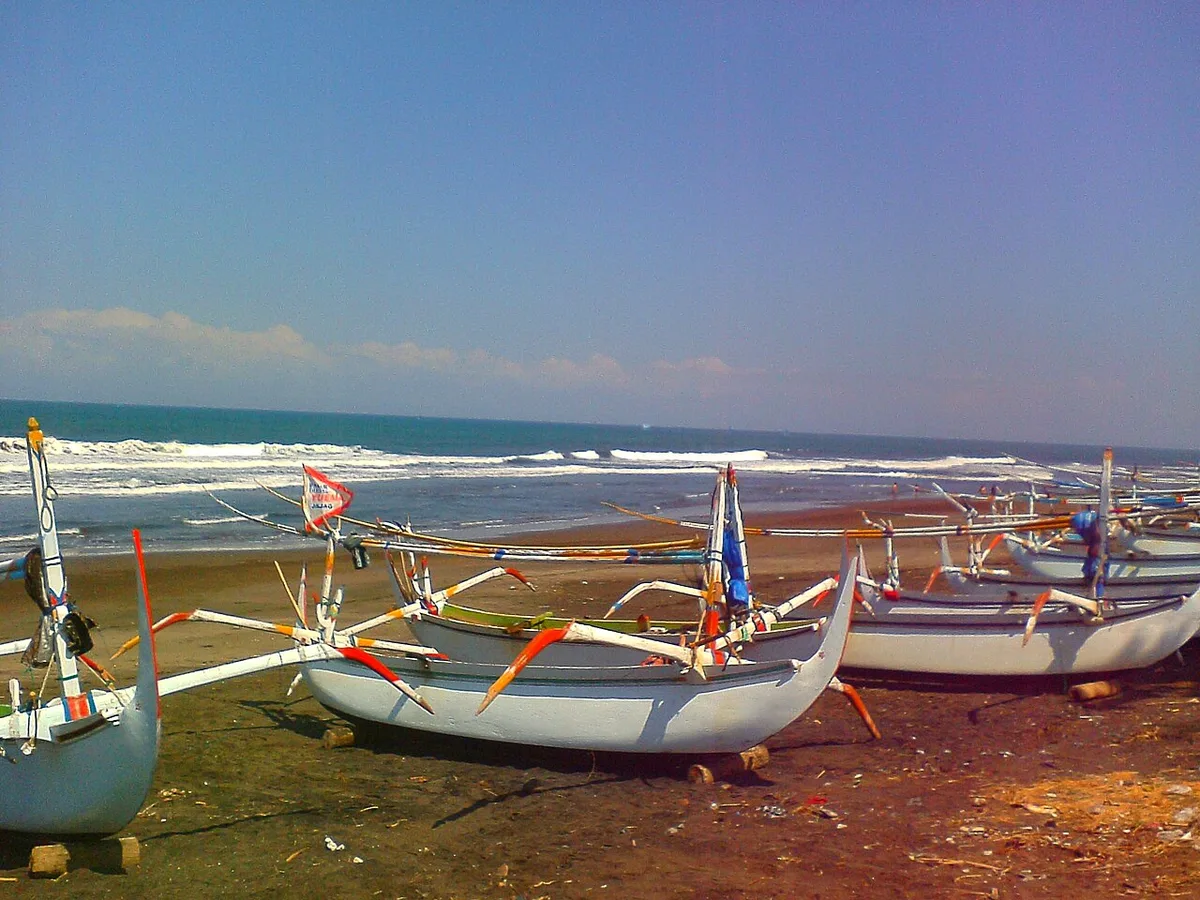
- Pura Rambut Siwi, a sea temple on a cliff above the black-sand coast
- West Bali National Park (Taman Nasional Bali Barat), with monsoon forest, mangroves and diving at Menjangan Island
- Gilimanuk, for the ferry onwards to Java
Watching jegog the way the crowd does
Jegog audiences stand close, and they are loud. People cheer for their village group and laugh when a rival loses the beat.
- Dress: sarong and sash are expected wherever a performance is linked to a temple or ceremony. Covered shoulders are a good idea anywhere else too.
- Photos: photos are welcome, but leave the stage area clear. Flash in the players’ faces is rude while they are playing.
- Sound: the bass is physically strong at close range. Children and anyone sensitive to noise usually sit further back.
- Money: food stalls and warungs around the venue take cash in rupiah. Tipping performers is not part of local custom.
- Language: suksma means thank you in Balinese, and terima kasih is the Indonesian. People are pleased to hear either.
The Jembrana regency government runs local cultural programming. The rhythm of each evening comes from how the ensembles are paired, not from fixed time slots, so mebarung contests often keep going late into the night.
Frequently asked questions
When is the Jembrana Jegog Festival?
The festival takes place in November 2026 in Jembrana regency, western Bali.
How do I get to Jembrana from the airport?
Take the Denpasar–Gilimanuk road west from Ngurah Rai Airport. The drive to Negara takes roughly three hours, and most visitors hire a car with a driver.
What is jegog?
Jegog is Jembrana's bamboo gamelan. It is played on huge tuned bamboo tubes, and the bass notes are deep enough to feel. In jegog mebarung, rival ensembles compete by playing against each other.
Where should I stay for the festival?
Negara, the regency capital, is the most practical base. Medewi, on the coast east of Negara, suits surfers, and Gilimanuk works for travellers going on to Java.
What should I wear?
Wear light clothing that covers your shoulders, plus a sarong and sash for any temple-linked performance. A rain layer helps too, because November is around the start of the wet season.
Plan your trip to Jembrana
Indonesia eSIM & staying connected →
Some links above are affiliate links — if you book through them, Wander Atlas earns a small commission at no extra cost to you. It's how we keep every guide free.