You feel the temperature change before you understand why. Down a long staircase behind the museum, the jungle presses in on both sides and the air goes still and thick. Then the rock walls appear (sheer, hand-chiseled, twelve metres high in places), and you’re standing in Hellfire Pass itself.
Why this place hits differently
This isn’t a recreation. It’s the actual cutting, carved through solid limestone by Allied POWs and Asian laborers building the Thailand-Burma Railway in 1943.
Working conditions were the reason it earned its name, night shifts lit by carbide lamps and bonfires, men reduced to skeletal silhouettes against the flames. Thousands died here from cholera, starvation, and exhaustion. The rock still bears drill marks and chisel scars from tools, not machines.
Getting there from Kanchanaburi
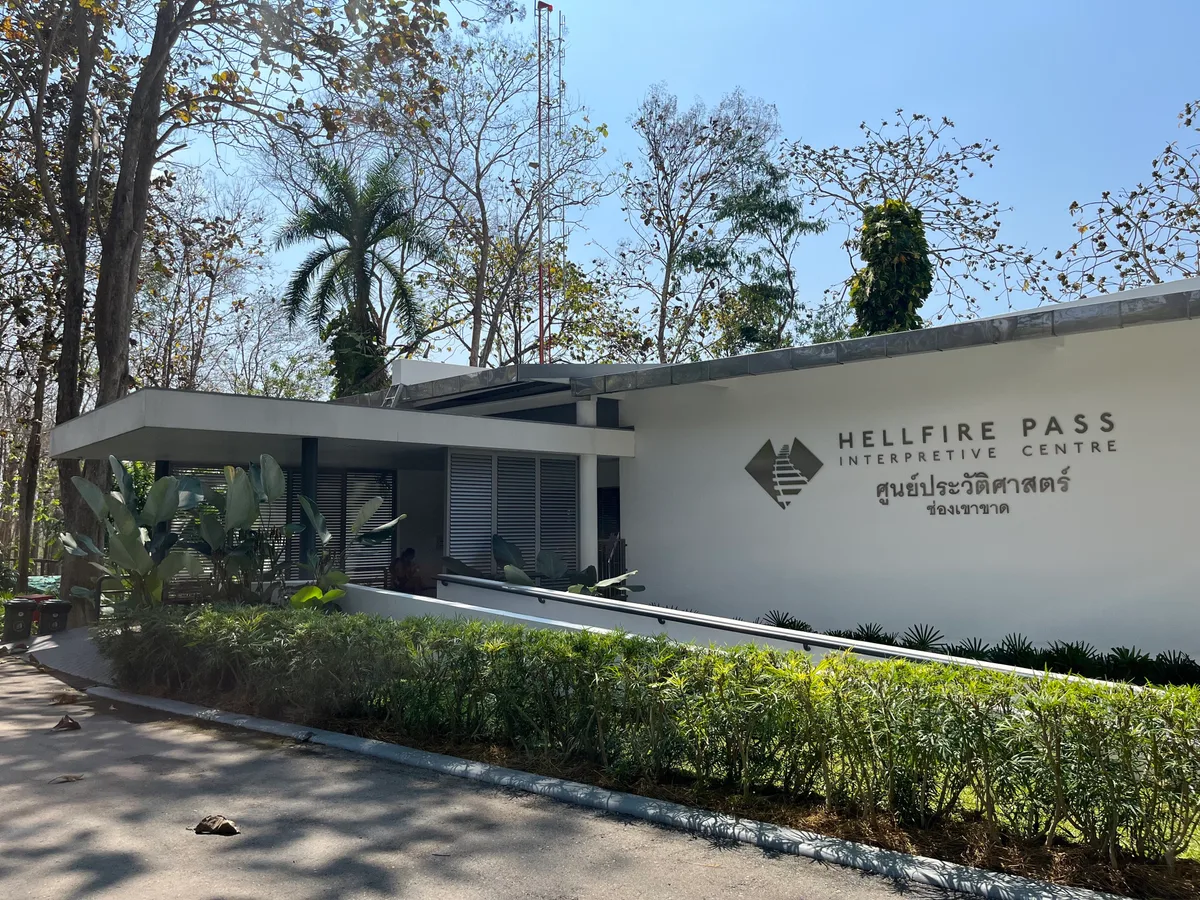
The Interpretive Centre sits at 207 Tambon Tha Sao, roughly 80km from Kanchanaburi town, about 90 minutes by road along Route 323.
Most visitors arrange one of these:
- A rental car or motorbike (self-drive, most flexible)
- A private taxi or Grab from Kanchanaburi (easiest, no navigation stress)
- A guided day tour bundled with the Bridge on the River Kwai and Sai Yok Noi waterfall
There’s no direct public bus to the site itself, so joining a tour or hiring a driver for the day is the practical move.
What to see and do
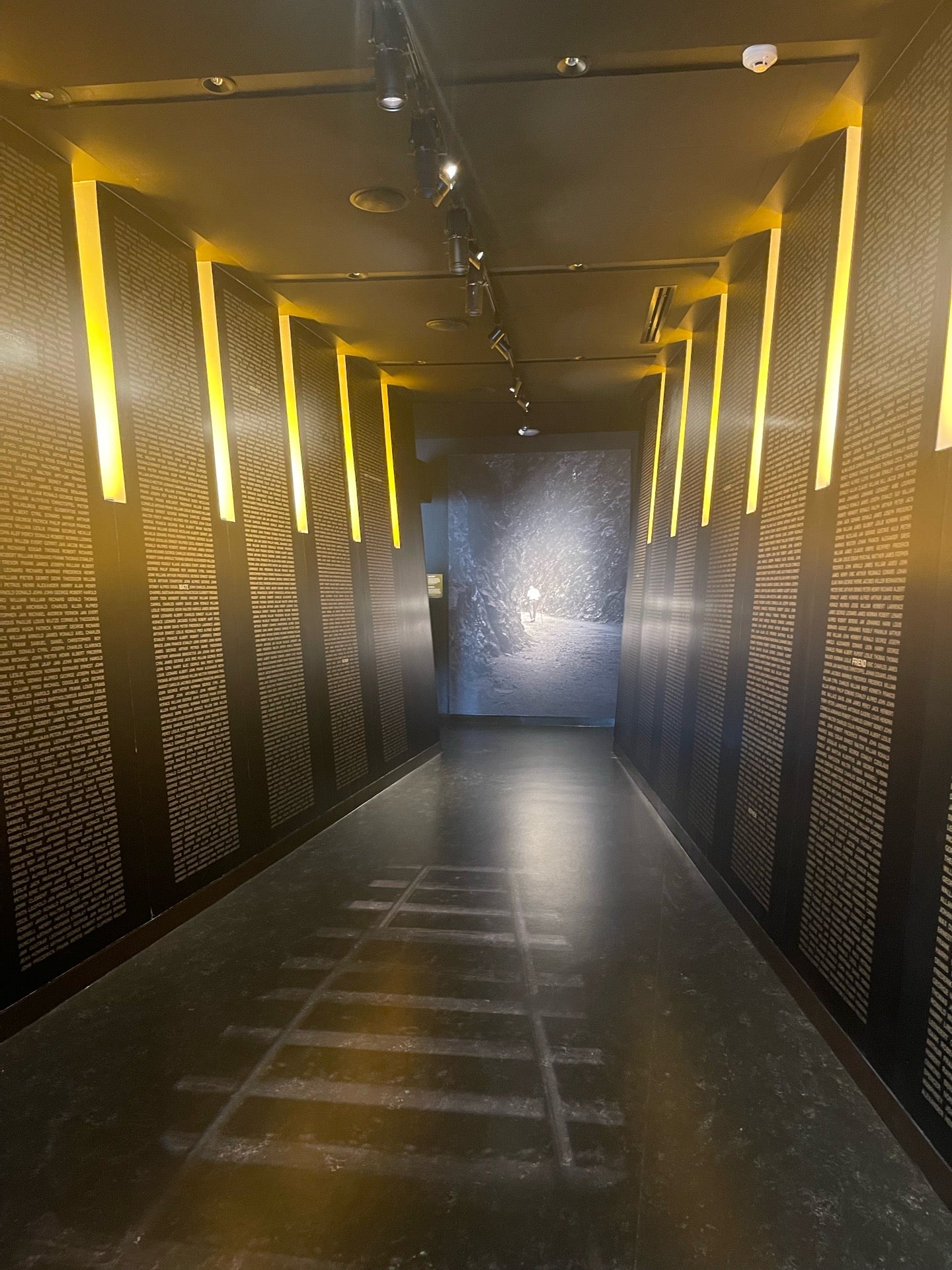
Start in the museum. It’s compact but dense, using photographs, oral histories, and salvaged tools to walk you through how the “Death Railway” was built and why so many didn’t survive it.
Pick up the free audio guide at the desk, narrated partly by railway survivors, it transforms the walking trail from a hot gravel path into something genuinely moving.
Then descend to the cutting itself. The main walking trail runs about 4km round-trip along the original railway bed, passing several smaller cuttings before reaching Hellfire Pass proper. Most visitors walk the shorter loop to the main cutting and back, which takes 45–60 minutes.
Look for:
- Drill and chisel marks still visible in the rock face
- A small memorial plaque at the base of the main cutting
- Remnant embankments where the wooden trestle bridges once stood
When to go
The centre opens daily from 9am to 4pm, and there’s no shade anywhere on the trail, the rock radiates heat by late morning.
Arrive as close to opening as you can, especially between November and February when temperatures are milder. April and May are punishing; if that’s your only window, go straight after 9am and carry more water than feels necessary.
Because this is a well-visited stop on the Kanchanaburi circuit, tour buses tend to cluster mid-morning. Getting there right at opening also means quieter time in the museum before the day’s groups arrive.
How to visit like a local
Thai and Australian visitors alike treat this site with noticeable quiet, it functions as a war memorial, not a photo backdrop. Keep voices low near the cutting and at the memorial plaque.
A few practical notes:
- Entry is free, though a donation box supports the site’s upkeep. A small cash contribution is appreciated
- Wear closed shoes; the trail down to the cutting is uneven stone and loose gravel, not paved
- Bring more water than you think you need. There’s nowhere to refill once you’re on the trail
- The audio guide is worth the few minutes it takes to collect. Most of the emotional weight of the site comes through survivors’ own recorded voices, not the signage
- Pair the visit with the Thailand-Burma Railway Centre in Kanchanaburi town beforehand if you want fuller historical context before seeing the physical site
The mistake most first-timers make is treating this as a quick photo stop en route to the bridge and waterfalls. Budget real time here. The walk into the cutting is where the place actually lands.
Frequently asked questions
How much does it cost to visit Hellfire Pass?
Admission is free, though the site relies on donations to maintain the museum and trail — a small cash contribution at the donation box is appreciated.
How long should I spend at Hellfire Pass Interpretive Centre?
Plan for at least two hours: about 45 minutes in the museum and another 45–60 minutes walking down to the main cutting and back.
What's the best time of day to visit?
Go right when it opens at 9am. The walking trail has no shade, and the rock cutting gets uncomfortably hot by late morning, especially November–February being the milder overall season to visit.
How do I get to Hellfire Pass from Kanchanaburi town?
It's about 80km and 90 minutes by road via Route 323. There's no direct public bus, so most visitors go by rental car, taxi/Grab, or a guided day tour that also covers the Bridge on the River Kwai.
Is Hellfire Pass suitable for kids or people with mobility issues?
The museum itself is flat and accessible, but the trail to the actual cutting involves a steep staircase and uneven, rocky ground, so it's not wheelchair-friendly and can be tough for young children in the heat.
Plan your trip to Kanchanaburi
Thailand eSIM & staying connected →
Some links above are affiliate links — if you book through them, Wander Atlas earns a small commission at no extra cost to you. It's how we keep every guide free.
Related guides
 attraction
 Sai Yok National Park: Kanchanaburi Travel Guide (4.4★)
 attraction
 Erawan National Park: Kanchanaburi Travel Guide (4.6★)
 hidden gem
 Ayutthaya Royal Palace: Travel Guide (4.5★)
 hidden gem