Why Patara is worth the detour
You come around a bend on the road from Kalkan and the valley opens up, flat, green, ringed by hills, with fragments of marble poking out of fennel and wild grass. This is Patara, once the chief port of the Lycian League, now a ruin field so large you’ll walk a good kilometer before you’ve seen half of it.
The scale is what surprises people. This isn’t a single temple or a tidy amphitheater roped off in a town square. It’s a whole ancient city, harbor included, slowly being excavated from sand dunes that swallowed it centuries ago.
What you’ll actually see
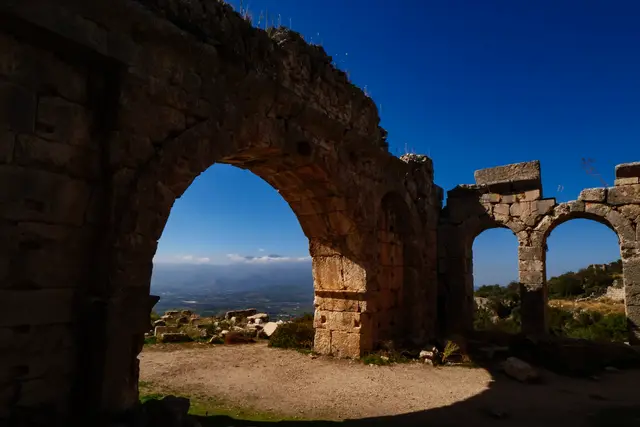
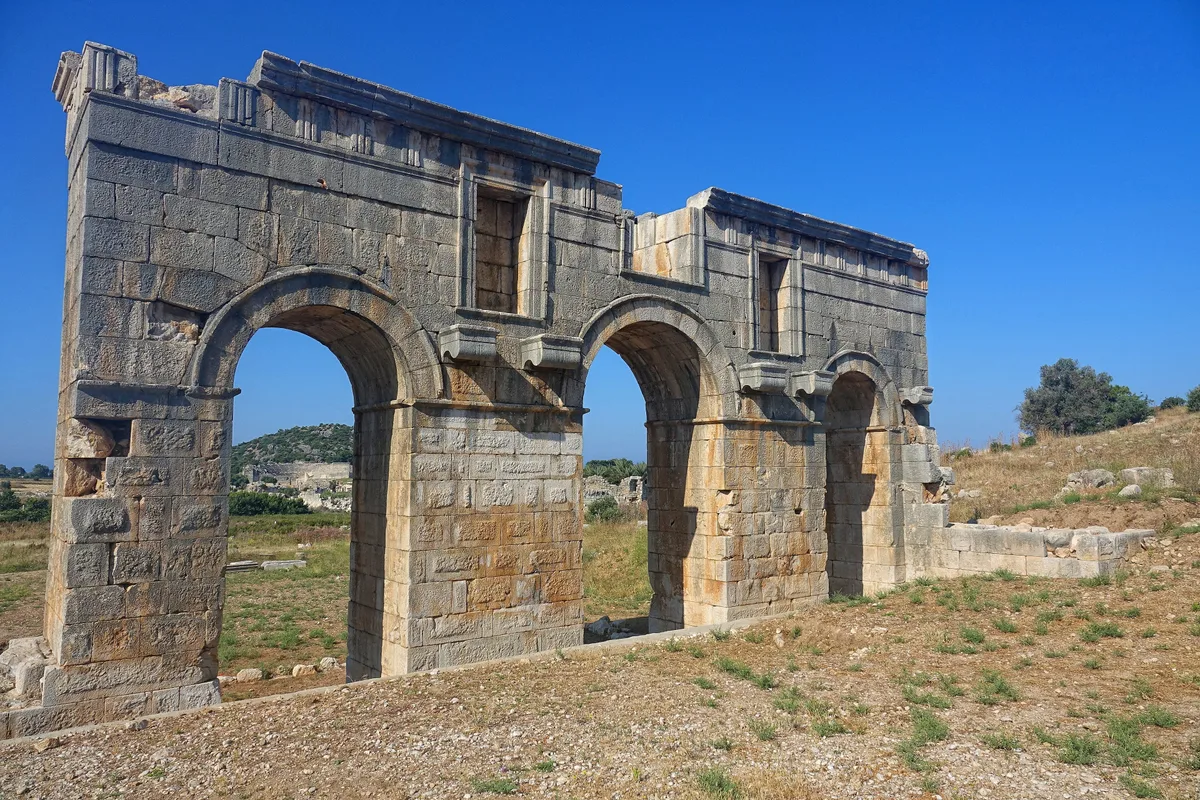
The entrance road itself cuts straight through a triumphal arch, the three-bayed Arch of Mettius Modestus, still standing almost to full height. From there a boardwalk and dirt paths fan out toward the rest of the site.
Highlights to look for:
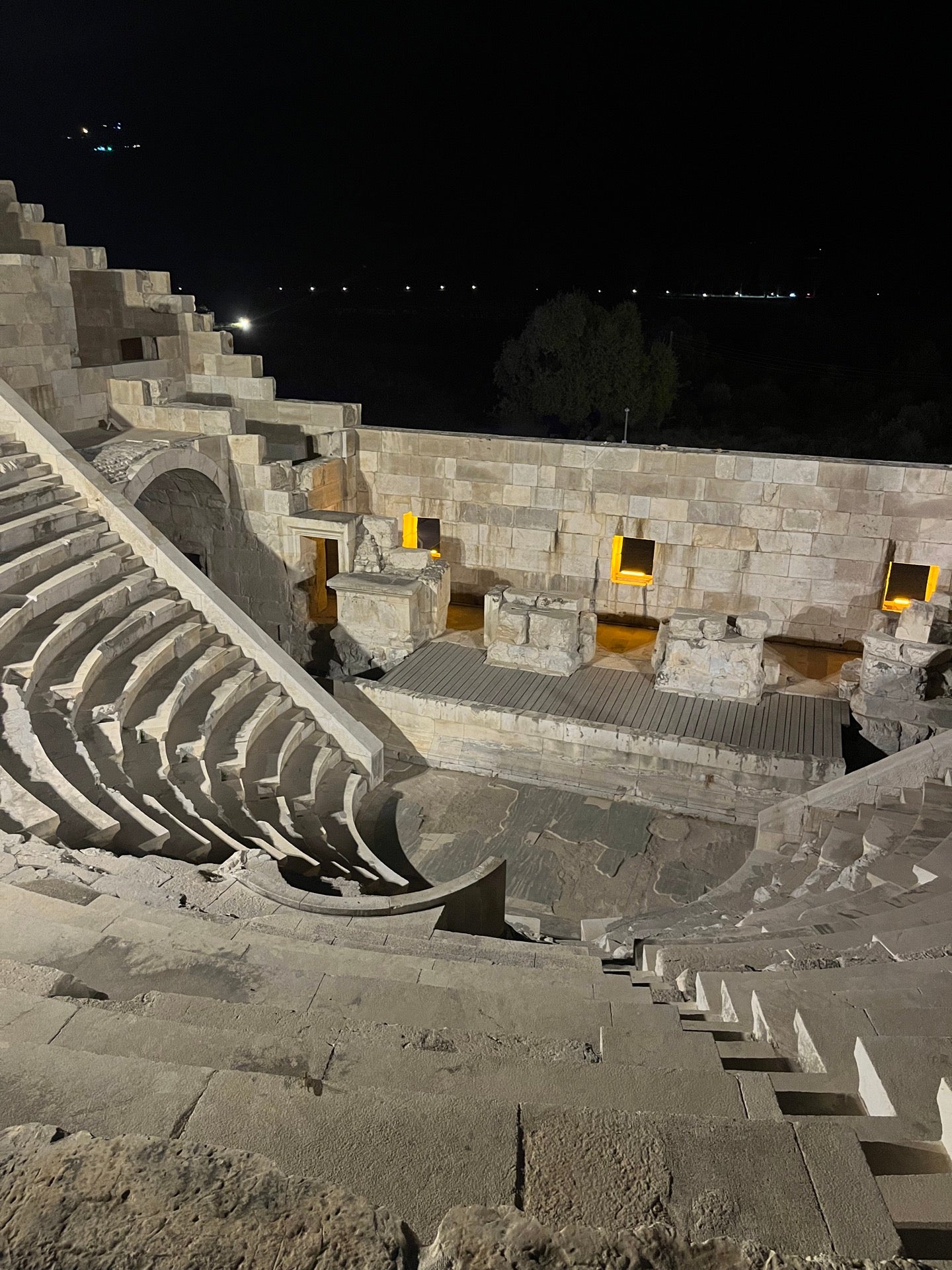
- The Roman theater, partly dug out of sand, with rows of seats still intact
- The bouleuterion (council house), where the Lycian League once met
- Colonnaded streets and scattered granite columns half-buried in scrub
- The Roman baths and a restored lighthouse near the beach, one of the oldest known in the world
- The old harbor basin, now silted up and grazed by cattle
Bring water and sun protection. There’s very little shade once you’re past the entrance, and the walk between sites is longer than it looks on the map.
The beach at the end of it
Patara’s other claim to fame is the beach beyond the dunes, a long stretch of pale sand backed by Mediterranean scrub, largely undeveloped because it’s a protected loggerhead turtle nesting site. Combine ticket and towel: many visitors do ruins first, swim after.
There’s a small café setup near the beach access, but options are limited, so pack snacks if you’re staying past midday.
Getting there
Patara sits just off the main coastal highway between Kalkan and Kas, roughly a 15-minute drive from either town. Dolmuş (shared minibuses) run from both Kalkan and Kas in season and drop you at the site entrance road.
If you’re driving, there’s a car park near the ticket booth, though it fills fast on weekends. A taxi from Kalkan is quick and easy to arrange for the return trip if you don’t want to wait for a dolmuş.
When to go
Go early. Opening hours vary seasonally, and the calmest hours tend to fall in the early morning, both on weekdays and weekends, with the crowd surge concentrated between 12pm and 6pm on weekends.
Arriving right at opening gets you the ruins in soft morning light, before the heat sets in and before tour groups from the coast arrive. Spring and autumn are noticeably more comfortable than midsummer, when the shadeless walk between sites gets brutal by late morning.
How to visit like a local
Patara draws heavy visitor numbers, so the goal here isn’t finding a quiet secret. It’s timing your visit to dodge the peak.
- Go before noon, ideally close to the 8am opening, and avoid the 12pm–6pm weekend window entirely if you can.
- Pay at the entrance booth, card and cash are both generally accepted, but carry some cash as backup since machines occasionally go down in rural sites like this.
- Wear closed shoes, not sandals, paths are uneven stone and sun-baked dirt, not paved walkway.
- Combine with the beach: bring a swimsuit and towel under your clothes so you’re not carrying extra gear through the ruins.
- The common mistake is treating this as a quick photo stop. Patara rewards slow walking. Budget at least two hours for the ruins alone, more if you’re adding the beach.
- Confirm current opening hours and ticket prices before you go, since these can shift seasonally.
Frequently asked questions
How long should I spend at Patara?
Plan on two to three hours for the ruins alone. If you're adding the beach, allow half a day total.
When is the quietest time to visit?
Both weekdays and weekends are calmest within the 8am–11pm window; the crowd spike is specifically 12pm–6pm on weekends, so arriving near opening is your best bet.
How do I get to Patara without a car?
Seasonal dolmuş (shared minibuses) run from both Kalkan and Kas to the Patara turnoff, or you can take a short taxi ride from either town.
Can I visit the ruins and the beach in one trip?
Yes — the same ticket road leads to both. Most visitors do the ruins first, then walk down to the beach to swim afterward.
What should I bring?
Water, sun protection, closed shoes for uneven paths, and a swimsuit if you plan to hit the beach afterward. Cash as backup for the entrance fee is a good idea.
Plan your trip to Kas
Some links above are affiliate links — if you book through them, Wander Atlas earns a small commission at no extra cost to you. It's how we keep every guide free.