Sri Senpaga Vinayagar Temple: Katong Travel Guide (4.8★)
✓ Facts verified via Google Places · Sep 15, 2026
At a glance
Opening hours
- Monday: 6:30 AM – 12:00 PM, 6:30 – 9:00 PM
- Tuesday: 6:30 AM – 12:00 PM, 6:30 – 9:00 PM
- Wednesday: 6:30 AM – 12:00 PM, 6:30 – 9:00 PM
- Thursday: 6:30 AM – 12:00 PM, 6:30 – 9:00 PM
- Friday: 6:30 AM – 12:00 PM, 6:30 – 9:00 PM
- Saturday: 6:30 AM – 12:00 PM, 6:30 – 9:00 PM
- Sunday: 6:30 AM – 12:00 PM, 6:30 – 9:00 PM
Live foot-traffic data via BestTime.app
How this guide is made
Produced with AI assistance and reviewed against live data sources. Facts such as hours, ratings, and location come from Google Places; images are licensed or public domain. Details can change — please verify before visiting. Editorial policy
Turn off Joo Chiat Road onto Ceylon Road and the temple’s tower rises above a row of low shophouses, five tiers of plaster figures stacked in bright reds, blues and golds. It looks almost too tall for the street it sits on. This is Sri Senpaga Vinayagar, a Ganesha temple that has stood on this site since the 1850s, rebuilt and repainted over generations but still following the same Chola-style layout as the original.
What you’re looking at
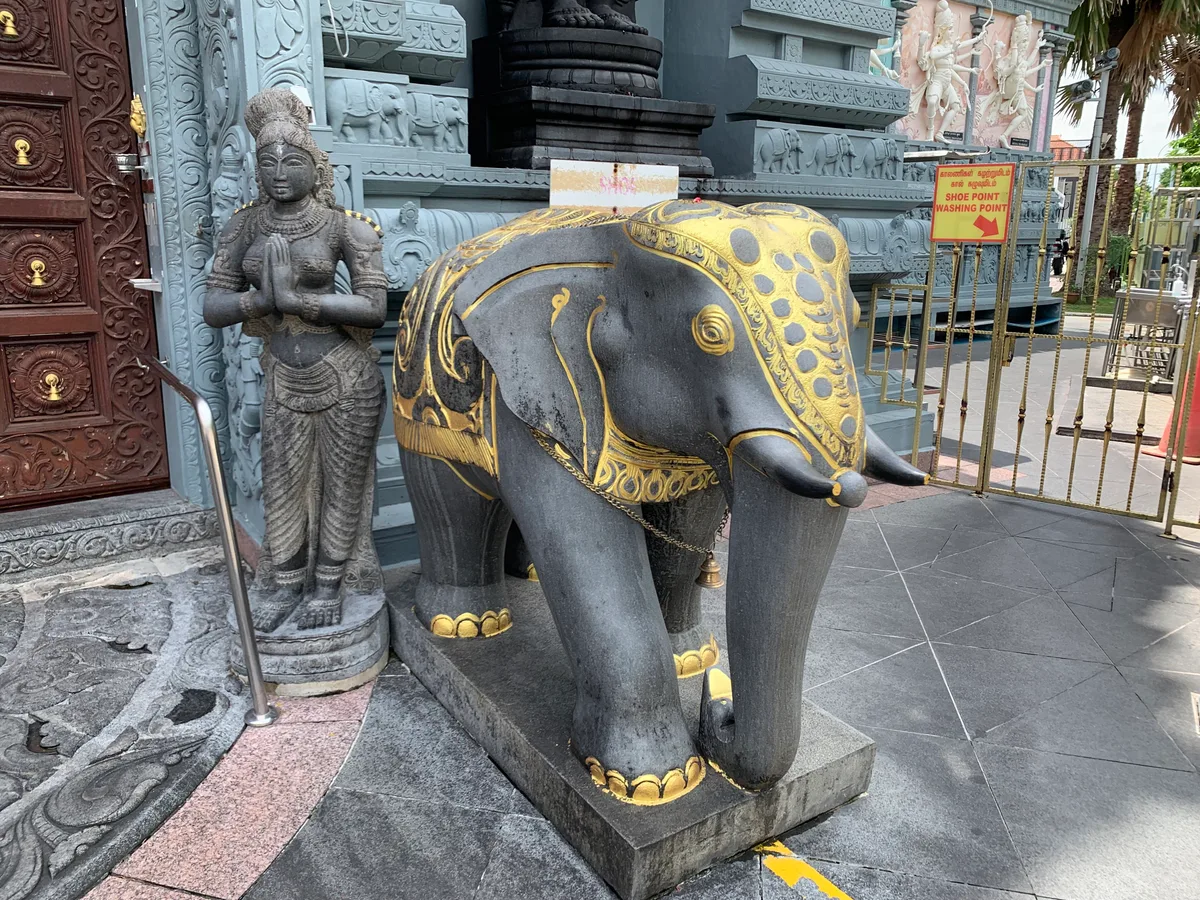
The temple is dedicated to Vinayagar, the elephant-headed remover of obstacles, and his image sits at the heart of the inner sanctum. The gopuram, the tiered gateway tower facing the street, is the part every visitor photographs first.
Look closer and the carvings resolve into individual scenes: Ganesha with his mouse, other deities in procession, decorative flourishes redone by hand during the temple’s periodic renovations. Inside, the granite pillars and dim, incense-heavy hall are a deliberate contrast to the tower’s noise and colour outside.
Getting there
The temple is a short walk from Eunos MRT station (East-West Line) or a slightly longer one from Paya Lebar. Buses along Joo Chiat Road and East Coast Road also stop within a few minutes’ walk.
Katong’s shophouse blocks make this an easy add-on to a wider walk. Joo Chiat’s peranakan facades, the East Coast Road food stretch, and Roxy Square are all close enough to fold into the same afternoon.
When to go
The temple keeps identical hours every day: 6:30am to 12pm, then 6:30pm to 9pm, with a long midday closure in between. Plan around that gap rather than showing up at 2pm expecting the doors open.
Weekends draw a steady stream of visitors and worshippers from 8am right through to 9pm, so a weekday visit, or the early part of the morning window, gives you a calmer look at the sanctum. Evenings after 6:30pm bring active prayer and chanting, which is worth experiencing but means less time for quiet photography.
Visiting the inner sanctum
Like any working Hindu temple, this one runs on a few unwritten rules that are easy to follow once you know them.
- Remove your shoes at the entrance; racks are provided.
- Dress modestly, covering shoulders and knees.
- Photography is generally fine in the courtyard and hall, but skip flash photography directed at the deity images and don’t photograph individuals mid-prayer without asking.
- If a priest offers a small plate of ash or kumkum (coloured powder) as prasadam, a light donation in the collection box is customary, though never required.
- Move around the sanctum clockwise, the traditional direction of circumambulation here as in other Hindu temples.
There’s no entry fee, and nobody at the gate will police you into visitor mode. Just move quietly and follow the same rhythm as everyone else there to pray.
Making it part of a Katong afternoon
Because the temple is well known rather than obscure, expect other visitors doing the same loop you are, especially on weekends. That’s not a reason to avoid it, just a reason to time it well: an early weekday visit lets you actually hear the temple bells and see the sanctum without jostling for space.
Afterwards, Ceylon Road and the surrounding lanes have some of Katong’s older peranakan terrace houses, worth a slow walk before you head back to the main road for food. The whole detour, temple included, comfortably fits into an hour without feeling rushed.
Frequently asked questions
Is there an entry fee for Sri Senpaga Vinayagar Temple?
No, entry is free, though a small donation is appreciated if you receive prasadam (ash or coloured powder) from a priest.
What are the opening hours?
Daily from 6:30am to 12pm, then again from 6:30pm to 9pm. It's closed to visitors in the mid-afternoon gap between those two windows.
What's the quietest time to visit?
Weekday mornings are calmer. Weekends are busy from around 8am right through to 9pm, so avoid those hours if you want a quiet look at the sanctum.
How do I get to the temple?
It's on Ceylon Road, a short walk from Eunos MRT station on the East-West Line, with several bus stops along Joo Chiat Road and East Coast Road also nearby.
What should I wear or do before entering?
Dress modestly with shoulders and knees covered, remove your shoes at the entrance, and move around the sanctum in a clockwise direction.
Plan your trip to Katong
Some links above are affiliate links — if you book through them, Wander Atlas earns a small commission at no extra cost to you. It's how we keep every guide free.
Related guides
This spot is Day 3 of our Singapore 3-day itinerary
This spot is Day 5 of our Singapore 5-day itinerary