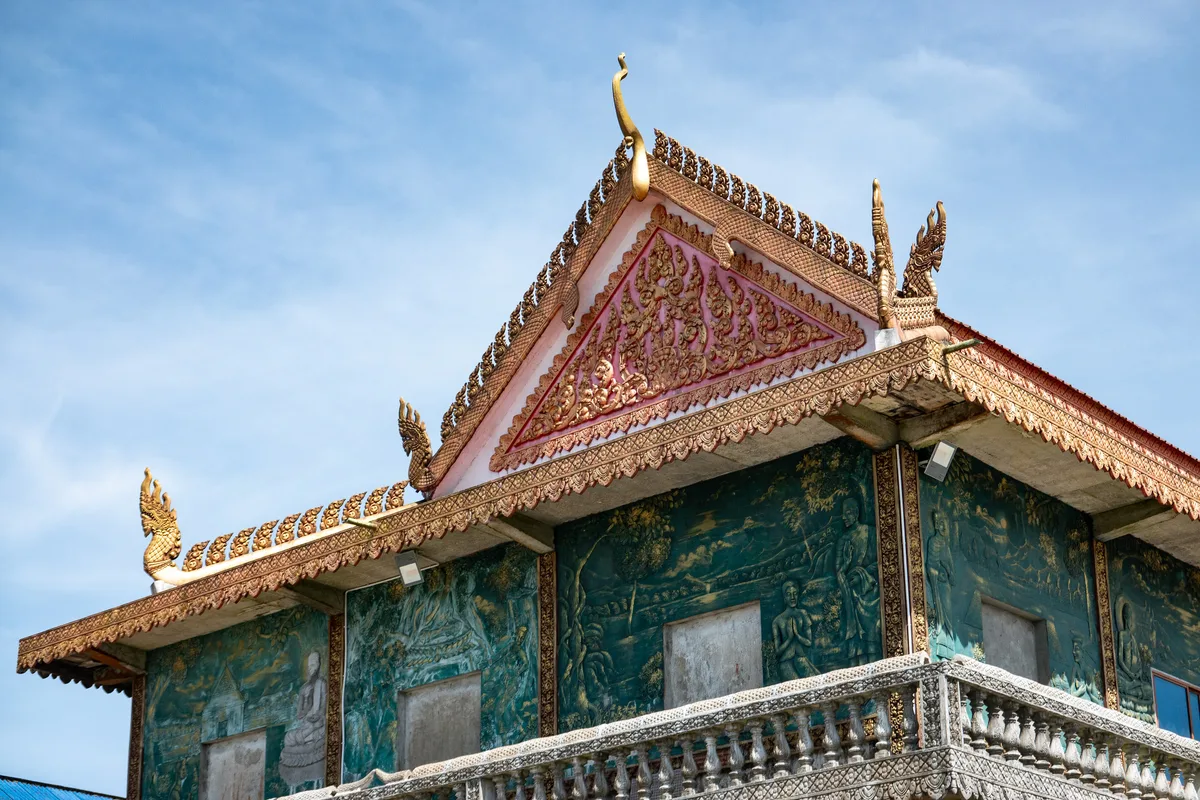
Why go
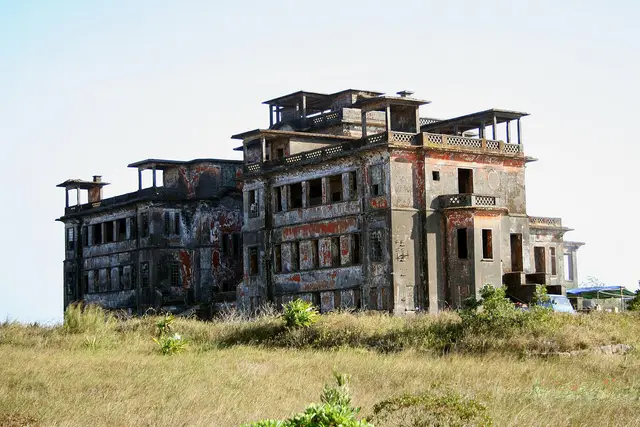
Wat Sampov Pram sits on the Bokor plateau inside Bokor National Park, close to the old Bokor Hill Station. Its name translates roughly to “five boats,” a nod to a local legend about boats turned to stone. You come here less for grandeur and more for atmosphere: stupas catching the light and, on a clear day, views down toward the coast and the Gulf of Thailand’s haze.
Unlike Angkor-scale temples, this one stays low-key. With a 4.5-star rating from visitors, it’s clearly loved by the people who find it.
What you’ll see
The complex is small enough to explore without a map. Expect:
- A cluster of stupas, some brightly painted, some weathered to bare concrete
- Naga-flanked staircases leading up the hillside
- A modest vihara (prayer hall) with Buddha statues and offerings
- Resident dogs and the occasional monk going about daily routines
- On a clear day, views from the plateau down toward the coast
Nothing here is roped off or ticketed in the way a museum would be. It functions as an active place of worship, so you’ll often see fresh incense, folded cash offerings, or a monk sweeping the courtyard.
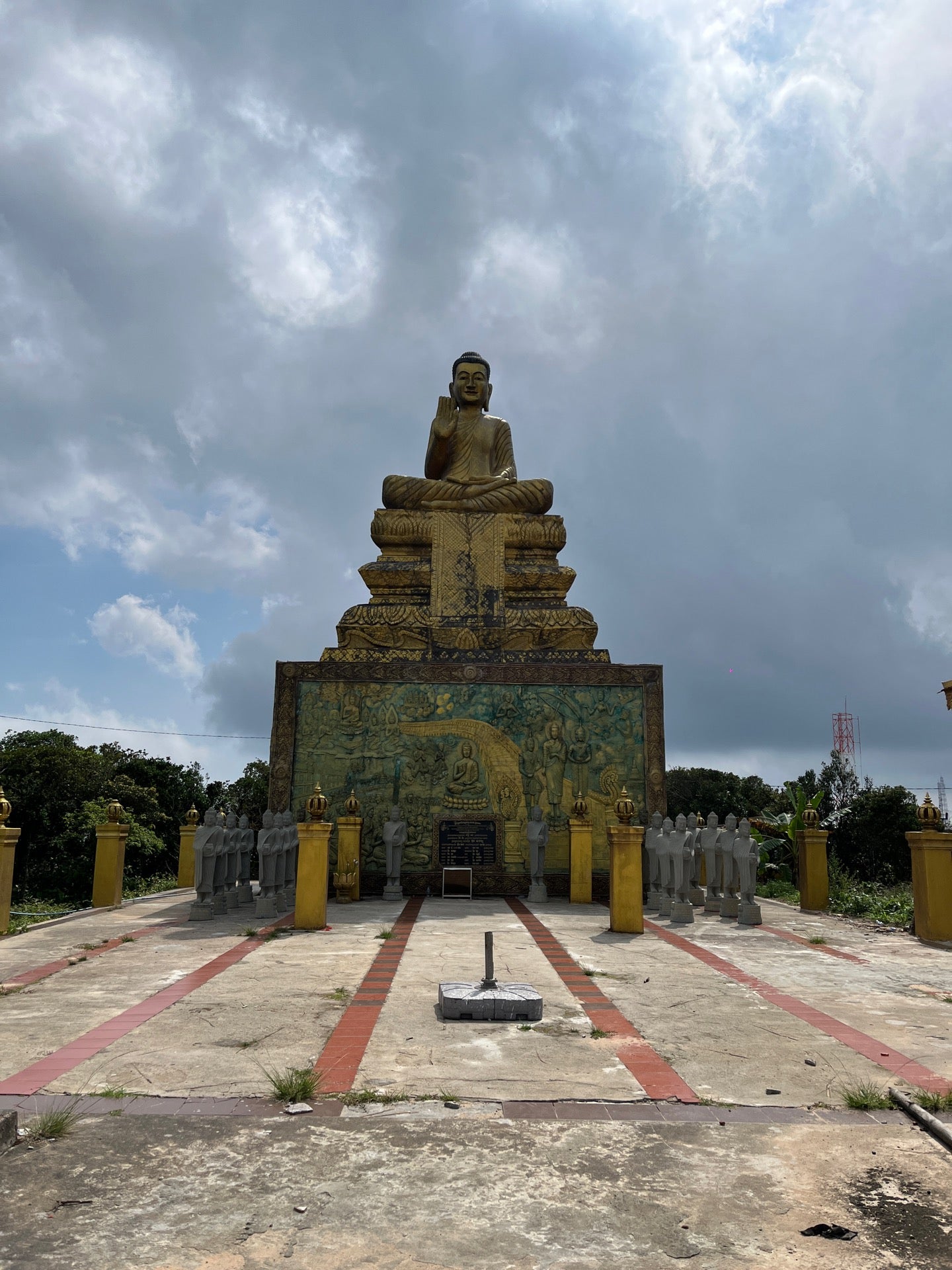
Getting there
Wat Sampov Pram is on the Bokor plateau, reached by the paved mountain road that climbs from the Kampot side. There’s no train or bus route that serves it, so your realistic options are a rented motorbike or a car or tuk-tuk hired for the day, usually as part of a Bokor loop that takes in Bokor Hill Station nearby.
The road winds a long way up. If you’re on a motorbike, take the bends slowly, and expect cloud and drizzle on the plateau even when it’s sunny below.
When to go
The region’s climate is tropical, with a wetter season roughly from May through October and a drier, cooler stretch from November through April. The plateau is cooler than the coast, but fog often builds up as the day goes on and can hide the view completely. Early morning gives you the best chance of a clear outlook.
Bring a light layer and something for rain, whatever the season.
How to visit like a local
Cambodians visiting a wat like this one treat it as a working religious site first, a sightseeing stop second. A few habits will help you blend in rather than stand out:
- Dress modestly: shoulders and knees covered, nothing sheer or overly casual
- Remove your shoes before entering any covered prayer hall
- Keep your voice low, especially if chanting or a ceremony is underway
- If you photograph a monk or a shrine, ask first with a smile and a nod; a flat “no” means no
- Small donations are welcome but never demanded; a few thousand riel or a small US dollar bill in the donation box is customary, not obligatory
The most common visitor mistake here isn’t rudeness, it’s rushing. People treat it as a five-minute photo stop on the Bokor loop, then wonder why it felt unmemorable. Give it thirty unhurried minutes, climb every staircase rather than just the first one, and the place opens up. There’s no ticket booth, no queue, and no fixed “tour route,” so the pace is entirely yours to set. It rewards exactly this kind of slow, quiet attention.
Pair it with Bokor Hill Station and Popokvil Waterfall, which are on the same plateau and fit into the same day trip from Kampot.
Frequently asked questions
How do I get to Wat Sampov Pram?
There's no bus or train. It is on the Bokor plateau, reached by the mountain road that climbs from Kampot, so rent a motorbike or hire a car or tuk-tuk for a Bokor day trip. Bokor Hill Station is close by.
Is there an entrance fee?
There's no formal ticket booth. Small voluntary donations toward the temple's upkeep are customary but not required.
How long should I plan for a visit?
Most people spend 30 to 60 minutes here, enough time to walk the stupas, climb the staircases, and take in the views without rushing.
What should I wear?
Dress modestly, covering shoulders and knees, and be ready to remove your shoes before entering the prayer hall, standard etiquette at any active Cambodian wat.
When is the best time of day to visit?
Aim for before 9am or after 4pm, when temperatures are lower and the light is best for photos. Midday is fine too but shadier spots are limited.
Plan your trip to Kampot
Cambodia eSIM & staying connected →
Some links above are affiliate links — if you book through them, Wander Atlas earns a small commission at no extra cost to you. It's how we keep every guide free.