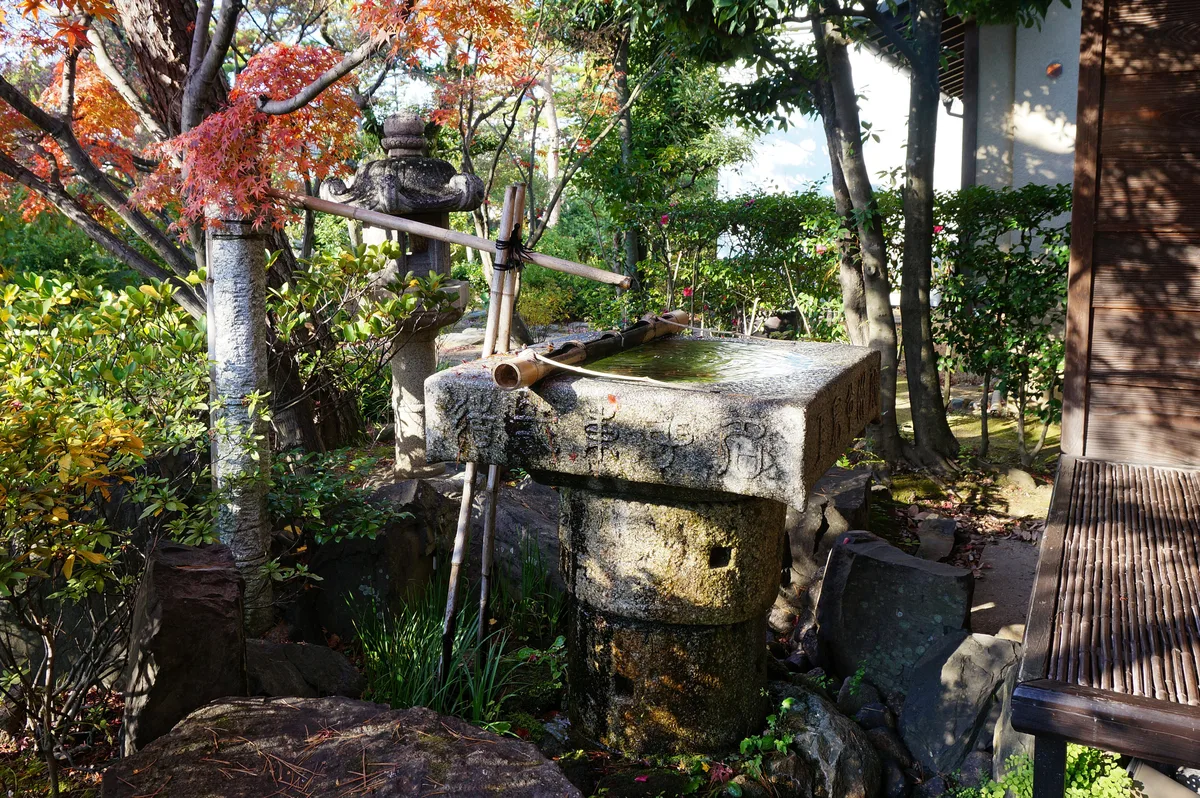
A gate most people walk past
Shinkeien is easy to miss. Most visitors on this stretch of the Kurashiki River are lining up for the Ohara Museum of Art or watching the flat-bottomed tour boats. Meanwhile, the garden’s gate beside the museum stays fairly quiet.
Step through it and the canal noise drops away. You’re inside a walled garden with a low tiled-roof house, raked paths and clipped trees. You can walk around the whole thing in minutes and sit in it for much longer.
It gets far fewer visitors than its neighbours, and it’s consistently well reviewed by the people who find it. That makes it one of the better quiet corners in the Bikan Historical Quarter.
The Ohara family’s retreat
The house here is tied to the Ohara family, the textile industrialists who shaped modern Kurashiki. The villa was built in the Meiji era for Ohara Kōshirō, father of Ohara Magosaburō. Magosaburō later founded the art museum next door.
The family later gave the property to the city. That’s why it works today as a public garden and not as a private estate. The main house is a traditional wooden building with tatami rooms that open onto the garden.
Knowing this changes how the garden reads. It wasn’t designed to show off. It’s a family’s private retreat at the edge of the merchant quarter, sitting next to the museum that same family built.
Reading the garden
Take this one slowly. A Japanese garden this size works by framing views, so it helps to pause at a few points:
- From the veranda edge of the house, where the garden was meant to be seen from inside
- By the pond and stone features, where the planting is layered to look deeper than it is
- Near the boundary wall, where the old rooflines of Bikan show over the top
The garden changes through the year. Maples turn in late autumn, and the evergreens keep their shape through winter. Spring and early summer bring fresh green against the dark wood of the house. There’s no single best month. Each one looks different.

From Kurashiki Station to the garden gate
Take the JR Sanyō Line or Hakubi Line to Kurashiki Station. Leave by the south exit and walk south along Chūō-dōri, the main road toward the Bikan Historical Quarter. The walk takes about 15 minutes on flat pavement.
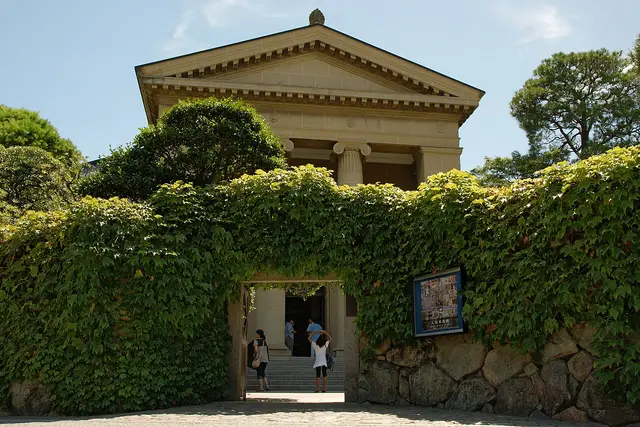
When you reach the canal, look for the Ohara Museum of Art’s Greek-temple façade. Shinkeien sits right next to it. The address is 1-1-20 Chūō, Kurashiki.
If you’re driving, use one of the paid car parks around the edge of the historical quarter and walk in. The canal lanes are narrow and meant for people on foot.
Shoes off, voices down
The house has its own rules, and they’re simple once you know them:
- Take your shoes off before stepping onto any raised wooden floor or tatami. Leave them neatly at the entrance step, toes pointing out.
- Don’t walk on tatami in slippers. If slippers are provided for the corridors, take them off at the edge of the matted rooms.
- Socks help. Bare feet on old tatami are frowned upon, so carry a pair if you’re wearing sandals.
- Keep your voice down. The house is often silent, and sound carries through the sliding doors.
- Ask before photographing people at events, and follow any signs about which rooms you can enter.
There’s no ticket-desk routine to learn. Read any notices at the gate, where current conditions are posted, and go in at your own pace.
When the rooms are in use
Shinkeien isn’t only a sight to look at. The city rents out the house’s rooms for tea gatherings, cultural classes and small private events. On some days a room will be closed off, or you’ll hear a gathering behind the sliding doors.
Don’t treat that as a reason to leave. Watching the house used for what it was built for, people kneeling on tatami beside an open garden, is part of what makes this place different from the museums nearby. Just keep to the open areas and give events plenty of room.
If you’re hoping to see the inside rooms in particular, check with the city or the gate notices before you go. Room bookings can change what’s open.
Fitting it into a Bikan day
Plan on 20–40 minutes here, longer if you want to sit. It works well as a pause between bigger sights, all within a few minutes’ walk:
- Ohara Museum of Art, right next door, for Western and Japanese modern art
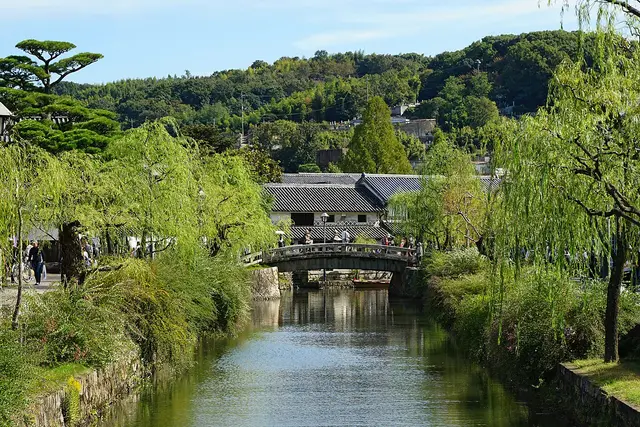
- The Kurashiki River canal, lined with willows and white-walled storehouses, with the tour boats
- Kurashiki Ivy Square, the ivy-covered former spinning mill a short walk east
- Achi Shrine, up the hill behind the quarter, with views over the tiled roofs
- Kurashiki Museum of Folkcraft, in converted rice granaries along the canal
At the moment the garden is open 9:00 AM–5:15 PM every day of the week. Garden hours can shift through the year and on holidays, so check the official City of Kurashiki listing before you plan around them.
Day-trippers tend to arrive mid-morning and spread along the canal. Coming early, or making Shinkeien your quiet stop between the museum and the boats, usually means you’ll share it with very few people.
Frequently asked questions
Where is Shinkeien in Kurashiki?
It's in the Bikan Historical Quarter at 1-1-20 Chūō, right beside the Ohara Museum of Art on the Kurashiki River canal.
How do I get to Shinkeien from Kurashiki Station?
Leave JR Kurashiki Station by the south exit and walk south along Chūō-dōri for about 15 minutes until you reach the canal. The garden is next to the Ohara Museum of Art.
What are Shinkeien's opening hours?
At the moment Google lists it as open 9:00 AM–5:15 PM every day. Garden hours can change with the season and on holidays, so check the official City of Kurashiki listing before you go.
How long should I spend at Shinkeien?
About 20–40 minutes is enough to walk the garden and look at the villa. Stay longer if you want to sit and take in the views from the house.
What else is near Shinkeien?
The Ohara Museum of Art is next door. The canal boats, Kurashiki Ivy Square, the Kurashiki Museum of Folkcraft and Achi Shrine are all a short walk away.
Plan your trip to Kurashiki
Japan eSIM & staying connected →
Some links above are affiliate links — if you book through them, Wander Atlas earns a small commission at no extra cost to you. It's how we keep every guide free.
Related guides
 hidden gem
 Ōhara Museum of Art: Kurashiki Travel Guide (4.4★)
 hidden gem
 Kurashiki Bikan Historical Quarter: Travel Guide
 hidden gem
 Hayashibara Museum of Art: Okayama Travel Guide (4.0★)
 hidden gem