Lyon doesn’t put its contemporary art biennale in one convention hall. It spreads the work across the city: old industrial sheds, a riverside warehouse, a contemporary art museum near a park, plus smaller sites further out. Seeing it means crossing Lyon, and that crossing is half of what the event is.
An exhibition the size of a city
The Biennale de Lyon started in 1991 and has become one of Europe’s major recurring shows of international contemporary art. Each edition brings in artists from around the world, many of them making new work for the occasion. Every edition also gets its own curator and its own title.
Expect large installations, video in darkened rooms, sound pieces and sculpture in spaces that were built for something else entirely. Painting on white walls is the minority here. The scale is the point: past editions have filled former factory floors where a single work can take up a hall.
The December 13 finish
This edition runs through December 13, 2026. The organiser publishes the opening date, the venue list and the weekly hours on its official site, and that page is the reference for every practical detail.
An autumn biennale brings a particular set of conditions. Days get shorter and colder as December comes round, and several venues sit beside the Saône or the Rhône. That makes moving between sites a matter of coats and trams, not long riverside walks. Indoor industrial spaces can feel cool too, so visitors usually keep a layer on.
Where the art usually lands
The venues change from edition to edition, so nothing below is a promise for 2026. It is a picture of where the Biennale has lived before, and of the parts of Lyon it tends to use.
- La Sucrière, a 1930s sugar warehouse on the Saône docks in the Confluence district, has been a core venue across many editions.
- macLYON (Musée d’Art Contemporain de Lyon), in the Cité Internationale beside the Parc de la Tête d’Or, is the museum where the Biennale began.
- The former Fagor-Brandt factory in Gerland held the main exhibition in 2019 and 2022.
- Les Grandes Locos, former railway workshops in La Mulatière, were the headline venue in 2024.
What they share is size and a working past. These buildings were made for sugar, appliances and locomotives, and the art takes them over.
Crossing Lyon between venues
Lyon’s TCL network of metro, tram and bus links the areas the Biennale has used in the past. The Confluence peninsula is served by tram T1, which runs down the Saône side past the Musée des Confluences. The Cité Internationale and macLYON are on the C1 bus line from Part-Dieu, the main rail station.
Arriving by train, you’ll come into either Part-Dieu or Perrache. Perrache is the closer of the two to Confluence. From the city centre, Gerland and La Mulatière are each a short metro, tram or bus ride.
Visitors usually split the venues over two days, not one. A big industrial site plus macLYON fills a day comfortably. Trying to see every site in a single afternoon tends to mean racing past the video works, and those often run long.
Closing week and the Fête des Lumières
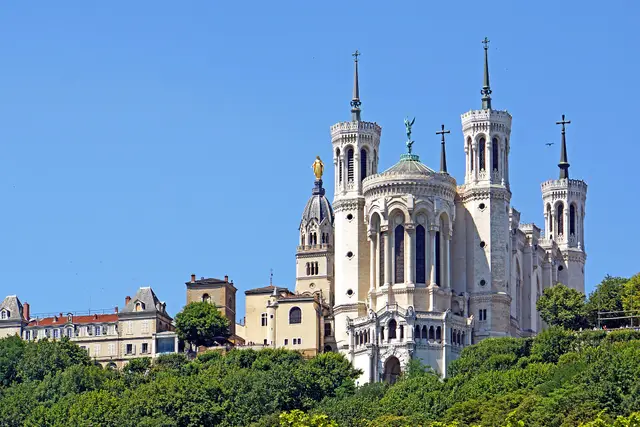
This edition ends in mid-December, and that timing matters. Lyon’s Fête des Lumières is traditionally held over the days around December 8. Light installations take over squares, facades and the hill of Fourvière, and huge crowds walk the Presqu’île at night.
For a visitor, the overlap cuts both ways. You get the Biennale by day and light art in the streets by night, two kinds of contemporary work in one trip. But hotels across the city fill up for the festival, and the centre gets very crowded after dark. Many visitors who aren’t coming for the lights pick a different week for that reason.
How Lyon’s visitors pace the shows
The Biennale is an unhurried event, and the people who enjoy it most go along with that. A few habits make the day easier:
- Talk to the mediators. The Biennale’s médiateurs are gallery staff whose job is to explain the work. Asking “Qu’est-ce que c’est, cette pièce ?” (what is this piece?) or simply asking in English is normal. Plenty of them speak English.
- Pay by card. Contactless card payment is standard in France, at venue desks and cafés alike, and TCL tickets can be bought on the network’s app.
- Validate on board. On Lyon’s trams and buses you validate your ticket each time you board. Inspectors do check.
- Eat on French time. Restaurant kitchens around Lyon generally serve lunch from roughly noon to 2pm. After that, a hot lunch near an industrial venue gets hard to find, so people often eat before heading to the outer sites.
- Sit through the videos. Long films usually have a running time posted at the entrance. Regulars tend to take a seat at the start, not drift in halfway.
Bags and big coats often have to go in a cloakroom or lockers at the larger sites. Packing light helps on a day with several venues.
Beyond the main venues
The Biennale also reaches past its headline sites. Over past editions, its Résonance programme linked partner exhibitions in galleries and art centres across the Auvergne-Rhône-Alpes region. Its Veduta strand took artists into neighbourhoods and towns around greater Lyon.
If you’re already in Confluence, the Musée des Confluences sits at the tip of the peninsula, where the Rhône and Saône meet. Near macLYON, the Parc de la Tête d’Or is one of France’s largest urban parks, with a free zoo and botanical glasshouses. Across the rivers, the old town of Vieux Lyon and the funicular up to Fourvière give you the other Lyon: Renaissance courtyards and traditional bouchon restaurants.
Frequently asked questions
When does the 2026 Biennale de Lyon run?
This edition runs through December 13, 2026. The organiser publishes the full run dates and venue opening hours on its official site.
Where is the Lyon Biennale held?
It's spread across several venues in and around Lyon, and these change from edition to edition. Past editions have used La Sucrière in Confluence, macLYON at the Cité Internationale, the former Fagor-Brandt factory in Gerland and Les Grandes Locos in La Mulatière. The organiser's official site lists the venues for each edition.
How much time do I need?
Most visitors spend at least a full day, and many split it over two days. A large main venue plus macLYON is a comfortable day, especially if you sit through the video works.
How do I get between venues?
Lyon's TCL metro, tram and bus network covers the areas the Biennale usually uses. Tram T1 serves the Confluence peninsula, and the C1 bus runs from Part-Dieu station to the Cité Internationale and macLYON. Remember to validate your ticket each time you board.
Does the Biennale overlap with the Fête des Lumières?
It can. The Fête des Lumières is traditionally held around December 8, and this Biennale edition runs until December 13. You can combine the two, but hotels fill up and the city centre gets very crowded at night during the festival.
Plan your trip to Lyon
France eSIM & staying connected →
Some links above are affiliate links — if you book through them, Wander Atlas earns a small commission at no extra cost to you. It's how we keep every guide free.