Why go
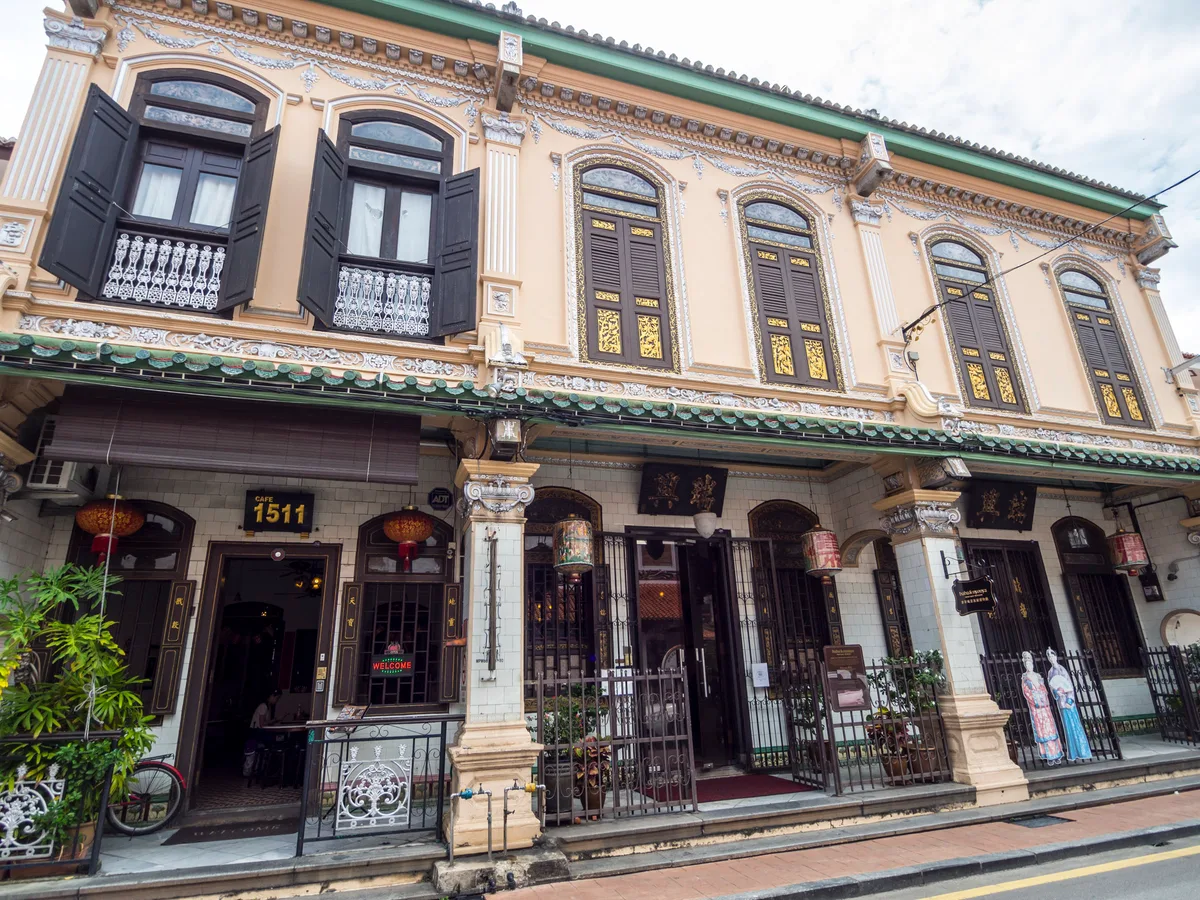
You step off a street lined with souvenir shops and suddenly you’re in someone’s ancestral home. The Baba & Nyonya Heritage Museum occupies a converted 19th-century townhouse, and unlike a typical museum, nothing here is roped off behind glass cabinets in sterile rooms.
Heavy carved teak furniture, inlaid with mother-of-pearl, fills rooms lit by an internal courtyard open to the sky. Tiled floors in patterns imported from England click under your shoes. This is the real thing: a family residence, not a reconstruction.
The Peranakan (Baba-Nyonya) culture blended Chinese ancestry with Malay custom, and this house shows exactly how that fusion played out in daily life, down to the wedding altars and porcelain.
Getting there
The museum sits at 48–50 Jalan Tun Tan Cheng Lock, in the middle of Malacca’s UNESCO-listed heritage zone. It’s an easy walk from the Stadthuys and Christ Church at Dutch Square, about 10 minutes on foot along Jonker Street’s southern end.
If you’re coming from a hotel further out, a Grab (the regional ride-hailing app) is cheap and simple. There’s no dedicated parking lot, so most visitors either walk in from the historic core or get dropped nearby and stroll the last stretch.
What to see inside
You’re taken through the house in small groups, usually led by a guide who actually grew up in this Peranakan tradition. That personal thread, not a recorded audio guide, is what makes the visit stick.
Highlights to watch for:
- The formal reception hall, with gilded carved wood panels and ancestor portraits
- A bridal chamber set up with the elaborate silver and beadwork used in traditional Nyonya weddings
- The internal air well, a courtyard design that cools the house and lets in monsoon rain
- Antique Nyonya porcelain in the signature pink-and-green “phoenix and peony” pattern
- Family photographs spanning several generations of the same household
No photography is typically allowed inside, which keeps the tour moving and keeps you looking rather than framing shots.

When to go
The museum runs 10am to 4:45pm every day except Tuesday, when it’s closed entirely. Plan your Malacca day trip around that closure if this stop matters to you.
Weekends are the crunch point: foot traffic stays heavy from 10am right through to 4pm. If you can, visit on a weekday morning shortly after opening, or squeeze in a weekend visit in the last hour before closing.
Give yourself 45 minutes to an hour. Tours move at a fixed pace since a guide walks you through, so you can’t really rush it or drag it out much.
How to visit like a local
This is a well-known stop on Malacca’s heritage trail, not a quiet secret, so treat the crowd strategically rather than hoping to dodge it entirely.
- Time it right: arrive at 10am sharp on a weekday, or after 3pm, to avoid the weekend 10am–4pm squeeze.
- Pay how you like: cash and cards are both generally accepted at the entrance, but carrying a little ringgit cash is a safe backup.
- Follow the guide’s pace: entry is often bundled with a short guided walkthrough. Don’t wander ahead, since some rooms are only unlocked as the group moves through.
- Dress and touch with care: this remains a furnished, museum-grade interior, so keep hands off the antique furniture and porcelain.
- Skip the photos, take notes instead: photography restrictions are common inside, so if a detail catches your eye, ask the guide about it rather than reaching for your phone.
The mistake most first-time visitors make is treating this as a quick five-minute photo-op stop. It’s a proper guided experience, and the stories the guide shares (about specific wedding customs, mourning rituals, or family heirlooms) are the actual reason to come.
Pair it with a walk down Jonker Street afterward, or the nearby Cheng Hoon Teng Temple, both within a few minutes’ walk, to round out a morning in Malacca’s old quarter.
Frequently asked questions
What are the opening hours?
10:00 AM–4:45 PM every day except Tuesday, when the museum is closed. Confirm before visiting since hours can shift around public holidays.
How long should I spend at the museum?
Plan for 45 minutes to an hour. Visits are typically led by a guide at a fixed pace through the house.
When is the best time to avoid crowds?
Weekends stay busy from 10am to 4pm. Go on a weekday right at 10am opening, or after 3pm on weekends, for a calmer visit.
Is photography allowed inside?
Photography is generally restricted inside to protect the antique furniture and artifacts, so plan to simply look and listen rather than shoot photos.
What's nearby to combine with a visit?
The museum is about a 10-minute walk from Dutch Square and sits close to Jonker Street and Cheng Hoon Teng Temple, making it easy to fold into a heritage-district walking route.
Plan your trip to Malacca
Some links above are affiliate links — if you book through them, Wander Atlas earns a small commission at no extra cost to you. It's how we keep every guide free.
Related guides
 attraction
 Cheng Hoon Teng Temple: Malacca Travel Guide (4.5★)
 attraction
 Menara Taming Sari: Malacca Travel Guide
 attraction
 Melaka Botanical Garden: Malacca Travel Guide (4.4★)
 hidden gem