A street that changes shape at sundown
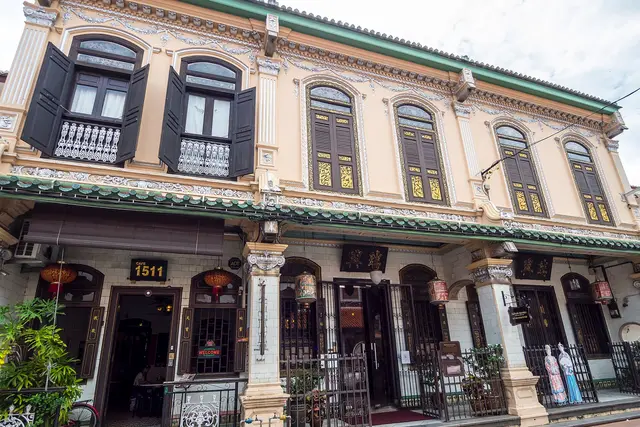
By day, Jalan Hang Jebat is just a street. Two-storey Chinese shophouses line both sides, with carved doors, shuttered windows and the covered five-foot walkways that run along Malacca’s old core. Cars and motorbikes still squeeze through.
On Friday, Saturday and Sunday evenings, the road closes and folding tables go down the middle. By dark, the street is a single long corridor of stalls between the shophouse fronts. You move through it in whatever direction the crowd is going.
The whole old town is part of the UNESCO World Heritage listing Malacca shares with George Town, inscribed in 2008. That gives the market its backdrop: hanging lanterns, temple roofs a block away and the Melaka River at one end.
What to eat on Jonker Walk
Graze here instead of sitting down to a meal. Portions are small, most stalls cook in front of you, and the best plan is to share several things as you walk. Look for these Malaccan and Nyonya staples:
- Chicken rice balls: the town’s signature, with the rice pressed into firm balls and served next to poached chicken
- Cendol: shaved ice with green pandan jelly, coconut milk and dark gula Melaka palm sugar, sometimes topped with durian
- Nyonya kuih: small, brightly coloured steamed cakes made from coconut, glutinous rice and pandan
- Popiah: soft spring rolls filled with braised turnip
- Pineapple tarts: sold boxed, so they’re easy to take home
- Grilled and skewered snacks: quail eggs, seafood and meat on sticks, cooked to order
The drinks stalls are worth a stop in the heat, with sugarcane juice and coconut water sold everywhere.
Souvenirs, trinkets and the stage
Food stalls and trinket stalls take turns along the street. Expect phone accessories, keychains, T-shirts, small toys and Malacca fridge magnets. Some stalls sell batik and beaded Nyonya-style items, which make better keepsakes.
The editorial listing mentions entertainment, and there’s usually a performance space along the route. Stop for a song or two between snacks. Also look up at the shophouse ground floors: many stay open late on market nights as antique shops, cafés and small galleries.
Moving through the weekend crowd
This is one of Malacca’s most-visited evening outings, and it gets packed. The street is narrow and the flow is two-way, so plan around that rather than hoping for a quiet night.
- Pick your night. Saturday draws weekend visitors from Kuala Lumpur and Singapore on top of the regular crowds. Friday is often the gentler choice.
- Start early. Stalls open at 6pm, and in the first stretch of the evening the queues are shorter and the food is freshest.
- Pay small. Many stalls take cash only, though plenty now show a DuitNow or e-wallet QR code. Bring small notes, because breaking a big one at a snack stall slows everyone down.
- Queue in line. Popular stalls run a simple first-come line. Order, pay, then step aside to wait so the next person can reach the counter.
- Don’t tip. Nobody expects it at hawker stalls.
- Bargain gently, and only at souvenir stalls. Food prices are fixed and shown on the stall boards.
- Stand to eat. Seating is scarce, so step into a side lane or onto a five-foot way instead of stopping in the middle of the flow.
Every price is shown at the stall itself, so check there before you order.
Getting to Jalan Hang Jebat
Malacca has no metro. Most visitors come by road from Kuala Lumpur, taking an express bus from Terminal Bersepadu Selatan (TBS) to Melaka Sentral, which takes about two hours. Buses also run from Singapore.
From Melaka Sentral, a Grab ride to the old town takes about 15 to 20 minutes. Ask to be dropped near Dutch Square or the Tan Kim Seng Bridge. Jonker Street starts just across the river from there. Driving is harder on market nights, because the street itself is closed and nearby parking fills quickly.
Before and after in the old town
Arrive in the late afternoon and see the sights around Dutch Square first. The red Stadthuys and Christ Church stand side by side. Trishaws covered in fairy lights and cartoon decorations wait nearby for passengers.
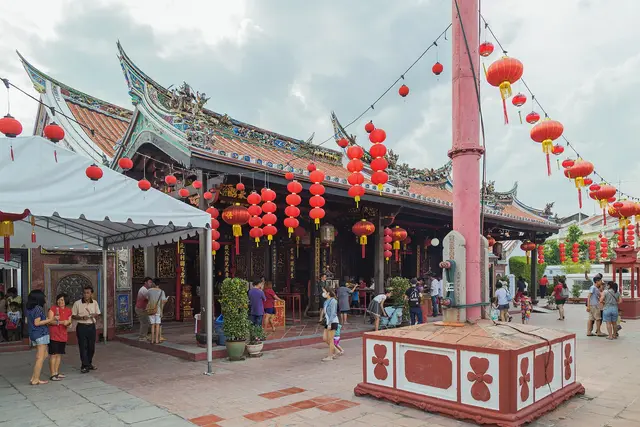
Parallel streets are worth a detour. Jalan Tokong, known as Harmony Street, has Cheng Hoon Teng Temple, Kampung Kling Mosque and Sri Poyyatha Vinayagar Moorthy Temple within a short walk of each other. On Jalan Tun Tan Cheng Lock, the old Heeren Street, the Baba & Nyonya Heritage Museum shows how wealthy Peranakan families lived.
After the market, walk along the Melaka River, where the banks are lit at night. Allow two to three hours for the market itself.
Frequently asked questions
Which nights is Jonker Street Night Market open?
It runs Friday, Saturday and Sunday from 6pm to midnight. It's closed Monday to Thursday. On those nights Jalan Hang Jebat is an ordinary street of shops and cafés.
How do I get there from Kuala Lumpur?
Take an express bus from Terminal Bersepadu Selatan (TBS) to Melaka Sentral, which takes about two hours. Then take a Grab to Dutch Square or the Tan Kim Seng Bridge, a short walk from the start of Jonker Street.
When should I go to avoid the worst crowds?
It's busy every market night. For more space, arrive close to the 6pm opening, or choose Friday, since Saturday brings extra weekend visitors from KL and Singapore.
How long should I spend there?
Two to three hours is enough to walk the whole street, eat your way through several stalls and browse the souvenirs. Add time before for Dutch Square and Harmony Street, and after for a walk along the Melaka River.
Can I pay by card at the stalls?
Card payment is uncommon. Many stalls take cash only, although some show a DuitNow or e-wallet QR code. Carry small notes, and check prices on each stall's board.
Plan your trip to Malacca
Some links above are affiliate links — if you book through them, Wander Atlas earns a small commission at no extra cost to you. It's how we keep every guide free.