
A Square Measured in Blocks
Macroplaza is too big to take in from one spot. It is a chain of plazas, gardens and fountains running north to south through Monterrey’s Centro. Each section has a different job: a government palace at one end, a contemporary art museum at the other, and a cathedral in between.
It was built in the early 1980s by clearing several city blocks. The result is often listed among the largest city squares in the world. Your feet will notice that before your eyes do. Above every rooftop to the east sits the saddle-shaped ridge of Cerro de la Silla, which keeps you oriented the whole way.
Walking It North to South
Starting at the north end lets the plaza open up as you go. Here is what you pass, roughly in order:
- Palacio de Gobierno: the Nuevo León state government building, built from pinkish cantera stone in the early 1900s. It looks out over the Explanada de los Héroes, which is lined with statues.
- Fuente de Neptuno: a large bronze fountain group set behind the Teatro de la Ciudad. It’s one of the most photographed corners of the plaza.
- Faro del Comercio and the Catedral Metropolitana: Barragán’s tall orange slab stands directly beside the cathedral’s baroque facade.
- The Palacio Municipal and MARCO: the south end, where Juan Soriano’s huge bronze dove sculpture marks the museum entrance.
At a steady pace with photo stops, the full length takes about an hour. Add time for any museum you go into.
The Faro del Comercio After Dark
The plaza’s signature landmark is easy to misread by day. Luis Barragán designed the Faro del Comercio (Beacon of Commerce) in 1984 to mark a century of commerce in the city. It is a flat, slotted tower of orange-red concrete, about 70 metres tall.
At night it becomes a lighthouse. A green laser on top sweeps across the sky over Centro, and you can see it from blocks away. That’s the best argument for coming back after sunset.
The cathedral facade is lit at night too. The two together make the plaza’s best-known evening view. Stand on the open paving just west of the Faro to fit both in one frame.
Museums on the Edges
The plaza works as a hallway between cultural buildings, so plan your time around which doors you want to go through.
- MARCO (Museo de Arte Contemporáneo): Ricardo Legorreta’s building at the south end, with a central courtyard and a reflecting pool. It runs rotating exhibitions.
- Museo Metropolitano de Monterrey: housed in the old city hall on Calle Zaragoza, with an arcaded courtyard.
- Museo de Historia Mexicana and Museo del Noreste: just east of the plaza’s northern half, linked to each other.
Museum hours and admission are separate from the plaza’s. Check each museum’s official site before you go, since Monday closures are common in Mexico.
Out the East Side: Santa Lucía and Barrio Antiguo
Two of Monterrey’s most walkable areas start right at the plaza’s eastern edge. The Paseo Santa Lucía, a long artificial riverwalk with landscaped banks, begins next to the Museo de Historia Mexicana. You can walk its paths east toward Parque Fundidora, and there are boat rides along the channel too.
South-east of the cathedral is Barrio Antiguo, the old quarter of low colonial houses, cafés and bars. It’s the obvious place to eat after an evening on the plaza. On weekend nights it gets much louder than the square.
Using the Plaza Like Regiomontanos Do
Macroplaza is one of the city’s most visited places, so expect company. Local families fill it on weekends, and school groups and office workers cut across it on weekdays. Here’s how to use it well:
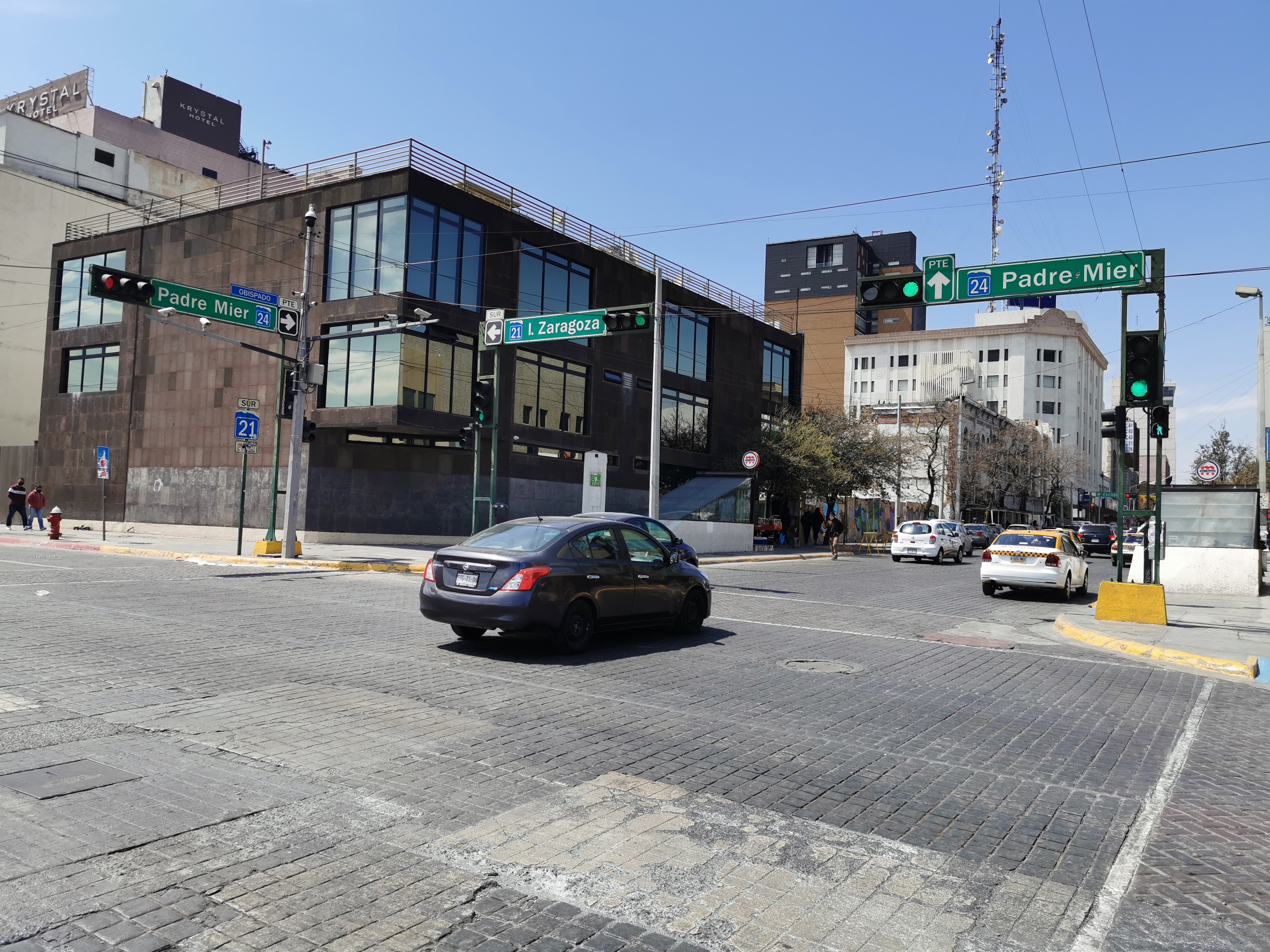
- Go by Metro. Line 2 runs right along the plaza. Zaragoza station serves the southern end and Padre Mier the middle. Parking in Centro is tight, and rides arrive faster than you’d expect.
- Plan around the heat. Monterrey summers are brutally hot, and most of the paving has no shade. Locals come in the morning or once the sun drops. Carry water and look for the tree-lined gardens.
- Carry small peso notes. Street vendors with elotes, raspados and balloons usually take cash only.
- Respect the cathedral. It’s a working church. Keep your voice down, take off your hat inside, and save photos for times when Mass isn’t on.
Sundays are the liveliest: families on the benches and kids running through the fountains. If you want an emptier, more architectural view of the plaza, come on a weekday morning.
When to Plan Your Visit
The plaza never closes, so the clock is less important than the season. October to April brings milder days, which makes walking the full length easy. From May to September, start early or come back in the evening for the laser and the cooler air.
The best way to see it is to split it in two. Walk the length in daylight and spend an hour or two in a museum. Then eat in Barrio Antiguo, and finish under the Faro’s beam after dark.
Frequently asked questions
How do I get to Macroplaza by public transport?
Take Metro Line 2. Zaragoza station is at the southern end of the plaza, near the Palacio Municipal and MARCO. Padre Mier station is closer to the middle section.
Is Macroplaza open at night?
Yes, the plaza is open 24 hours every day. Evening is a good time to go, because the Faro del Comercio's green laser sweeps over the city and the cathedral facade is lit up.
How long should I spend at Macroplaza?
Allow about an hour to walk from the Palacio de Gobierno to MARCO with photo stops. Add an hour or two for each museum, and more if you continue along the Paseo Santa Lucía.
What is the best time of year to visit?
October to April is the most comfortable time for walking. In summer, Monterrey's heat makes midday on the open paving tough, so go in the early morning or after sunset.
What's nearby?
MARCO, the Museo Metropolitano, the Museo de Historia Mexicana and the Museo del Noreste are all on or next to the plaza. The Paseo Santa Lucía riverwalk starts on the east side, and Barrio Antiguo's cafés and bars are just south-east of the cathedral.
Plan your trip to Monterrey
Mexico eSIM & staying connected →
Some links above are affiliate links — if you book through them, Wander Atlas earns a small commission at no extra cost to you. It's how we keep every guide free.
Related guides
 attraction
 Fundidora Park: Monterrey Travel Guide (4.8★)
 hidden gem
 Paseo Santa Lucía: Monterrey Travel Guide (4.8★)
 attraction
 Monumento Al Pipila: Guanajuato Travel Guide (4.7★)
 attraction