Above the brink, not at it
This is the high ground. Most visitors meet Niagara at river level, pressed against the stone wall at Table Rock. Falls View is a lookout up on the escarpment, in the hotel-and-casino district Canadians call Fallsview.
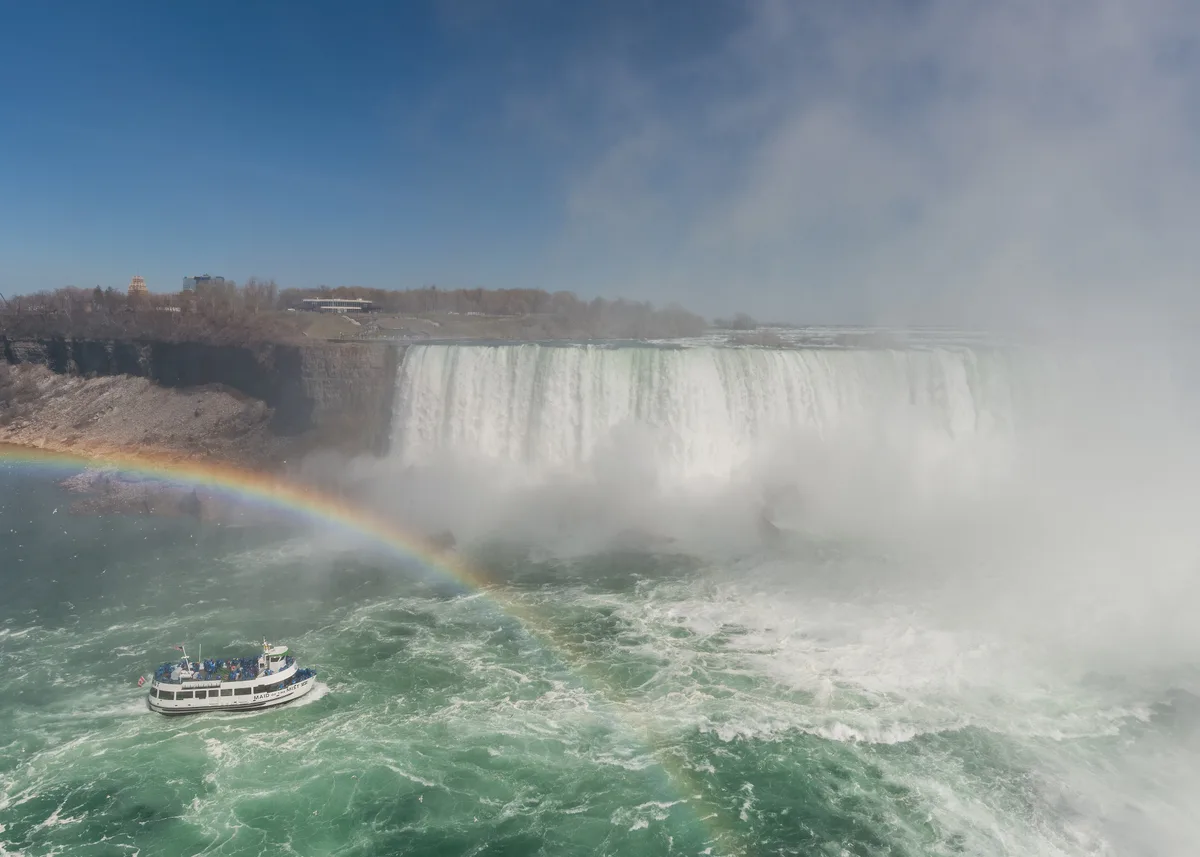
From up here the whole scene fits in one frame. The curve of the Horseshoe Falls sits to one side. The straighter line of the American Falls stands across the gorge, and the river runs green and white below. Mist rises off the Horseshoe almost constantly, so the cloud over the falls can be seen from well back in town.
Google lists the spot as a park with only a few dozen reviews, nearly all of them glowing. That makes it one of the quieter places to take in a view that millions of people come to see.
Reading the view
Look left to right and you’ll pick out the main pieces:
- Horseshoe Falls, the Canadian falls, the widest and loudest of the three, curving around its own cloud of spray.
- Goat Island, the wooded strip on the US side that splits the river.
- Bridal Veil Falls, the thin ribbon beside the American Falls, separated from them by Luna Island.
- American Falls, with its piled talus rock at the base.
- Rainbow Bridge, the arched border crossing further downriver.
On sunny afternoons rainbows often form in the spray, because the sun is behind you in the west. The boats you see pushing into the mist below leave from the docks at the foot of Clifton Hill.
Why the river runs harder by day
Here’s the quirk that catches people out. Niagara’s volume isn’t constant. Under a 1950 treaty between Canada and the United States, a large share of the river is diverted upstream into hydroelectric intakes.
The treaty guarantees more water over the falls during daytime tourist hours from April through October. At night, and through the off-season, the flow is allowed to drop by half. So the falls you see at 11pm in July carry noticeably less water than the ones you saw at 2pm.
That shapes when you should come. For the full roar, visit in daylight during the warmer months. For lights and atmosphere, come back after dark and accept that the falls will be a little thinner.

The falls after dark
At night the view changes completely. The falls are lit from banks of lights across the gorge, and the colours change through the evening. Seen from the bluff, the lit spray makes a pale glowing column above the dark water.
In the warmer months there are often fireworks over the gorge on scheduled nights. Niagara Parks publishes the illumination times and fireworks dates on its official site, and they shift through the year, so check before you plan an evening around them.
Winter is worth the cold. Mist freezes onto railings, trees and lamp posts, and ice builds up at the base of the American Falls. The lookout is listed as open around the clock at the moment, so a late walk after dinner is easy.
Getting up to Fallsview
The district sits on the escarpment, roughly above Table Rock, along Fallsview Boulevard and Portage Road. If you’re driving from Toronto, the QEW gets you here in about an hour and a half outside rush hour. Hotel garages and Niagara Parks lots post their parking rates at the entrance.
Without a car:
- GO Transit trains run from Toronto’s Union Station to Niagara Falls station on Bridge Street, a long way north of the falls.
- WEGO buses link the station, Clifton Hill, Table Rock and the Fallsview hotels.
- The Falls Incline Railway is a short funicular between the Fallsview district and the Table Rock area. It saves your knees on the steep slope.
Walking up from the river is fine for most people. It’s steep, but it doesn’t take long.
How to claim a spot at the railing
The trick is to arrive before the town fills up. Early morning brings soft light from the east, and the coach tours from Toronto haven’t arrived yet. On summer evenings the crowds come back for the lights, so settle in before the illumination begins rather than as it starts.
A few habits that help:
- Pay by card. Tap payment works almost everywhere in Fallsview, from parking machines to coffee counters. US dollars are often accepted, but your change usually comes back in Canadian dollars at the business’s own rate.
- Protect your lens. On windy days the spray drifts uphill, so a microfibre cloth matters more than any filter.
- Don’t block the rail. Take your photo, then step back so the next group can get to the front. People here are used to sharing a few metres of railing.
- Bring a layer. Up on the bluff the wind runs straight off the gorge, and evenings can be cold even in summer.
Walking it into a longer day
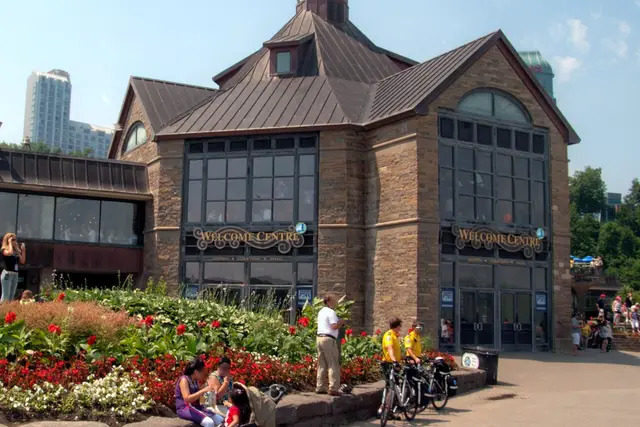
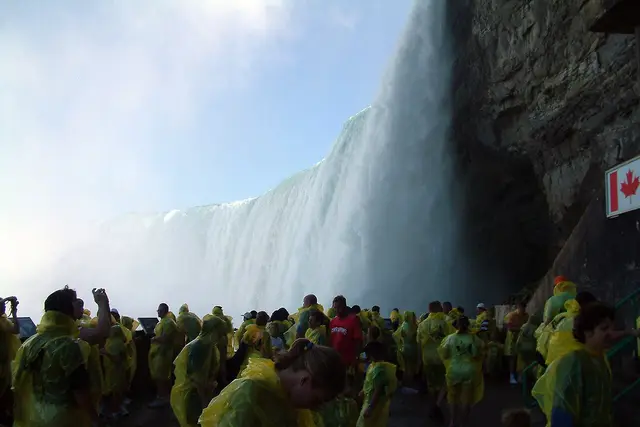
The lookout is a starting point, not a whole afternoon. From the bluff, head downhill to the Table Rock Welcome Centre, where you stand a few steps from the brink of the Horseshoe Falls. Journey Behind the Falls starts there and takes you through tunnels cut behind the falls.
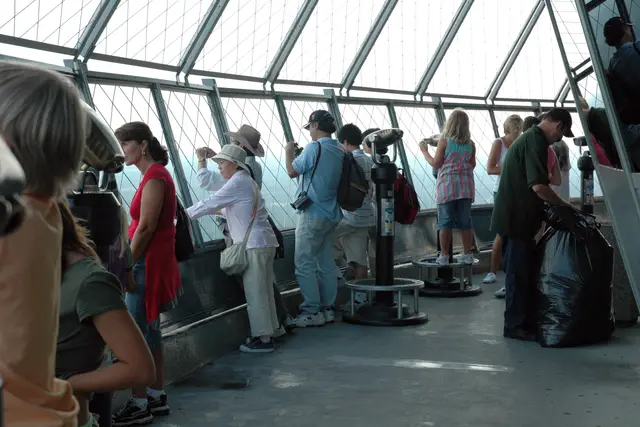
North along the Niagara Parkway, Queen Victoria Park runs beside the river with gardens and benches facing the American Falls. Beyond it, Clifton Hill is the noisy strip of arcades and wax museums. Back up top, the Skylon Tower has an even higher view, and the Fallsview Casino Resort anchors the hotel row.
Plan on half a day for the lookout, the walk down to Table Rock and the stroll along the Parkway. If you add the boat ride or an evening of lights, make it a full day.
Frequently asked questions
Where exactly is Falls View in Niagara Falls?
It's in the Fallsview district of Niagara Falls, Ontario (postcode L2G 7G1). The district sits on the escarpment above the Horseshoe Falls and the Table Rock area, around Fallsview Boulevard and Portage Road. The Falls Incline Railway connects it with the river level below.
When is the best time to visit?
Come in daylight between April and October to see the falls at full volume. A 1950 treaty allows more water to be diverted for hydro power at night and in the off-season. For coloured lights, come after dark, and check Niagara Parks' official site for current illumination times and fireworks dates. Early mornings are usually calmest, before the tour coaches arrive.
How long should I spend at Falls View?
About 20–40 minutes is enough for the lookout itself. Most people combine it with the walk down to Table Rock and along the Niagara Parkway, which takes half a day.
Can I get there without a car?
Yes. GO Transit trains run from Toronto's Union Station to Niagara Falls station, and WEGO buses connect the station, Clifton Hill, Table Rock and the Fallsview hotels. You can also walk up from the river or take the Falls Incline Railway.
What else is nearby?
Nearby are the Table Rock Welcome Centre and Journey Behind the Falls, Queen Victoria Park, Clifton Hill, the Skylon Tower and the Fallsview Casino Resort. The boat tours into the mist leave from the docks at the foot of Clifton Hill.
Plan your trip to Niagara Falls
Canada eSIM & staying connected →
Some links above are affiliate links — if you book through them, Wander Atlas earns a small commission at no extra cost to you. It's how we keep every guide free.
Related guides
 attraction
Table Rock Welcome Centre: Niagara Falls Travel Guide (4.6★)
 attraction
Journey Behind the Falls: Niagara Falls Travel Guide (4.5★)
 attraction
Skylon Tower: Niagara Falls Travel Guide (4.4★)
 attraction