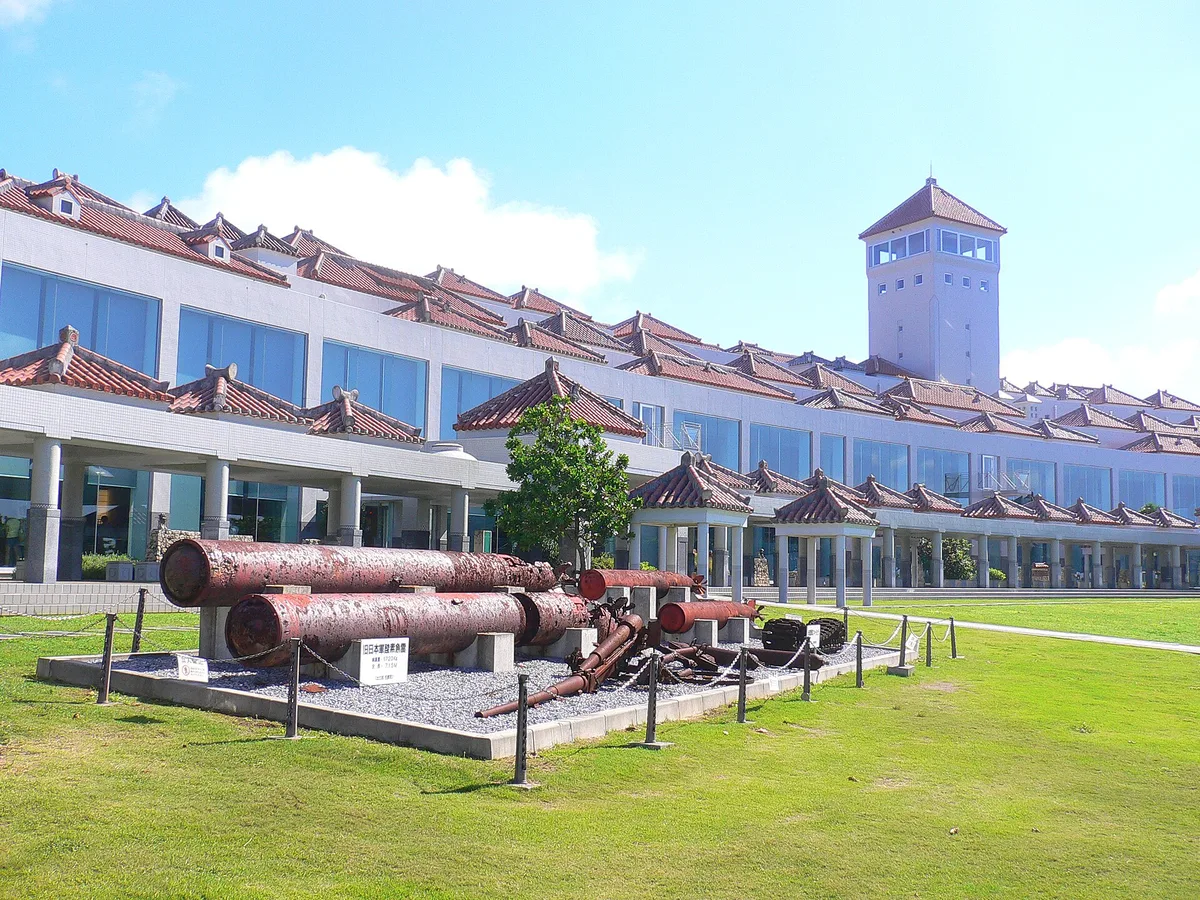
Why this place matters
You arrive expecting a typical war museum. You leave with something heavier and more specific: a room-by-room account of what happened to Okinawan civilians in 1945, told largely in their own words.
This isn’t a Tokyo-style military history exhibit. The Battle of Okinawa killed an estimated quarter of the island’s population, many of them civilians caught between Japanese and American forces. The museum’s entire purpose is making sure that toll isn’t reduced to a statistic.
What you’ll actually see inside
The exhibition unfolds chronologically across several halls, moving from pre-war Okinawan life through the invasion, the ground battle, and the aftermath.
The most affecting sections are the testimony rooms, walls of handwritten and recorded accounts from survivors, many recorded decades after the war when people finally felt able to speak. Photographs of cave shelters, replica tunnel interiors, and personal belongings recovered from battle sites sit alongside these testimonies.
Expect English-language panels throughout, though some are denser reading than others. Give yourself real time here:
- Minimum 90 minutes for the permanent exhibition alone
- Add 30–45 minutes if you want to read testimony transcripts in full
- Allow another hour if you’re walking the surrounding park and monuments
The park around it
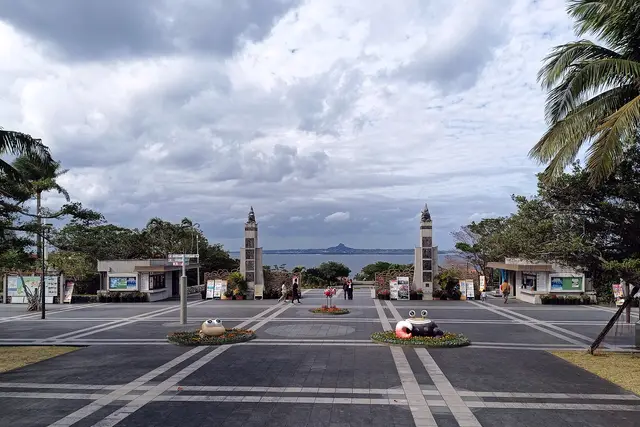
The museum sits inside the much larger Okinawa Prefectural Peace Memorial Park, and you shouldn’t treat it as a standalone stop.
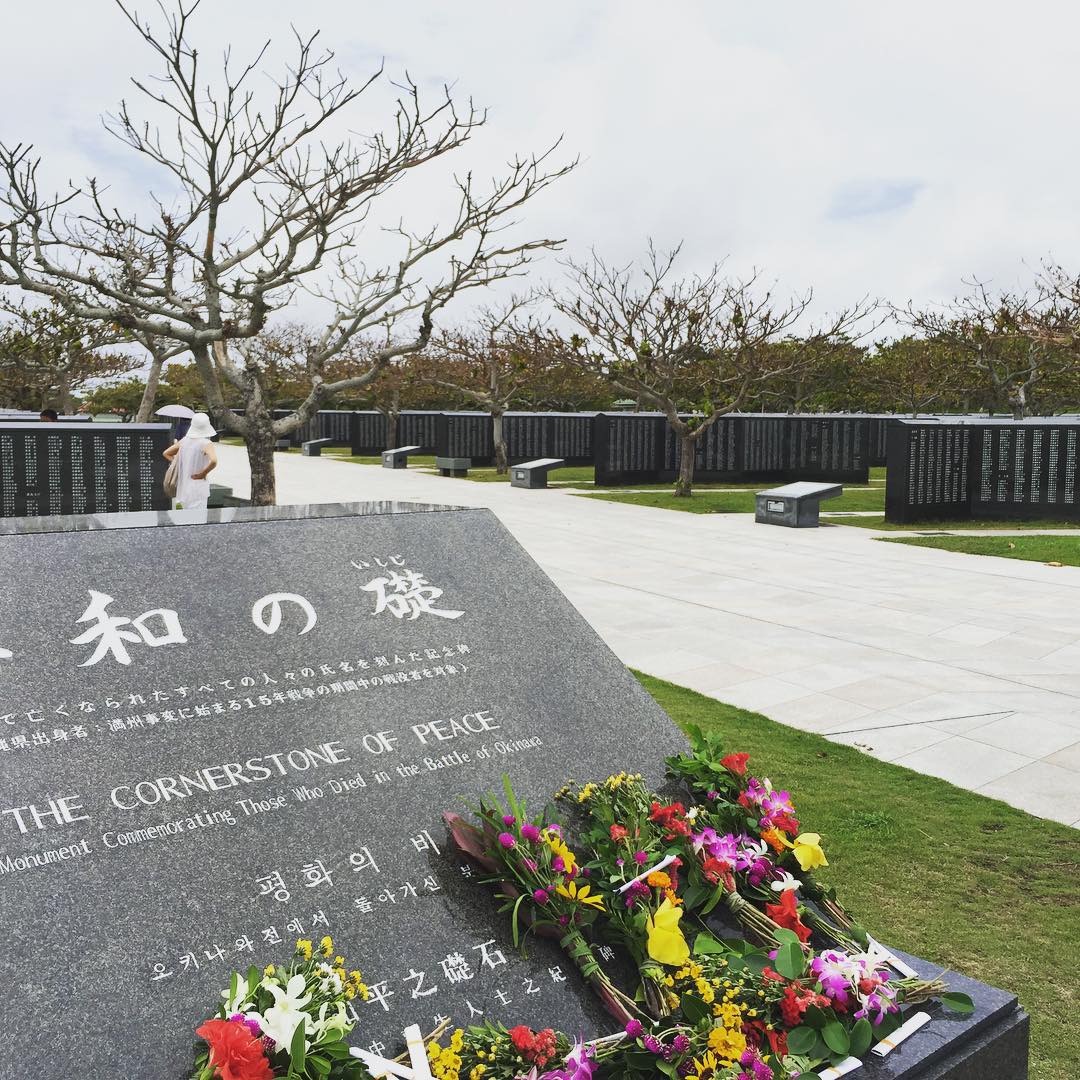
Just outside, the Cornerstone of Peace is a sweeping arrangement of black granite walls inscribed with the names of everyone who died in the battle (Okinawan, Japanese, American, Korean) regardless of nationality or which side they fought on. It’s worth walking the full length of it.
The clifftops nearby look straight out over the Pacific, toward the waters where the fighting reached its final, brutal endgame. The Peace Memorial Hall, with its large seated peace statue, is a short walk further into the park.
Getting there
The museum sits at 614-1 Mabuni, in Itoman, at Okinawa’s southern tip, roughly 40–50 minutes by car from central Naha.
There’s no monorail or train connection this far south, so most visitors arrive one of three ways:
- Rental car, with free on-site parking (the easiest option, and how most visitors get here)
- A direct or transfer bus from Naha Bus Terminal, which takes longer but is doable without a car
- A half-day organized tour, often combined with other southern Okinawa war sites like Himeyuri Peace Museum
Because of the distance from Naha’s main tourist strip, most people build this into a half-day loop covering two or three southern Okinawa memorial sites rather than visiting in isolation.
When to go
The museum is open daily, 9am to 5pm, with no weekly closing day listed, but always confirm current hours before you set out, since museums occasionally adjust for holidays.
If you want the exhibition halls to yourself, arrive between 9am and 11am. That’s the quietest window on both weekdays and weekends. Weekend afternoons, especially 12pm to 4pm, draw the heaviest crowds, including school groups and tour buses. Plan around that window if you can.
June 23rd, Okinawa’s Memorial Day (Irei no Hi), draws large crowds and a formal ceremony in the park, moving to witness, but this isn’t the day for a quiet, reflective visit.
How to visit like a local
Treat this as an educational site, not a photo stop, Okinawans visit here to learn and remember, not to sightsee quickly.
- Arrive right at 9am opening if you want near-empty testimony rooms
- Speak quietly inside; this is treated as a place of mourning, not a typical attraction
- Combine your visit with Himeyuri Peace Museum and the Cornerstone of Peace in one southern-Okinawa itinerary
- Bring a rental car if possible, public transit here is infrequent and slow
- Read at least a few full survivor testimonies rather than skimming captions; that’s the museum’s real purpose
- Check current admission fees and hours online before setting out, since these can shift seasonally
The mistake most visitors make is rushing through in 30 minutes on the way to somewhere else. Give this the time it asks for.
Frequently asked questions
How long should I spend at the Okinawa Prefectural Peace Memorial Museum?
Plan for at least 90 minutes for the permanent exhibition, and up to 2.5–3 hours if you include the surrounding Peace Memorial Park and Cornerstone of Peace monument.
When is the quietest time to visit?
Between 9am and 11am, on both weekdays and weekends. Weekend afternoons from 12pm to 4pm are the busiest, with tour groups and school visits.
How do I get to the museum without a car?
Take a bus from Naha Bus Terminal toward Itoman/Mabuni, though schedules are limited. A rental car (about 40–50 minutes from Naha) or a half-day organized tour covering southern Okinawa's war sites is more practical.
Is the museum only in Japanese?
No, English-language panels are provided throughout the permanent exhibition, including translated survivor testimonies, though some sections are text-heavy.
What else is nearby worth visiting?
The Cornerstone of Peace monument and Peace Memorial Hall are both inside the same park, within a short walk. Himeyuri Peace Museum, covering the story of student nurses conscripted during the battle, is a short drive away and commonly paired with this visit.
Plan your trip to Okinawa
Japan eSIM & staying connected →
Some links above are affiliate links — if you book through them, Wander Atlas earns a small commission at no extra cost to you. It's how we keep every guide free.