Phuket Thai Hua Museum: Travel Guide (4.0★)
When to visit Thailand: month-by-month weather, crowds and holidays →
✓ Facts verified via Google Places · Aug 5, 2026
At a glance
How this guide is made
Produced with AI assistance and reviewed against live data sources. Facts such as hours, ratings, and location come from Google Places; images are licensed or public domain. Details can change — please verify before visiting. Editorial policy
Why the Thai Hua Museum matters
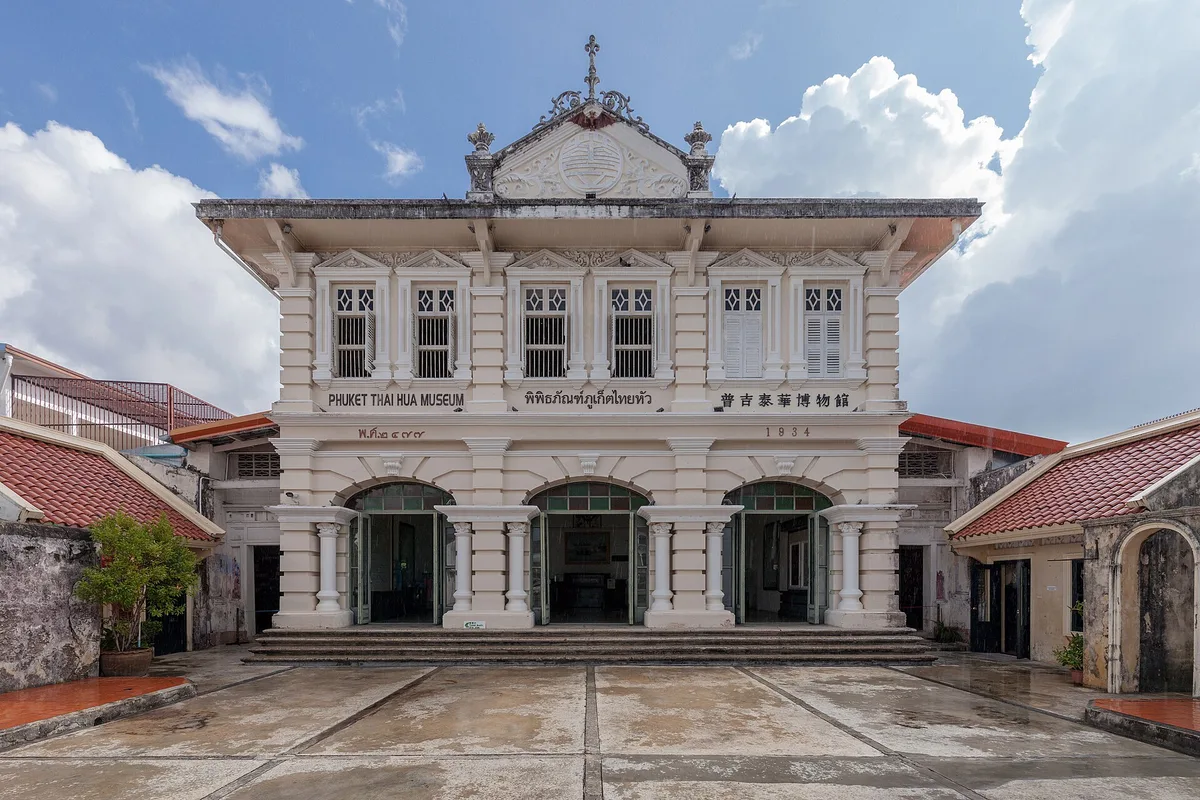
Long before Phuket meant beach resorts, it meant tin. In the 19th century, waves of Hokkien and Teochew Chinese migrants arrived to work the mines, and their descendants built the shophouse-and-mansion architecture that still defines Old Phuket Town. The Thai Hua Museum, housed in a mansion built in 1934 as the Thai Hua School, is the place that explains all of this in one visit, not as a dry history lecture, but through the personal objects, photographs, and trades of the families who shaped the island.
What the building itself tells you
You feel the story before you read a single placard. The structure is classic Sino-Portuguese: thick masonry walls painted a soft ochre-yellow, deep-green shuttered windows, and an open central courtyard designed to pull air and light down through the middle of the house, a “chim chae” airwell you’ll recognize if you’ve walked past any of the grander old shophouses on Thalang Road.
Ceiling fans turn slowly overhead in high-ceilinged rooms, and the tiled floors underfoot are original, worn smooth in patches by decades of foot traffic when this was still a working school.
Inside the galleries
The exhibits unfold room by room around that courtyard. Early rooms cover the tin-mining boom and the waves of migration from Fujian and Guangdong provinces; you’ll see mining tools, ledgers, and maps that trace how a Chinese port on the Malay trade route became a mixed Baba-Nyonya (Peranakan) society. Later rooms shift to domestic life, carved wedding beds, embroidered clothing, kitchenware, and black-and-white family portraits with the stiff, formal poses typical of early studio photography.
One gallery is dedicated to Peranakan cuisine and customs, another to the language and education history tied to the building’s original use as a school. Signage is bilingual (Thai and English), and rooms are compact enough that you can read everything without your legs giving out, but detailed enough that history-minded visitors could easily spend well over an hour.
The courtyard café
At the center of the mansion is a small coffee shop that spills into the courtyard. A genuinely pleasant spot to sit under the airwell with an iced coffee or Thai tea before or after the galleries. It’s shaded, quieter than the street outside, and a good place to flip through a guidebook or just let the mansion’s stillness settle in before you head back into Old Town’s bustle.
Getting there and timing your visit
The museum sits at 28 Krabi Road in Talat Nuea, right in the historic core of Old Phuket Town, an easy walk (10–15 minutes) from nearby landmark streets like Thalang, Dibuk, and Soi Romanee, all lined with similar Sino-Portuguese facades, street art, and old shopfronts. There’s no train or metro on Phuket, so most visitors arrive by rental car, motorbike, taxi, or a short tuk-tuk/Grab ride from wherever they’re staying.
If you’re coming from Phuket Town’s other sights (the Phuket Philatelic Museum, Shrine of Serene Light, or the weekend Old Town walking street) you can walk between most of them.
Old Phuket Town gets genuinely hot by midday, and the streets around the museum have little shade, so aim to arrive in the morning, roughly an hour or two after opening, when the light through the shophouse windows is softer and the courtyard café isn’t yet crowded. Because the building is indoors and largely shaded by its own walls, it’s also a sensible midday refuge if you get caught out in the afternoon heat elsewhere in town.
How to visit like a local
Treat this as an unhurried browse rather than a box to tick (45 to 75 minutes is realistic if you actually read the panels. Admission is inexpensive by international museum standards, and payment is typically cash or card at the entrance desk; bring some small bills just in case. There’s no need to book ahead) this isn’t a timed-entry attraction, and lines rarely form.
Dress is casual, though as with most Thai cultural sites, avoid overly skimpy clothing out of respect for the building’s heritage status. The most common visitor mistake is treating it as a quick five-minute photo stop and rushing through. The real value here is slowing down in the courtyard café and letting the architecture and family stories sink in before you continue exploring the rest of Old Town on foot.
Frequently asked questions
How much time should I budget for the Thai Hua Museum?
Plan for 45 to 75 minutes — enough to walk all the galleries around the courtyard and sit for a drink at the café without feeling rushed.
How do I get to the museum without a car?
Phuket has no rail or metro, so most visitors reach the museum at 28 Krabi Road in Old Phuket Town by taxi, Grab, or tuk-tuk, or on foot if staying nearby, since it's within walking distance of Thalang Road, Dibuk Road, and Soi Romanee.
What's the best time of day to visit?
Morning, an hour or two after opening, is best — Old Town heats up fast by midday and the museum's courtyard café is quieter earlier in the day.
Is the museum worth it if I'm not into history museums?
The building itself — a restored 1934 Sino-Portuguese mansion with a central airwell courtyard — is worth seeing even for visitors who skim the exhibits, and the on-site café makes it easy to enjoy without committing to a deep history lesson.
What else is nearby I can combine with this visit?
It's an easy walk to other Old Town landmarks like the Phuket Philatelic Museum, Shrine of Serene Light, and the colorful shophouse streets of Thalang, Dibuk, and Romanee, all part of the same Sino-Portuguese heritage district.
Plan your trip to Phuket
Some links above are affiliate links — if you book through them, Wander Atlas earns a small commission at no extra cost to you. It's how we keep every guide free.